 Delhi Sultanate emerged for the first time in India as an autonomous Muslim power in the country. The Delhi Sultanate reigned India from 1290 to 1526 AD. It was the rulers of Delhi Sultanate that strengthened the base. The first ruling empire that was part of the Delhi Sultanate was the Khilji dynasty. They had captured Bengal whilst Muhammad Ghori had Delhi in the list of his conquests.
Khilji Dynasty
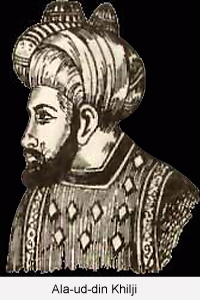
With the death of Muhammad Ghori, the Mamluk dynasty gradually became weak and finally Jalal-ud-din Khilji captured Delhi, the centre of power and established the Khilji dynasty and set onto expand the empire. Ala-ud-din Khilji inherited the throne and the dynasty thrived under his able rule. His ruling period is marked by market control regulations, innovative administrative and revenue reforms. The period is considered as the golden era of Khilji rule.
Ala-ud-din`s most trusted noble Malik Kafur succeeded after him and made Shahab-ud-din Umar as the successor of Ala-ud-din. Qutub-ud-din Mubarik Shah, another son of Ala-ud-din Khilji removed his younger brother Umar after the death of Malik Kafur and became the sultan. With the rise of a Hindu slave, who was given the name Khusrav Khan by Mubarik, Khilji dynasty came to an end. They ruled for 30 years from 1290 to 1320.
Tughlaq Dynasty
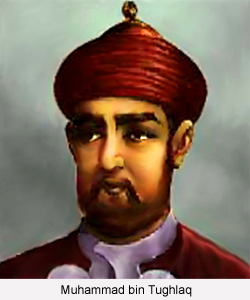
When Khusrav came into power, he replaced most of the Muslim officers by Hindu officers in the key positions. These Hindu officers insulted Islam. The Muslim rulers gathered around a Tughlaq noble, Ghazi Malik and killed Khusrav. He wanted to give the power back to the Khilji Dynasty. However there was no survivor amongst the decedents of Ala-ud-din. He ascended the throne and took the title of Ghias-ud-din Tughlaq thereby laying the foundation of Tughlaq dynasty. After killing Ghias-ud-din, his son Muhammad bin Tughlaq succeeded him. After him, his cousin Firoz Shah`s long reign over the territory of 37 years is well known for his marvellous administrative reforms. Amir Timur`s put an end to the Tughlaq dynasty.
 Sayyid Dynasty
Tughlaq dynasty eventually came to an end in 1414 when Khizar Khan founded the Sayyid dynasty in Delhi. In 1414, Khizar won the battle against Mahmud Shah, the last Tughlaq ruler and established Sayyid Dynasty. It was during his reign that a number of states and provinces of Delhi Sultanate declared their independence. The Sultanate was now reduced to Sind, Western Punjab, and western Uttar Pradesh. Mubarak Shah`s rule witnessed internal and external revolts. The next successors also faced political instability. The era of Sayyid Dynasty came to an end when Buhlul Lodhi occupied Delhi and established the Lodhi Dynasty.
Lodhi Dynasty
Buhlul Lodi occupied the province of Punjab and then captured Delhi. Nizam Khan succeeded his father who established himself as the most capable ruler of the Lodi Dynasty. He took the title of Sikandar Shah. The death of Sikandar Lodi created a disharmony between his sons: Ibrahim Lodi and Jalal Lodi. A succession war followed that resulted in the gradual downfall of the Lodi Dynasty. Ibrahim Lodi was the last ruler of the dynasty. He was defeated by Babur in the Battle of Panipat on 1526. This battle brought an end of 320 years rule of the Sultans in Delhi.
Administration of Delhi Sultanate
The King was the head of the Central Administration in Delhi Sultanate. The monarch had the last say in the legislative, executive and judicial matters. The administration was further divided into provinces. The administration mainly depended on the Shariat or the laws of Islam. The central administration was administered by the Sultan. Then under the Sultan came the Wiz rat (the Finance Minister), the Diwan-i- Arz (the Military department) and many other departments like The Diwan-i insha, The Barid-i mumalik, The Diwan-i risalat, The Muhatsibs and the last was slaves and karkhanas.
Culture of Delhi Sultanate
The influence of the Muslim invasion led to a number of cultural changes in the subcontinent. With the emergence of a new religion, Islam, the literature, art and architecture witnessed considerable changes.
While the Delhi Sultanate survived the invasion of Timur, the coming of Babur gave a final blow that led to the decline of the Delhi Sultanate.
Delhi Sultanate
Delhi Sultanate consisted of the Islamic dynasties ruled from 1206 to 1526. It emerged as a self-governing Muslim power in India.