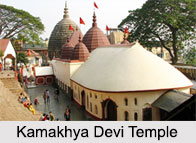
 Shakti Peethas in India are considered as the most sacred places of Hindu pilgrimage. Hindus from different parts of the country and various parts of the world visit these Shakti peethas to worship the Goddess. The Shakti peethas are also considered to be the holy places of celestial power where the main deity is the Goddess Sati, prominent deity of the Shakta sect.
Sati`s self immolation had immense significance in shaping the idea of Shakti peethas. Shakti peethas are the different places that are believed to have preserved with the presence of Shakti due to the falling of body parts of the dead body of Sati Devi. There are 51 Shakti Peethas and 4 Adi Shakti Peethas.
Legends of Shakti Peethas
A legend is related behind the different Shakti peethas in the Indian subcontinent. According to legends, there was a great king called Daksha Prajapati who was the son of Lord Brahma and father of Sati Devi. Sati Devi got married to Lord Shiva against the wishes of her father. Daksha conducted a "yagya", where he invited all of the gods and goddesses except his son in law. Against the wish of Lord Shiva, Sati attended the "yagya" where she felt insulted by the actions of her sisters and parents. Daksha started abusing her husband; she could not bear the rudeness and scarified herself at the place of "yagya" by creating "Agni" from the earth with her right thumb of her foot.
Knowing this, Lord Shiva removed one bunch of "Jatha" from his head and hit it on earth. From that, Lord Veerabhadra was born and rushed to "yagya", cut off Daksha"s head and replaced it with that of a goat. Still crazed with grief, he picked up the remains of Sati"s body, and danced the dance of destruction "Tandava Nritya" throughout the Universe. To stop this "Nritya", Lord Vishnu used his "Sudarshan Chakra" to cut Sati`s body in to pieces. These body parts fallen at different places in India and Sri Lanka. Where ever these parts fell, the places are called as "Shakti Peethas".
Four Adi Shakti Peethas
 Some of the great religious texts like the Shiva Purana, the Devi Bhagavata, the Kalika Purana and the Asta Shakti distinguish 4 major Shakti Peethas centres namely;
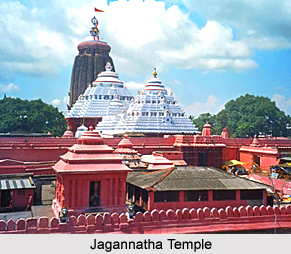
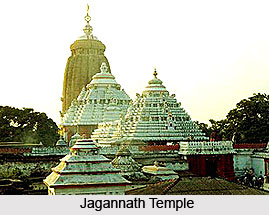
•Bimala (Pada Khanda) which is within the Jagannath temple of Puri, Odisha,
•Tara Tarini (Sthana Khanda) which is near Berhampur, Odisha,
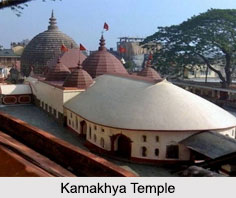
•Kamakhya Temple (Yoni Khanda) near Guwahati, Assam and
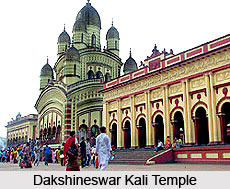
•Dakshina Kalika (Mukha Khanda) in Kolkata, West Bengal.
List of 51 Shakti Peethas
Apart from 4 major Shakti Peethas, there are 51 other famous Shakti Peethas recognized by different religious texts. Following are the different famous Shakti Peethas:
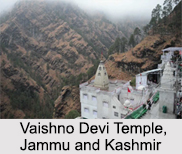
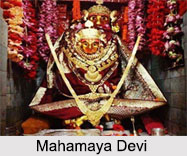
Jammu and Kashmir: It is said that Devi Sati"s throat and anklet has fallen at Shri Parvat and Amarnath area of Jammu and Kashmir. Here Devi Sati is worshipped as Mahamaya Devi.
Madhya Pradesh: It is said that Devi Sati"s elbow part has fallen in Bhairavparvat, Ujjain (Madhya Pradesh). Here Devi Sati is worshipped as Avanti Devi. Left buttock part of Devi Sati has fallen at the banks of Son River in a cave over hills near to Amarkantak. Right buttock part of Devi Sati fell on the source Point of Narmada River in Amarkantak, Madhya Pradesh.
Himachal Pradesh: It is said that Devi Sati"s feet and tongue part have fallen in Chintpurni, in Una District of Himachal Pradesh. Here Devi Sati is worshipped as Chhinnamastika Devi. Tongue fell at JwalamukhiTemple, Jwalamukhi Road Station. Both ears of Devi Sati have fallen at Karnat of Himachal Pradesh. Here Devi Sati is worshipped as Goddess Brajeshwari Devi. The right eye of Devi Sati fallen at Bilaspur district of Himachal Pradesh. It is famous as Naina Devi temple.
Maharashtra: It is said that Devi Sati"s chin part has fallen at Nashik, Maharashtra. Here Devi Sati is worshipped as Goddess Bhadrakali.
Meghalaya: It is said that Devi Sati"s left thigh part has fallen in Jayanti at Nartiang village in the Jaintia Hills district. This Shakthi Peetha is locally known as the Nartiang Durga Temple.
Tamil Nadu: It is said that Devi Sati"s back part has fallen in The Bhagavathy temple in Kanyakumari. Here Devi Sati is worshipped as Goddess Sarvani. The upper tooth of Devi Sati has fallen at Suchindrum, Tamil Nadu.
Rajasthan: It is said that Devi Sati"s wrist has fallen in Manibandh, at Gayatri hills near Pushkar. People know this temple as Chamunda Mata Temple.
Uttarakhand: It is said that Devi Sati"s lower teeth has fallen in Panchsagar near Lohaghat, Uttarakhand. Here Devi Sati is worshipped as Goddess Varahi.
Gujarat: It is said that Devi Sati"s stomach has fallen in Prabhas, in Junagadh, Gujarat. Local people call this temple as Kali Mandir. The heart of Devi Sati has fallen in Ambaji, Gujarat.
Uttar Pradesh: It is said that Devi Sati"s finger has fallen in Allahabad. Here Devi Sati is worshipped as Goddess Prayaga Madhaveswari. The earring of Devi Sati has fallen in Varanasi, Uttar Pradesh. Ringlets of hair of Devi Sati have fallen in Vrindavan, Uttar Pradesh. A part of tongue of Devi Sati has also fallen here.
Haryana: It is said that Devi Sati"s ankle bone has fallen at Kurukshetra town, Haryana. Here Devi Sati is worshipped as Goddess Bhadrakali.
Andhra Pradesh: It is said that Devi Sati"s cheeks part has fallen at the banks of Godavari River. It is locally known as Kotilingeswar Ghat temple. Right anklet of Devi Sati has fallen in Shriparvat hills, Andhra Pradesh. Hip Part of Devi Sati has fallen at Pithapuram, Andhra Pradesh.
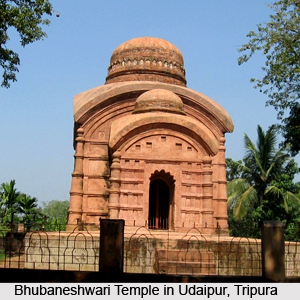
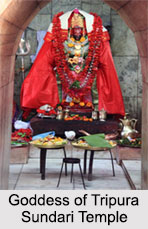
Tripura: It is said that Devi Sati"s right leg part has fallen at Udaipur, Tripura. It is known as Tripura Sundari temple.
Punjab: It is said that Devi Sati"s left breast has fallen at Jalandhar, Punjab. Here Devi Sati is worshipped as Goddess Tripurmalini Devi.
 Jharkhand: It is said that Devi Sati"s heart has fallen at Baidyanath Dham, Jharkhand. Here Devi Sati is worshipped as Goddess Jaya Durga.
Odisha: It is said that Devi Sati"s navel part has fallen at Jajpur, Odisha. It is known as Biraja Temple.
Bihar: It is said that Devi Sati"s Left Eye has fallen at near Munger town, Bihar. Here Devi Sati is worshipped as Goddess Chandika Devi.
Chhattisgarh: It is said that Devi Sati"s tooth has fallen here. It is known as Danteshwari Temple.
West Bengal: It is said that Devi Sati"s lips, left arm, portion between the eyebrows have fallen in Attahas Temple or Ashtahas village (district of Birbhum), in Bahula (Burdwan) and in Bakreshwar (Birbhum) respectively. Here Devi Sati is worshipped as Phullara, Goddess Bahula and Mahishmardini. Right toes part of Devi Sati has fallen at Kalighat. Here Devi Sati is worshipped as Kalika Devi. Pelvis of Devi Sati has fallen at on the banks of Kopai River. Devi Sati is locally known as Kankaleshwari Devi.
The Crown of Devi Sati has fallen at Kireet, Murshidabad. Right Shoulder of Devi Sati has fallen at Ratnavali. It is locally known as Anandamayee Temple. A part of left knee and left leg have fallen at Jalpaiguri and Howrah. It is locally known as Bhramari Devi and Ma Malai Chandi Temple. The necklace of Devi Sati has fallen at Sainthia, Birbhum. It is locally known as Nandikeshwari temple. The right wrist of Devi Sati has fallen at Ujaani, Burdwan. Left ankle of Devi Sati has fallen at Vibhash, Purba Medinipur. Great Toe of Devi Sati has fallen at Kshirgram, Burdwan.
Thousands of people visit these places of religious importance throughout the year. The legends behind the formation of the Shakti peethas are the major factor of drawing a large number of tourists. There are various beliefs associated with different Shakti peethas and devotees visit these places to get the divine blessings of the Devi Shakti in different forms.