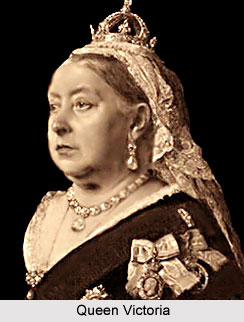
 Presidencies in British India, also known as Provinces of India, included certain important areas of jurisdiction which were under direct control of the British East India Company from the beginning of the British rule and after 1857. The 3 major Presidencies in British India were The Bombay Presidency, Madras Presidency and Bengal Presidency. The Agra Presidency was one of the 6 Northwestern Provinces of British India. These Presidencies were administered directly under the crown of Queen Victoria (and following monarchs) who ascended the British throne. There were a number of different ways by which British India was sought to be controlled. Beginning from East India Company ruling, when the country was basically looked as the eastern magical land of spices and brocades, and culminating in the strict regime of Queen Victoria, British India was administered by different modes.
The Divide and Rule policy of British Government, which proved to be a huge detriment to the natives as compared to the policy of equality followed for a career in the civil services. Since India is a huge country, the British rulers had made it a systematic policy to classify the country by the basis of village, town and city and thereby constantly redefine its boundaries.
Establishment and Development of Indian Presidencies
For a long time, the three port cities of Calcutta (now Kolkata), Madras (now Chennai) and Bombay (now Mumbai) were gradually growing in importance owing to their accessibility with other regions beyond the country. These three cities had thus witnessed an overwhelming presence of English population, making it their permanent domicile. As such, trading and commerce reached unprecedented heights, with working output adding up to both native and European workers. In this regard, Calcutta, Bombay and Madras were declared Presidency towns under British Indian rule. Presidencies during British India possessed an enormous periphery line, with the erstwhile princely states being included within them. These Presidencies during British India reflected the prototype of establishment of British trading factories and forts in and around 17th and 18th centuries. The first trading post of Surat was founded during early 17th century, only to be deserted later for greener pastures. This monumental event was succeeded by settlements on the Coromandel Coast, in which Madras seized prominence and was henceforth named the Madras Presidency.
The trading post in Bengal, headquartered in Calcutta, became the focal point of the Bengal Presidency, the seat of the Governor-General of India, who reigned over the East India Company`s Indian ownerships. The island of Bombay which was triumphantly gained as part of the dowry in a royal union turned out the centre of operations for the Konkan coast and the heart of the Bombay Presidency. Each of the Presidencies additionally possessed their respective Presidency armies- the Bengal Army, Madras Army and Bombay Army.
The Presidencies in British India had actually descended from the declining Mughal Empire, and the idea of sovereignty. However, these old ideas were completely done away with and the presidency towns started to be governed in a rather westernised system. Voyages to and from England, since the 17th century was a regular feature in Bombay, Calcutta or Madras as the English further honed their skills on how to colonise and use native markets for fostering their own economic growth.