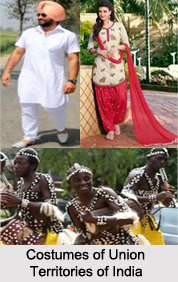
Traditional dresses of the states of India vary with region, religion and community. Every state of India has its own culture, customs and standard of living to follow and to celebrate fairs and festivals with these traditions. Festivals are the best way to explore India and its culture, which is unique in every state. The traditional dresses of the states of India are marked by many variations; the wide variety of conventional Indian clothing includes sarees, salwar kameez and ghagra choli.
Traditional Dresses of the North Indian State
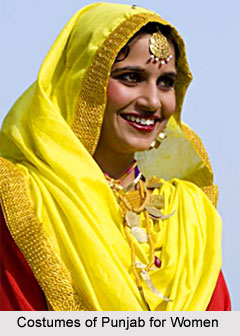
The primary fibre used in North India is cotton. However, since this part of India experiences winter, woollen clothes are quite common as well. The traditional dresses of the state of Jammu & Kashmir are made of wool, silk and cotton along with intricate embroideries. In these mountainous regions, Pheran, the traditional gown, is the most popular form of dressing among both men and women. The traditional dresses of the state of Himachal Pradesh are different for each community, be it the Hindu Brahmins, the Rajputs, and the tribal people. Punjab is famous for the Phulkari, traditional attire which literally means flower-work, along with shawls that are worn with a tight-fitting choli and ghagra. The dress materials for Punjabi culture that stands out are salwar kameez, saree and sharara. The traditional costumes of Delhi are churidar or salwar-kameez-dupatta for women and kurtas-pyjamas for men. In the states of Rajasthan, Uttar Pradesh, Bihar and southern Haryana and Gujarat, the traditional dress of the women is ghagra choli and odhna. It is said that the width and the number of pleats in the ghagra symbolizes one`s prosperity. Available in a variety of bright colours, the state of Rajasthan is famous for tie and dye prints or bandhani prints. The traditional dresses of Rajasthani women display a colourful look with their colourful motifs and prints in tie dye. Rajasthan traditional dresses of women are vibrant and extremely well-suited to the climatic conditions of the desert region. Pagri is worn by the men in various regional styles and is the symbol which shows one`s status and the respect in which one is held. In urban centres and as well as rural areas western influence can easily be seen nowadays. Though the modern influence and urbanization is also reflected in the changing attire of the state, the traditional dress continues to exist in perfect harmony with modern ways of dressing.
 Traditional Dresses of the North East Indian State
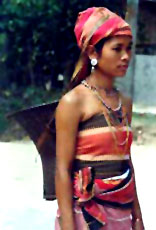
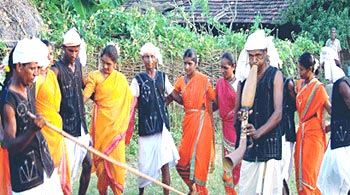
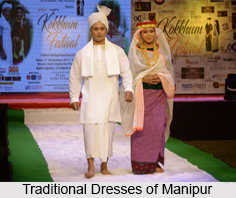
The traditional dresses of the North-East Indian states are quite unique. Ankle length skirts, jackets and traditional caps are a huge draw for the tourists. The traditional dresses of the Indian state of Mizoram bear conspicuous resemblance with that of the other hill-states of the Northeast. Puanchei, the gorgeous attire of Mizo girls is a must wear during weddings and festivals. Traditional dresses in the state of Meghalaya show the ethnicity of the tribes namely the Garos, Khasi and the Jaintias. The women drape a short cloth round the waist, while the men put on a loincloth. Muga or the golden silk fibre of Assam constitutes the lion"s share of the costumes of Assam. Traditional dresses of the state of Assam are called mekhla chadar. Traditional dresses of Nagaland mainly include shawls which are an extensively used item of the state. In the north eastern state of Arunachal Pradesh, the women of the Buddhist Mompa tribe wear quilted or plain jackets over sleeveless chemise which is then attached to the waist with a long and narrow cloth strip.
Traditional Dresses of the East and Central Indian State
Sarees are common in the eastern and central part of India. The traditional dresses of West Bengal reflect the state"s cosmopolitan culture. For the men in West Bengal, the traditional garment is dhoti and punjabi. The lungi is another variation of the dhotis worn by men in West Bengal. In Bengal, a section of the saree is wrapped around the waist and the remaining portion is swathed over the shoulder. The traditional dresses of Bihar have the women mostly wear sarees and men dhoti and kurta.
 The traditional dresses of Madhya Pradesh show multiplicity in various aspects. The majority of the people of Madhya Pradesh attest dhoti as their traditional costume. Safa, a kind of turban, is the headgear, which is the common feature of Madhya Pradesh"s costume. The womenfolk of Madhya Pradesh dress themselves in lehenga and choli. The delicate chanderi sarees and the Bandhani cloth, locally known as Bandhej are produced on a huge scale in Maundsar, Indore and /4/ujjain. Other than this the maheshwari sarees produced in Madhya Pradesh are hand-woven, and they are quite renowned all over India.
Traditional Dresses of the West Indian State
The traditional dresses of Maharashtra contains a 9 yard saree called Nauvari for the women, and dhoti and shirt as the traditional attire of the men folk. Paithani sarees happen to be the treasured creation of Maharashtra"s textile-industry. They also wear bandi over the shirt and turban, known as pheta and pagri. The traditional dresses of the Rajasthani people are colourful, gaudy, bright and elegant.
 Traditional Dresses of the South Indian State
South India enjoys a warm climate; hence the traditional dresses for this state are primarily made of cotton and are light. Sarees for women and dhoti like attires for men are quite common. In fact states like Karnataka, Tamil Nadu and Kerala are renowned for their silk and cotton sarees. The traditional dresses for the state of Karnataka consist of regal silk sarees. Bengaluru and Mysore are the epicentres of silk-industries in South India. The Kanjivaram or Kanchipuram silks, of Kanchipuram in Tamil Nadu, dazzle the eye with the rich texture, colours, and fabulous designs.
Indian Traditional Dresses
The traditional dresses of the states of India vary widely in accordance to the region and are steeped in local culture, tradition, religious beliefs and their customs.