Introduction
The Kurmi is a Hindu farming caste in India and Nepal. They are mostly found in the lower regions of the Indo-Gangetic plains. As per Hinduism, Kurmis is the name of one of the castes or Jatis of the Hindus. The Kurmis are known as the chief ancient agricultural caste of India. The Singraur, Umrao, Chandrakar, Gangwar, Kamma, Kanbi, Kapu, Katiyar, Kulambi, Kulwadi, Kunbi, Kutumbi, Naidu, Patel, Reddy, Sachan,Verma and Vokkaliga all belong to sub-castes of Kurmi. Kurmis are regarded as the descendants of some of the earliest Aryan immigrants.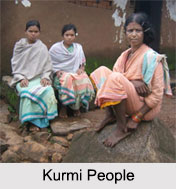
Kurmis are the people who are described as a yellowish-brown coloured native, of an average height, regular build and good looks. They are the mixture of aborigines. The Kurmis can be found throughout India, from Punjab to Bengal and even in central regions in the states of Chhattisgarh. The Barwar community of Uttar Pradesh and Bihar are descendants of the Kurmi. Kurmis generally speak in Kurmali, Hindi, Chattisgarhi, Marathi, Konkani, Oriya, Telegu and other south Indian languages.
Etymology of Kurmis
There are a number of theories about the etymology of the term Kurmi. It may be derived from an Indian tribal language or perhaps a Sanskrit compound term "krishi karmi". Some scholars suggest that the term may have originated from the word ‘kṛṣmi,’ which translates to "ploughman." Meanwhile, educationists trace the Bengali word ‘kuṛmi’ back to the Sanskrit term ‘kuṭumbin,’ signifying someone engaged in cultivating the land. The name has its origin in Sanskrit Language ‘Krishi,’ which means cultivation or from the word Kurma, which means the tortoise.
History of Kurmis
Kurmi community is said to be a sub-caste of the Kshatriya Varna. References regarding the origin of Kurmi are also found in Indian mythologies. Lord Rama had two sons Luv and Kush. The successors of Luv came to be known as lavyas and they settled in the region of Kashmir but later moved towards different parts of India. On the other hand, the successors of Kush later came to be called as Kushwahas, who settled in northern plains of the country. The Kurmi community used to be the governing bodies in the regions of Maharashtra, Sindh, Gujarat, Kashmir, and in some parts of Pakistan before the Aryan invasion. Kurmi community largely belongs to the Chhattisgarh and Jabalpur divisions.
Few Kurmis belong to Kashyap gotra, as suggested by the scholars. Kurmis are a functional caste just like the Kunbis. In some regions like Bihar, they show traces of Aryan blood. The Kurmis largely resemble the features of the Dravidian tribes. Further, some scholars suggest that it is quite difficult to distinguish a Kurmi people from a Santhal Tribe or Bhumij. The Kurmis were well-known as the cultivators and market gardeners of Mughals. The Muslim leaders offered the Kurmi people low-priced rental rates for clearing the jungle and cultivating it.
In 18th-century north India, the independent peasant farm remained a vital feature of agrarian life across many regions. However, in certain areas, the interplay of environmental hardships, political shifts, and demographic pressures heightened the dependence of peasant cultivators like the Kurmi. For instance, in the Benares division, which fell under the British East India Company's revenue jurisdiction in 1779, the devastating Chalisa famine of 1783, coupled with the Company's aggressive taxation policies, significantly diminished the socio-economic standing of many Kurmi farmers.
As the 19th century progressed, and well into the early 20th century, the elite landed classes continued to experience economic stress. This strain often translated into increasing demands for unpaid labor from non-elite cultivator groups, including the Kurmis. In response to these growing pressures, the Kurmis began to organize. The first caste association was established in 1894 in Lucknow, initially to protest discriminatory practices in police recruitment. This movement soon expanded in Awadh, seeking solidarity with other agrarian communities such as the Patidars, Marathas, Kapus, Reddys, and Naidus under the shared identity of the Kurmi name.
This collective push for recognition led to a campaign during the 1901 census, urging Kurmis to be identified as Kshatriyas. This movement gained further momentum with the creation of the All India Kurmi Kshatriya Mahasabha in 1910. Parallel to these caste-based mobilizations, newly emerging farmers’ unions known as Kisan Sabhas began to take shape. Comprising cultivators and pastoralist groups like the Kurmi, Ahir, and Yadav (Goala), and inspired by reformist leaders such as Baba Ram Chandra and Swami Sahajanand Saraswati, these sabhas openly criticized the moral authority and ineffectiveness of traditional Brahman and Rajput landlords.
By 1930, Kurmis in Bihar had joined forces with fellow agricultural communities like the Yadavs and Koeris to participate in local elections. Though their initial foray was unsuccessful, the collaboration led to the creation of the Triveni Sangh in 1934—a political platform claiming nearly a million dues-paying members by 1936. However, internal challenges and external competition, particularly from the Congress-supported Backward Class Federation and co-option of Kurmi leaders by the Congress Party, hindered the Sangh’s long-term effectiveness.
In the decades that followed, especially between the 1970s and 1990s, Bihar saw the rise of numerous caste-based militias amid escalating tensions between landlord groups and left-wing extremist movements. Among them was the Bhumi Sena, composed largely of young Kurmi men, highlighting how caste dynamics, class conflict, and agrarian unrest continued to intertwine well into the modern era.
Culture of Kurmis
The Kurmis are farmers apart from Punjab where they are a landless community who mostly work as gardeners for private and government institutions. They eat seasonal vegetables, fruits, milk and dairy products. Alcoholic drinks are generally not allowed. Kurmis are Hindus although some of them are Buddhists and Jains. Within the Kurmi community, there are different sub-castes and surnames. Some prominent examples include Patel (in Gujarat), Kurmi (in Assam, West Bengal), Chandrakar, Jaiswal, Patanwar, Niranjan, and Chaudhary.
Marriages are generally ruled by the law of sub-group and clan. Marriages are arranged by elders of the families. Child marriages are still fairly common in some rustic areas of Bihar and Uttar Pradesh. In case of child marriage the gaona which means the bride's leaving to the husband's house takes place after she attains puberty. Glass bangles, sindur and a nose-ring are severely observed as symbols of marriage. The Kurmis have a prosperous verbal tradition of myths and folktales passed down over the generations. Women sing folk songs on favourable occasions like marriage and childbirth. The musical instruments which are usually used include the dholak, a barrel-shaped double-headed drum and the manjira with a pair of small cymbals. The All India Kshatriya Kurmi Mahasabha is the Kurmi’s nationalized level council that looks after their wellbeing.