 Batta is an Anglo-Indian military phrase, derived from the Kannada term bhatta (implying for rice in the husk form). It stood for a special allowance of pay made to officers, soldiers, or other public servants in the field. The amount and circumstances of batta given were composite and constituted a substantial amount of the pay received by soldiers. Arguments over allowances led to cases which turned into an almost mutinous affair. With the inclusion of the British East India Company`s military forces into the Crown`s army, much of the Company`s allowance of batta was lost, as the British army did not receive it.
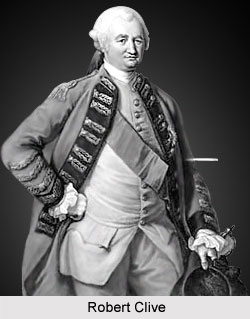
On 1st January 1766, in a meeting of the Bengal Select Committee, Robert Clive (1725-1774) terminated the payment of double batta to the officers of the Bengal Army.
While at Murshidabad on 1 May, Lord Clive learned from Brigadier-General Sir Robert Fletcher (c. 1738-1776) that officers of the rank of captain and below were to resign on May 15. Juxtaposed to this news was that of an army of 50,000 to 60,000 Marathas moving toward Kora. Clive responded by writing to the Governments of Madras and Bombay to have any available officers sent to Bengal.
On 15th May, Lord Clive arrived at Monghyr, home of Fletcher`s First Brigade. Here, he restored order, forwarded all resigning officers to Calcutta and sent for replacement officers from Madras. With this decisive action, the brigades at Patna and Allahabad fell into line. Fletcher and a few other ringleaders were sacked.
On 12th November, the Company signed an agreement with the Subahadar of the Deccan for possession of the Northern Circars of Rajahmundry, Ellore, and Mustephanagur for an annual tribute of five lakhs. Later, Chicacole (present day Srikakulam, Andhra Pradesh) and Mustephanagur were included for an additional two lakhs each.
During the passing years of 1766-67, Parliament initiated an inquiry into the affairs of the East India Company at the instigation of Lord Chatham (1708-1778). His intent focused on acquiring a portion of the newly obtained Bengal revenues received from the 1765 grant of Diwani to the Company. On March 20, 1767 a Parliamentary Committee of Inquiry began its hearings. As the Commons moved closer to threatening the Company`s charter rights, negotiations on April 28 and May 2 led to a settlement by which the Company would annually pay the Government 400,000 pounds. The Company also would retain its control of the revenues of Bengal, Bihar and Orissa.
On 26th January, Henry Verlist (d. 1785) assumed the duties of Governor of Bengal.
In April 1767, the British Government and the Company negotiated a lowering of the tax on tea to create new and expanded markets for China tea. The inland duty of Rs 1. per pound of tea was removed entirely. The twenty-five per cent duty on tea re-exported to North America and Ireland were also removed.