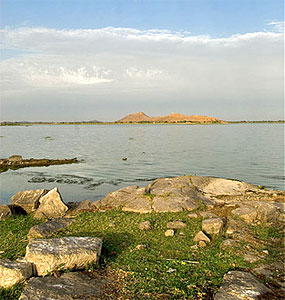
The Godavari River has ample tributaries and distributaries that flow in the Godavari River Basin. Some of the main rivers flowing in the Godavari river basin are as follows -
After the Ganges and the Indus Rivers the Godavari River is a sacrosanct river in India. It originates in the Western Ghats near Trimbak in Nashik district of Maharashtra. It then flows in the east across the Deccan Plateau traversing through the states of Maharashtra and Andhra Pradesh. It flows in a southeastern direction in order to evacuate in the Bay of Bengal through two mouths. The major tributaries of the Godavari are Indravati River, Manjira River, Bindusara River and Sabari River. It travels a distance of 1,465 km. before draining into the Bay of Bengal.
The
Kolab River is the tributary of River Godavari and flows in the Koraput districts. The Kolab originates from the Sinkaran hills of the Eastern Ghats in Koraput districts. The river covers a catchment area of 20400 sq. kms. The
Gupteswar Temple is an important pilgrimage along the river. The
Indravati River is a tributary of the Godavari River, located in central India. The river rises in the Eastern Ghats in Orissa and flows westwards to join the Godavari, thus forming the boundary between Maharashtra and Chhatisgarh states at some places. Most of the River Course of Indravati is through dense forests of Bastar. The famous `Chitrakoot` falls forms on Indravati River, some 40 km from Jagdalpur in Chhatisgarh.
The
Bandiya River is a tributary of Godavari, flowing in Gadchiroli district of Maharashtra.
Pranhita River flows on the edge of Gadchiroli district in Maharashtra and Adilabad district in Andhra Pradesh. The name Pranhita is derived from the nature of combined flow of the rivers
Painganga and
Wainganga. The Wainganga river originates about 12 Km from Mundara village of Seoni district in the southern slopes of the Satpura Range of Madhya Pradesh, and flows south through Madhya Pradesh and Maharashtra in a very meandering course of roughly 360 miles.
Sati River is one of tributaries of
Godavari River and flows in the district of Gadhchirli.
Khbragadi River is one of tributaries of
Godavari River.
Chulband River is one of tributaries of Godavari river. Other than the
Kanhan River, the Pench, Jam, Kulbehra, Shakkar and Doodh rivers also flow in the region of Sausar in Madhya Pradesh. Kanhan river flows in the Southern direction through the western parts of Chhindwara Tahsil and converges with the
Wenganga river.
Nag River is a tributary of
Godavari River. The
Pench River is a tributary of
Godavari river and flows in the border areas of Chhindwara and Seoni Districts in Maharashtra.
Kolhar River is one of tributaries of River Godavari, flowing in Nagpur. The
Sur River is a tributary of Godavari River and flows in the districts of Bhandara and Nagpur in Maharashtra.
Bawanthadi River starts it journey from the Kurai plateau of Seoni District in Madhya Pradesh. Eventually, the river enters Bhandara District of Maharashtra by flowing towards south and functions as an interstate boundary between two states all along its middle course.
The
Wagh River is also known as the Daman
Ganga River in Goa.

The
Wardha River is the distributary of Godavari and a significant tributary of Pranhita River. The
Penganga River is also known as the Painganga River and is considered as the chief river of the Yavatmal district in the Maharashtra state in India. Geographically Vidarbha lies on the northern part of Deccan Plateau and the
Vidarbha River lies in this hilly terrain.
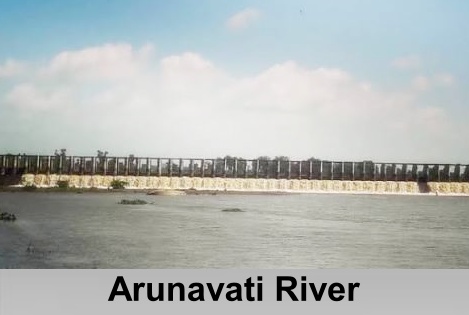
Arunavati River is one of the chief tributaries of
Penganga River. The river flows across Darwha and certain areas of Kelapur.
A principal tributary of the Painganga River, the Adan river flows in the state of Maharashtra. The Adan River originates in the Washim district of Maharashtra (India) and flows across a curve, north, east and south, and finally converges with the Painganga River. The river Kayadhu on entering the district from the northwest turns at a right angle flows northeastwards under the influence of a similar turn of the spur and joins the Penganga. The
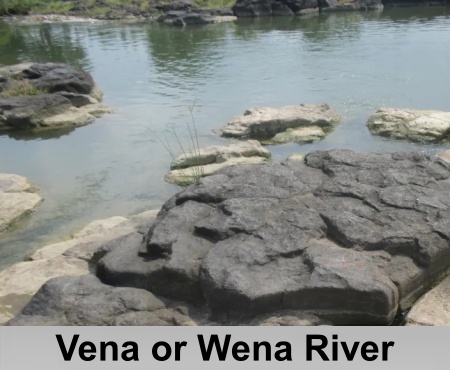
Vena River play a vital role in agriculture of Nagpur. The crops grown in the territory have a strong bearing on this river.
Bor River is one of the tributaries of Godavari River in India. Yashoda River is one of the tributaries of Godavari River in India.
Dham River is one of the tributaries of Godavari River in India.
Bhakalee River is one of the tributaries of Godavari River in India. Ramganga River is the most important factor for the maintenance of Jim Corbett Park. In fact without this river, there would be no Corbett Park established. This river is the tributary of Godavari and the largest of the precious few persistent sources of water in the Park.
The start of the
Bombala River is in the Brown Mountain area with other rivers emptying into it. Charghad River, Maad River, Manjra River,
Manhaad River, Lendi River and Terna River are some of the tributaries of Godavari River flowing in India. The
Tavarja River is a tributary of Godavari and flows through the Latur district of Maharashtra. The
Kelna River flows in the administrative district of the Indian state of Maharashtra.
Bindusara River is one of the tributaries of
Godavari River in India.
The
Karanja river is a distributary of Godavari River with mythological importance. The location of
Karanja River co ordinates latitude 18degree 4` 60 N and longitude 77degree 4` 60 E. Karanja river basin covers around 2422 square kilometers. Devani River is one of the tributaries of Godavari River in India. The
Kadakpurna River flows through the district of Parbhani, which was previously known as Prabhavatinagar. This river plays a significant role in the lifestyle of the people residing in this region. The Dudhna River flows in the district of Parbhani, which lies in the east central part of Maharashtra. The river flows parallel to the Hyderabad railway line that is about 16 km south of the Dudhna River.
The
Kapra River flows in the hydrographic soil, through the state of Maharashtra. This tributary of Godavari river coordinates from the latitude 19degree 22` 60 N to longitude 76degree 54` 0 E. Kham River is one of the tributaries of Godavari River in India.
Shivna River is an important tributary of Godavari, flowing in the state of Rajasthan. In old maps this river is written as SAU and SEU. Pravara River is an important river in the western parts of Maharashtra. It is one of the main tributaries of the Godavari River. The Mula river is an important river in India that originates at the Mulshi Dam in Taluka Mulshi in Pune district in the Western Ghats province of the Indian state Maharashtra.
Kadwa river is one the most important tributaries of
Godavari River. The Nandur Madhmeshwar Dam lies at the convergence point of Godavari and
Kadwa Rivers. The Darna River rises from the highlands of the Sahyadris; it is one of the major tributaries of Godavari. The Darna River flows through an area of hydrographic soil.

 Godavari River is considered to be one of 7 sacred Indian rivers. It is India`s second longest river. Godavari River also has the distinction of being the largest river in the Indian peninsula considering its length, catchment area and discharge. It has been serving as a life giver and sanctifier for most of the towns in Andhra Pradesh and Maharashtra. Pushkar Mela, a major bathing festival is held on the banks of the river, after every 12 years. One of the ships of the Indian Navy called INS Godavari has derived its name from the name of the river.
 River Godavari is under the serious threat as a result of the growing civilization and industrialization. The river has been drying at a disturbing rate due to the pollution fashioned by the factories. The main reason behind the pollution of Godavari River is the small Nakavaggu rivulet that joins the Manjira, a tributary of the Godavari. Nakavaggu rivulet is not a source of life in its course. The rivulet is bounded by the extremely productive agricultural land, which is polluted by a huge number of industries located near the twin cities of Secunderabad and Hyderabad. However the 72 industries in the Patancheru Industrial area dumps the chemicals and waste into the water and thus changes the geology of the soil vastly. Some of the major diseases such as lung cancer, leukemia, and liver cancer in the region are due to this water pollution. The government of India has been constantly taking steps to save the river water from further pollution.
 The Godavari River is one of the major waterways in central India; it originates in the Western Ghats and flows eastwardly across the Deccan Plateau between the states of Maharashtra and Andhra Pradesh, then crossing Andhra Pradesh it turns to flow in a southeast direction until it finally flows into the Bay of Bengal through two mouths. Its tributaries are Indravati River, Bindusara River, Moosi River, Manjira River and Sabari River.
 The Godavari River rises near the Trimbak in the district of
  Legends related to Godavari River
 Tributaries of River Godavari can be classified as the left bank tributaries which include the Purna, Pranhita, Indravati and Sabari River and the right bank tributaries Pravara, Manjira and Manair River. The left bank coverings nearly 59.7 percent of the total catchment area of the basin and the right bank tributaries contribute 16.1 percent of the basin. The Tributaries of River Godavari are responsible for the supply of water in the states of
  The Godavari is a river that runs from western to southern ends of India and forms one of the largest river basins in India. With a length of 1465 km, it is the second longest river in India, second to
  A legend has it that the
  India supports about 10% of the world`s Biological Diversity, with just 2% of the worlds land area, thus making it the seventh richest bio-diversity country in the world. This difference bestows a great responsibility on the government with the responsibility to protect and conserve the rich floral, faunal & ecological diversity of Godavari river basin. The protection is well carried out by constructing a network of sanctuaries and national parks, which cover areas of ecological and biological importance. The State of Andhra Pradesh is located strategically and its geographical variation is thought to be as one of the rich bio-diversity states in India.
 The vegetation found in the state is largely made of dry deciduous style with a mixture of precious trees like Teak, Dalbergias, Pterocarpus, Terminalias, Anogeissus and so on. The hills of Eastern Ghats add highly to the biological diversity and provide centers of endemism for plants, birds and lower forms of animal life. The varied environment harbors a assortment of fauna, including tiger, panther, sambar, wolf, cheetal, wild dog, chowsingha, black buck, hyena, sloth bear, nilgai, gaur, chinkara and a number of birds and reptiles. The long sea coast offers the inhabiting place for sea turtles, the back water of Pulicat lake are the feeding and breeding grounds for flamingo and grey pelican, the estuaries of river Godavari and Krishna initiates the growth of rich mangrove forests with fishing cat and otters as key stone species.