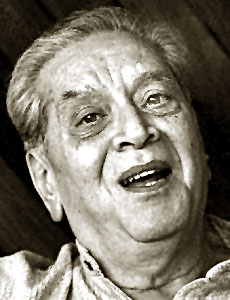
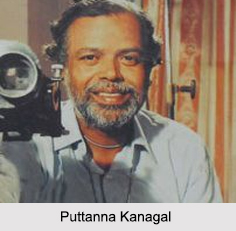
 Well known for psychological expressionism, Puttana Kanagal was fondly called the Chitra Brahma or the God of Films. He was a director, producer and a screenwriter, who made movies which were ahead of its time and mostly centred on women.
Early Life of Puttanna Kanagal
Born on 1st December, 1933 in Kanagal, a village in the erstwhile Kingdom of Mysore, Puttana Kanagal was born to Ramaswamaiah and Subbamma. Growing up, Puttana did not hail from a wealthy background and thus had to strive hard and endure hardships to get a decent livelihood. He has worked multiple jobs and done menial labour like working as a cleaner and a salesman and later even as a teacher. His job as a publicity boy brought him closer to theatre and subsequently to cinema.
Career of Puttanna Kanagal
Puttanna Kanagal started his career as a publicity boy and was drawn to the craft of independent filmmaking after a stint in theatre. He has worked with film director and producer B. R. Panthulu as his assistant. Later, Kannagal had assistants including Tamil directors like S.P. Muthuraman, P. Bharathiraja and T.S. Nagabharana.
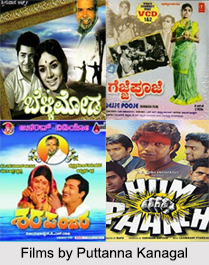
Puttana"s movies were like "bridge films" that connected the art and commercial cinema, the subjects of his movies were offbeat and taboo, generally having women as the main protagonists. His first directorial venture was the 1964 Malayalam movie School Master, a remake of his mentor B. R. Panthulu`s Kannada classic of the same name. He has made movies on several novels, the 1969 Kannada film Gejje Pooje based on a novel of the same name by M. K. Indira is considered a landmark film. His others movies like Belli Moda, Poochakkanni and Sharapnjara are based on the works of Triveni. Puttanna Kanagal has directed a handful of films in his lifetime in various languages from Malayalam, Tamil, Telegu to Hindi language. He had directed a total of 24 Kannada films, all of which had strong themes filled with unprecedented direction.
 He has introduced several actors and actresses to the Kannada film industry like superstar Rajinikanth, Kalpana, Aarathi, Leelavathi, Jayanthi, Padma Vasanthi, Srinath, Vishnuvardhan, Ambarish, Jai Jagadish, Chandra Shekhar, Gangadhar, Shivaram, Vajramuni, Sridhar, Ramkrishna and Aparna, who was a television and radio anchor. He provided all these people a platform to showcase their talents and make their mark in the entertainment industry.
Puttanna Kanagal as a Visualiser
The period between 1960s and 70s was the time of the New Wave Cinema movement which spread across India, particularly in the Indian states of Karnataka, West Bengal and Kerala. The plots in Puttanna"s movies were based on popular Kannada novels that revolved around strong characters with distinct themes. He added mandatory songs and emotions to distinguish from alternate cinemas. His mastery over symbolism is quite remarkable and has been effectively used in almost all his movies. In general, his movies contained about 4 to 5 songs. Puttanna had a strong sense of colour and imagery and was considered a pioneer in picturising songs. The songs in his movies reflected the inherent mood of the film. He was well known for his effective use of freeze shots and negative images to heighten the introspective effect of key scenes.
The films of Puttanna Kanagal saw women in new light and the subjects of his films were often bold. Due to their innovative ideas Puttanna Kanagal`s movies are considered some of the finest Kannada films even today. Till date, therefore, he remains one of the best Kannada directors. Some of the films that he has made in various languages are as follows:
Films in Kannada language:
•Belli Moda (1966)
•Mallammana Pavaada (1969)
•Kappu Bilupu (1969)
•Gejje Pooje (1969)
•Karulina Kare (1970)
•Sakshatkara (1971)
• Sharapanjara (1971)
•Nagara Haavu (1972)
•Edakallu Guddada Mele (1973)
•Upasane (1974) (The Devotion)
•Katha Sangama (1975)
•Shubhamangala (1975)
•Bili Hendthi (1975)
•Phalithamsha (1976)
•College Ranga (Kaaleju ranga) (1976)
•Paduvaaralli Pandavaru (1978)
•Dharmasere (1979)
•Ranganayaki (1981)
•Maanasa Sarovara (1982)
•Dharani Mandala Madhyadolage (1983)
•Amrutha Ghalige (1984)
•Runamukthalu (1984)
•Masanada Hoovu (1984)
•Saavira Mettilu (2006)
Films in Telugu language
•Pakkalo Ballem (1965)
•Palamanasulu (1968)
•Iddaru Ammayilu (1972)
Films in Tamil language
•Teacharamma Thediva (1968)
•Sudarum sooravaliyum (1971)
Films in Hindi language
•Hum Paanch (1980)
•Zehreela Insaan (1974)
Awards of Puttanna Kanagal
In his lifetime, Puttanna Kanagal has received 3 Filmfare Awards South, 3 National Film Awards for his movies Gejje Pooje and Sharapanjara, and multiple Karnataka State Film Awards. The Karnataka state honours film directors and various personalities with Puttanna Kanagal Award in his memory every year during the Karnataka State Awards function.
Personal Life of Puttanna Kanagal
Puttanna Kanagal was married at a young age to Nagalakshmi and had 5 children. Later in 1970s, he married his protégé and leading actress, Aarathi and had a daughter named Yashaswini, who was born in 1978. However due to creative differences Puttanna and Aarathi separated in 1981. He was 51 years old when he died on 5th June, 1985 in Bengaluru, while in preparation of the movie Masanda Hoovu.