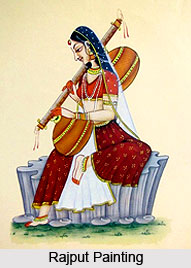
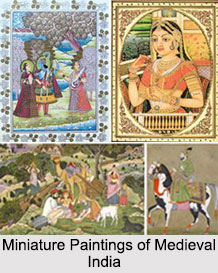
Miniature painting in Rajasthani developed from the Marwar - Mewar area. The origin of miniature paintings is rooted in the history of Rajasthan. However a definite form of miniature painting cannot be traced. The numerous invasions in Rajasthan have left an indelible mark on its history and culture. The miniature paintings reflect this fact too. Miniature paintings, as a result, have been divided into various forms of school. The schools are Jodhpur, Jaipur, Mughal, Kangra and Mewar.
Influences on Miniature Paintings in Rajasthan
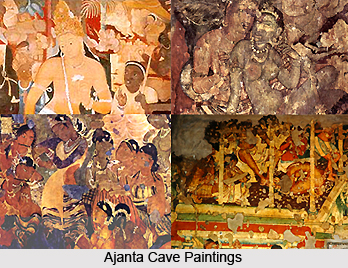
Rajasthani miniature painting developed from the Marwar-Mewar area, being started as design to Jain manuscript in the 15th century. This is why these paintings demonstrate booms of the art styles used in the Ajanta murals and Gujarat Jain art. The Jain art influence reached its peak in the 1555 AD with Bhagavata paintings and went on to encourage many diverse art styles in the area.
The Mughal influence was pleasantly blended with Indian sensibilities to portray Indian culture. Marwar art symbolizes a large amount of original Rajasthani art. The miniature artwork is very bright with the use of thick lines, clear facial expressions, sharp features and muscular figures depicted with bright tones. Kota paintings depicted the stories of Lord Rama and Krishna which were influenced by Bundi paintings.
Themes of Miniature Paintings in Rajasthan
Themes of Miniature Paintings in Rajasthan are Rama-Katha, KrishnaÂlila, Mahabharata and other Vaishnava themes. Other themes are like Baramasa, celebrations, hunting, wild life and lively nature consisting of trees waving like a stream. Its representation of beauty, charm and different emotional situations are greatly aesthetic.
Materials Used in Miniature Paintings of Rajasthan
The colours used are totally natural, created from naturally occurring minerals, plants, conch shells, and even costly stones. Gold and silver are used for decorative touches. Because of the small shades of the art form, there is huge concern in the material used for paint and outside is to be painted.
Different Schools of Miniature Paintings in Rajasthan
The Jodhpur School of miniature painting has the very essence of Rajasthan. Relaying the folklores through its art work it is instrumental in upholding the Rajasthani culture to the outside world. The tourists will be surprised to see the intricate art work. These paintings are made by hand and depict love scenes of legendary lovers like Dholu and Maru on camel back. A lot of gold and stone colours are used to paint them.
Another school of miniature painting that evolved as an influence was the Mughal School. Once upon a time, the kingdoms of Amer, Jaipur, Bairat and several others had good relations with the Mughals. Hence the outcome of these two influences popularized love scenes and the Mughal royal court as their main theme. These were painted on silk by using golden and stone colours. Here the used colours are made from indigo, precious stones, silver, vegetables, minerals and pure gold.
Another popular school of miniature painting was the Bani Thani paintings. Exaggerated features are to be found in this absolutely different form of painting. This form of painting has derived its name from the singer poet of Nagari Das`s (Raja Sawant Singh) court, Bani Thani.