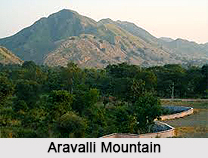
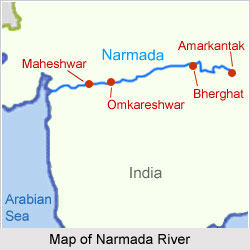
The Southern Plateau is the oldest part of India that in turn is divided into several large or small plateaus. The interiors of the plateaus are marked by a number of rivers, which flow in broad, flat valleys. A number of isolated hillocks are also found in the interior, but they are more numerous near the hills bounding the plateaus. The Narmada River divides the plateaus region into two portions. The northern portion is known as the Malwa Plateau and the Southern part is known as the Deccan Plateau. To the west and northwest of the Malwa Plateau there are the Aravalli Hills. The important rivers, which cross the Aravallis, are the Mahi and the Luni flowing into the Arabian Sea and the Chambal with the Banas flowing into the Yamuna. Towards the south the Malwa plateau is bounded by the Vindhyas whereas towards the northeastern corner of this plateau are the Bundi hills.
Towards the North of the Deccan Plateau there are the Satpura hills, whose highest point is the Mahadeo hills on which Pachmarhi is situated. These hills continue towards the East where they meet with the hills of the Chhota Nagpur plateau. Towards the North of the Satpura there lies the valley of the Narmada and towards the south that of the Tapti. The Western flank of the Deccan tableland is guarded by the Western Ghats. Their steep slope is towards the sea. The Western Ghats are a continuous mass running north south. Access to the plateau is only through two passes namely, the Bhor Ghat and the Thai Ghat.
Towards the East of the tableland there is the Eastern Ghats, which are a series of low hillocks. In the extreme south they join the Nilgiri Hills. Towards the northeast, they join the hills of the Chhota Nagpur plateau. The Eastern Ghats leaves a broad coastal strip. The physical features of the Southern Plateau have resulted partly from the very old mountain systems that remain exposed above the vast lava deposits and partly from the lava deposits themselves that buried the old rocks to a great thickness covering the major part of the peninsula into a big table-land. The Peninsula is a region of great geological stability and is remarkably immune from seismic disturbances of any intensity. The plateau is poor in forest resources yet it is rich in minerals.
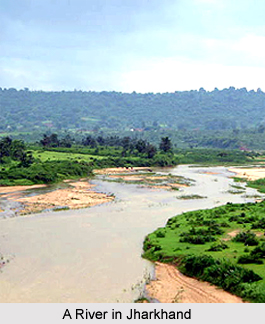
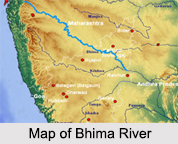
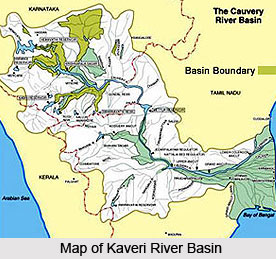
In the Southern Plateau the Narmada and the Tapti drain the northwestern portion and escape into the Gulf of Cambay. The other four great rivers of the Peninsula namely the Mahanadi, the Godavari, the Krishna and the Kaveri flow eastwards and fall in the Bay of Bengal. The rivers of the Deccan are generally rain fed and therefore, fluctuate very much in volume. The surface of the plateau gently slopes from west to east.
The Southern Plateau is surrounded on all sides by low plains. Towards the north is the Sutlej-Gangetic plain, towards the east, the Gangetic plain and the eastern coastal plains and towards the west, the western coastal plain, which joins the Thar Desert plains.