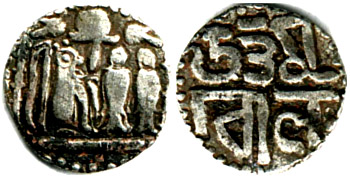
Rajendra Chola I, son of Rajaraja Chola I, was the next ruler who ascended the throne of the Chola Empire after his father`s rule. He occupies a special place in the history of Tamil Nadu and in that of the whole of South India. He was a great ruler and even a mighty conqueror. His outstanding military achievements started from the time when he was a prince. Rajendra Chola assisted his father in his military conquests of Kerala and the Western Chalukyas of ancient Karnataka. Later, when he ascended the throne, he waged extensive battles to expand the frontiers of his large empire.
Early life of Rajendra Chola I
Rajaraja Chola I had made the crown prince Rajendra Chola was made the prince in 1012 AD. Both father and son equally rule the Chola Empire during the final few years of Rajaraja`s life. During the invasion of Vengi and Kalinga Rajendra was in the front position. This practice of choosing a successor and discharging administrative duties partly was a major feature of the Chola administration and probably done to avoid disputes regarding succession. The famous Tiruvalangadu inscription consists of all his military achievements and other details too.
Conquests of Rajendra Chola I
On behalf of his father he had successful campaigns against the capital of the Rashtrakutas and region around the current northwestern Karnataka state, southern Maharashtra up to Kolhapur and Pandharpur. Rajendra also defeated the Western Chalukya Satyasraya and his successor Jayasimha-II.
Rajendra invaded the island of Sri Lanka in 1018 AD. Chola inscriptions disclose that the Cholas considered the Sinhalas as their enemies because the traders of Tamilnadu had been jailed, looted, and killed for years. In 1041 AD Rajendra had another campaign against Vikramabahu, Sinhalese king. Chola army was able to bring the whole Sri Lanka under their territory.
Rajendra Chola I made a successful campaign against the Pandya and Cheras in 1018 AD. He had appointed one of his sons as viceroy with Madurai as the headquarters
In 1021 AD Rajendra turned his attention towards the Western Chalukyas. Rajendra`s army defeated him in the battle of Maski. Many of his generals lost their lives in this battle. Rajaraja Narendra, son of Vengi king Vimaladitya was coronated as the king of Vengi. In 1031 AD the Western Chalukyas invaded Vengi and placed Vijayaditya as the Vengi king. The Cholas again fought with the Western Chalukyas with Rajadhiraja I as head thereby reestablishing the Chola supremacy in 1035 AD.
Due to his victorious military conquests Rajendra Chola I earned famous titles like `Jayasimha Saraban`, Irattapadikonda Sozhan, Mudikonda Chozhan, Mannaikonda Sozhan and Nirupathivaagaran. During the closing years of his reign he invaded the Manyakheta, capital of the Chalukyas due to Jayasimha-II and his successor Somesvara I`s intervention in the Chola territories of Nulambavadi and Gangavadi. Rajadhiraja had led the army against them and captured their capital. This was the first full-grown war between the Cholas and Chalukyas in which Rajadhiraja Chola proved his capabilities as a successful conqueror to his father.
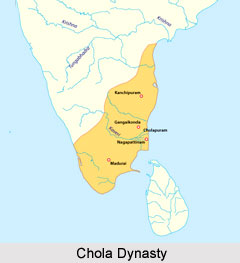
The new Chola capital of Gangaikonda Cholapuram was the creation of Rajendra I.
Rajendra Chola I earned the title of Poorvadesamum, Gangaiyum Kadaramum Konda Ayyan as he was successful in conquering the Ganga-Hooghly belt on the North and Eastern part of India as well as defeated his enemies of Indo-China borders. Rajendra`s inscriptions provide a very meticulous list of all the kingdoms which were conquered by him on his way to the Gangetic valley. His generals returned with the sacred water of the Ganga, which was then poured into a huge tank aptly named Cholagangam which was dug at Rajendra`s new capital city Gangaikonda Cholapuram. Thus to commemorate this brilliant expedition to the north Rajendra took up the title Gangaikonda Chola meaning the Chola who brought the waters of the River Ganga.
In 1019 AD Rajendra led a voyage to the River Ganga. They reached the Pala kingdom of Bengal where Mahipala, the then Pala ruler was defeated.
The Chola navy had also captured Kadaram, Pannai in present day Sumatra, Malaiyur in the Malayan peninsula and Kedah. However no reasons can be attributed to the reason of this naval expedition.
Successors of Rajendra Chola I
 Rajendra Chola I was active for about thirty-two years in expanding the Chola Empire. He had kept the prestige of Chola dynasty intact which was acquired during the previous reign. His titles like Mudikonda, Gangaikonda, Kadarangonda and Pandita Chola epitomise his greatness. His three sons, Rajadhiraja I, Rajendra II, and Virarajendra I ascended the throne in consecutively, and his daughter, Ammangadevi, was the queen of Rajaraja I of Vengi and mother of Kulottunga I.
Rajendra Chola I was considered as the first Indian king to undertake an expedition to the overseas and make conquests of those territories. This great monarch appointed his son Rajadhiraja I as his co-ruler in 1018 A.D. Rajendra`s reign marked the pinnacle of glory of the dynasty of the Imperial Cholas. His power was nonparallel. During the final years of Rajendra the Chola Empire was the widest with the navy and army reputation at its peak.