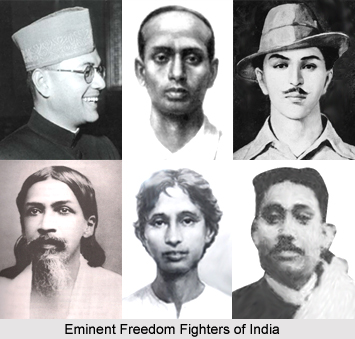
Some of the famous Indian freedom fighters were Mangal Pandey, Rani of Jhansi, Tantia Tope and the famous leader Mahatma Gandhi who brought in the weapon of non-violence to fight against the enemy. Some of the other major freedom fighters of India include Lala Lajpat Rai, Annie Besant, Bal Gangadhar Tilak, Bipin Chandra Pal, Bhagat Singh, Sukhdev, Chandrashekhar Azad, Sarojini Naidu, Gopal Krishna Gokhale, Dadabhai Naoroji, Chakravarti Rajagopalachari, Sucheta Kriplani etc. There are a large number of women and men who fought relentlessly for the independence of India.
Lakshmi Bai
Lakshmi Bai or the Rani of Jhansi was the queen of the princely state of Jhansi, ruled by the Marathas. She was among the most prominent and leading figures in the 1857 rebellion, and was regarded as a symbol of resistance in India against the British rule. She is remembered in the history of India as a legend, the firebrand queen who commenced the Indian Revolution against the Colonialism of British.
Tantia Tope
One of the great freedom fighters during the regime of Rani Lakshmi Bai was Tantia Tope, who is considered to be a hero in the 1857 revolt. His name used to strike terror in the heart of English generals. Being cheated by his friend, Tatia Tope accepted death as a hero for his country.
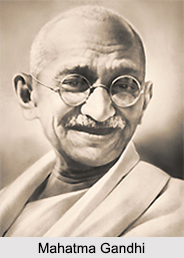
Sardar Vallabhbhai Patel
Sardar Vallabhbhai Patel was one of the prominent freedom fighters of India and he also became the deputy Prime Minister of India after independence. The brave deeds of this person earned him the title of the ‘Iron Man of India.’ He was called Sardar after his active role in the Bardoli Satyagraha. He was a renowned lawyer but quit his practice to fight for India’s independence. As the deputy Prime Minister of India, Sardar Vallabhbhai Patel contributed significantly in India’s integration by the merging a number of princely states in the Indian Union.
Bal Gangadhar Tilak
A great freedom fighter and a firebrand leader, Bal Gangadhar Tilak (1856-1920) is remembered as a powerful force in India’s struggle for independence. In order to fight for the independence of India and to serve his fellow countrymen, Bal Gangadhar Tilak published newspapers and founded schools. He was famous in the country as one of the trios- Lal, Bal and Pal and the other two of this group were Lala Lajpat Rai and Bipin Chandra Pal. In the early part of the 20th century when the trend of Indian independence was mostly guided by Extremism, Tilak became the uncrowned king. Tilak was one of the first and strongest proponents of Swaraj and he was also considered as the father of Hindu Nationalism. Tilak was credited to be the first nationalist leader who sought close contact with the masses.
Bhagat Singh
Bhagat Singh was another famous freedom fighter of India. His name is linked with sacrifice, bravery, courage and vision. Singh was born in a Sikh family which was involved in revolutionary endeavors against the British. He was a prominent member of various revolutionary associations. Bhagat Singh became a symbol of heroism and inspiration after he sacrificed his life at the tender age of twenty-three. With other revolutionaries, he founded the Hindustan Socialist Republican Association in 1928. In order to caution the British of its misdeeds, he threw a bomb in the Central Legislative Assembly. By accepting death at the prime of his life, Bhagat Singh became an inspiration for other freedom fighters of that time who praised his courage and sacrifice.
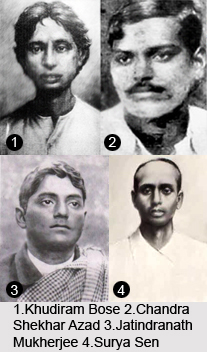
Dadabhai Naoroji
Dadabhai Naoroji was an influential Indian political leader, scholar, writer, and merchant who left a lasting mark on both Indian and British public life. A founding member of the Indian National Congress, he served as its president three times—1886–87, 1893–94, and 1906–07, helping shape the early course of the nationalist movement. His career began in 1874 as the Diwan of Baroda, after which he moved to England to champion India’s cause before the British establishment. In 1892, Naoroji made history by being elected to the House of Commons as a Liberal Party MP for Finsbury Central, serving until 1895. He was the second person of Asian descent to enter the British Parliament, after David Ochterlony Dyce Sombre.
Chakravarti Rajagopalachari
Chakravarti Rajagopalachari, popularly known as Rajaji or C.R., and also referred to as Mootharignar Rajaji, was an Indian statesman, lawyer, writer, and freedom fighter. He holds the distinction of being the last Governor-General of India, as the office was abolished when India became a republic in 1950. He was also the only Indian-born leader to hold that post; all his predecessors had been British.
Over his long career, Rajagopalachari served in several key roles: leader of the Indian National Congress, Premier of the Madras Presidency, Governor of West Bengal, Union Home Minister, and Chief Minister of Madras State. He later founded the Swatantra Party, which became a significant voice of opposition in Indian politics. A recipient of the Bharat Ratna, India’s highest civilian honor, Rajaji was also known for his principled opposition to nuclear weapons and his advocacy of world peace and disarmament. Fondly nicknamed the “Mango of Salem,” he combined political acumen with intellectual depth, leaving a lasting imprint on India’s public life.
Sucheta Kripalani
Sucheta Kripalani was a pioneering Indian politician and freedom fighter who became the country’s first woman Chief Minister, leading the Uttar Pradesh government from 1963 to 1967. Like her contemporaries Aruna Asaf Ali and Usha Mehta, she took part in the Quit India Movement and was arrested by the British for her role in the struggle. During the turbulent Partition years, she worked closely with Mahatma Gandhi, even accompanying him to Noakhali in 1946 to help restore peace amid communal violence. A trailblazer in independent India’s political sphere, Kripalani was among the few women elected to the Constituent Assembly, where she served on the subcommittee that helped draft the Constitution.
On the eve of independence, 14 August 1947, she marked history by singing Vande Mataram in the Assembly just before Jawaharlal Nehru’s iconic “Tryst with Destiny” speech. Beyond her constitutional work, she was elected from Kanpur and went on to make history as the first woman Chief Minister of Uttar Pradesh. Earlier, in 1940, she had founded the All India Mahila Congress, underscoring her lifelong commitment to empowering women in politics and public life.
Ambikagiri Rai Choudhury
Ambikagiri Rai Choudhury was a renowned Assamese poet, lyricist, singer, prose writer, journalist, magazine editor, social worker, and a leading figure in India’s freedom struggle. Revered as Assam Kesari (the Lion of Assam), he combined literary brilliance with deep patriotism and activism.
A poet, playwright, and nationalist in equal measure, Rai Choudhury actively participated in the independence movement and was imprisoned by the British for his efforts. In 1950, he was elected president of the Asam Sahitya Sabha during its Margherita session, further cementing his stature as a cultural leader of Assam. He also founded the ‘Asom Songrokhini Sobhaa,’ reflecting his commitment to protecting Assamese identity and fostering social reform. Through both his writings and activism, Rai Choudhury left an enduring legacy as one of Assam’s most respected literary and political voices.
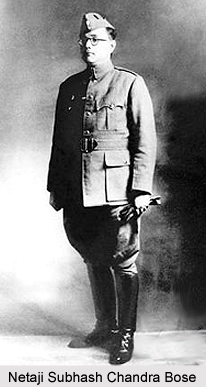
Tarun Ram Phukan
Tarun Ram Phukan, popularly known as ‘Deshbhakta,’ was a distinguished leader of Assam during British colonial rule. An influential political figure, he was an active member of the Assam Association until 1920 and later played a pivotal role in establishing the Assam branch of the Indian National Congress in 1921, becoming its first president.
Phukan emerged as a leading voice in the Non-Cooperation Movement, spreading Mahatma Gandhi’s message across Assam. His activism led to his arrest, and in 1921 he was sentenced to one year of rigorous imprisonment. In 1926, he presided as Chairman of the Reception Committee of the Pandu Session of the Indian National Congress. Beyond politics, Phukan contributed significantly to civic life, serving as Chairman of the Municipal Board and Local Board of Guwahati. He also championed social welfare initiatives, founding a leper asylum in Guwahati to aid the underprivileged.
Durgabai Deshmukh
Durgabai Deshmukh was an eminent Indian freedom fighter, lawyer, social worker, and politician. She played a significant role as a member of the Constituent Assembly of India and later served on the Planning Commission. A staunch advocate of women’s emancipation, she founded the Andhra Mahila Sabha (Andhra Women’s Conference) in 1937, which became a major platform for women’s education and empowerment. She also established and served as the first chairperson of the Central Social Welfare Board. In 1953, she married C.D. Deshmukh, the first Indian Governor of the Reserve Bank of India and Finance Minister in the Central Cabinet from 1950 to 1956.
Gopinath Bardoloi
Gopinath Bardoloi was an Indian freedom fighter and statesman who became the first Chief Minister of Assam, serving from 1946 until his death in 1950. A staunch advocate of Gandhian principles, he firmly believed in non-violence as a means of political struggle. He also chaired the North-East Frontier Tribal Areas and Assam Excluded and Partially Excluded Areas Sub-Committee, playing a crucial role in shaping policies for the region. Recognized for his selfless service and unwavering dedication to the people of Assam, then Governor Jayram Das Doulatram honored him with the title “Lokpriya”—meaning “loved by all.”
Badal Gupta
Badal Gupta was an Indian revolutionary remembered for his role in the daring attack on the Writers’ Building in Dalhousie Square, Calcutta, alongside Benoy Basu and Dinesh Gupta in December 1930. On 8 December, disguised in European attire, the trio entered the Secretariat Building and assassinated Colonel N.S. Simpson. A fierce exchange of gunfire followed as police retaliated, during which several officers, including Twynam, Prentice, and Nelson, were injured. When the revolutionaries were overpowered, they chose death over capture. Badal consumed potassium cyanide, while Benoy and Dinesh turned their revolvers on themselves. Badal died instantly, sacrificing his life at just 18 years of age.
Pulin Behari Das
Pulin Behari Das was an Indian revolutionary and the founding president of the Dhaka Anushilan Samiti. In September 1906, when Bipin Chandra Pal and Pramatha Nath Mitra toured the newly created province of Eastern Bengal and Assam, Mitra called upon those willing to sacrifice their lives for the nation. Pulin stepped forward, and soon after, he was entrusted with organizing the Dhaka chapter of the Anushilan Samiti. By October of the same year, he had established the branch with 80 young recruits.
A gifted organizer, Pulin quickly expanded the Samiti’s influence, building a network of over 500 branches across the province. He also founded the National School in Dhaka, which served as a training ground for revolutionaries. Students initially practiced with lathis and wooden swords, before advancing to daggers, pistols, and revolvers.
In early 1908, he organized the daring Barrah Dacoity, carried out in broad daylight at the residence of the zamindar of Barrah in Dhaka district. The funds from this raid were used to procure arms and ammunition. Later that year, Pulin was arrested alongside Bhupesh Chandra Nag, Shyam Sundar Chakravarti, Krishna Kumar Mitra, Subodh Mallick, and Ashwini Dutta, and imprisoned in Montgomery Jail. Released in 1910, Pulin resumed revolutionary activities with renewed vigor. By this time, the Dhaka group had begun operating independently of the Kolkata faction, and following the death of Pramatha Nath Mitra, the two branches formally parted ways.
Ullaskar Dutta:
Ullaskar Dutta was an Indian revolutionary linked with the Anushilan Samiti and the Jugantar group of Bengal, and a close associate of Barindra Ghosh. Initially serving as the principal bomb-maker of Jugantar, he played a pivotal role until Hemchandra Kanungo returned from Paris with advanced knowledge of political theory and explosives. A skilled craftsman in bomb-making, Ullaskar collaborated with Hem Chandra Das to produce explosives, one of which was used by Khudiram Bose in the attempted assassination of magistrate Kingsford. The plot, however, led to a major crackdown on the Jugantar network, resulting in the arrest of several of its members, including Ullaskar Dutta, Barindra Ghosh, and Khudiram Bose.
Sister Nivedita
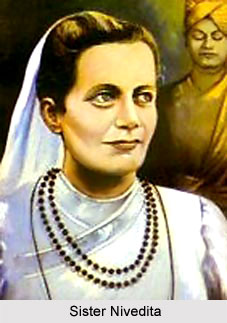
Sister Nivedita, born Margaret Elizabeth Noble, was an Irish teacher, author, social activist, and devoted disciple of Swami Vivekananda. Her life took a new direction in 1895 when she met Swami Vivekananda in London. Inspired by his vision, she travelled to Calcutta (now Kolkata) in 1898. On 25 March that year, Vivekananda initiated her into the vow of Brahmacharya, giving her the name Nivedita, meaning “Dedicated to God.”
In November 1898, she founded a girls’ school in Bagbazar, North Calcutta, with the mission of providing education to underprivileged girls. A year later, during the plague epidemic in Calcutta, she selflessly nursed and cared for the poor and afflicted. Nivedita also maintained close ties with the newly established Ramakrishna Mission. However, her active involvement in the Indian nationalist movement eventually compelled her to formally distance herself from the Mission under Swami Brahmananda’s leadership.
Birsa Munda
Birsa Munda was a tribal freedom fighter and folk hero from the Munda community, remembered for spearheading a powerful tribal religious and socio-political movement against British rule in the late 19th century. Emerging in the Bengal Presidency (present-day Jharkhand), his struggle became a defining chapter in India’s independence movement, particularly across the Munda belt of Khunti, Tamar, Sarwada, and Bandgaon.
After leaving school, Birsa founded a new faith known as Birsait, which quickly gained followers from the Munda community. The movement posed a direct challenge to both colonial authorities and Christian missionaries, as Birsaits openly declared that their true enemy was British rule, not fellow Christian tribesmen. The uprising, rooted in resistance to exploitative land-grabbing practices by colonial officials and local landlords, sought to protect the traditional tribal land system. Birsa Munda became a symbol of defiance, uniting Munda and Oraon communities against oppression and missionary-led conversions.
Sidhu and Kanhu Murmu
Sidhu and Kanhu Murmu, two brothers, were prominent tribal leaders who spearheaded the historic Santhal Rebellion of 1855. The uprising, which spread across present-day Jharkhand and parts of Bengal, including Purulia, Birbhum, and Bankura, was a powerful resistance movement against British colonial rule and the exploitative zamindari system.
On 30 June 1855, Sidhu and Kanhu, alongside fellow leaders Chand and Bairab, mobilized nearly 10,000 Santals and declared open rebellion. In the early stages, the Santals achieved some success. However, the British soon devised a brutal strategy to draw them out of the forests. In a decisive battle, British troops, equipped with modern firearms and even war elephants, lured the Santals into charging by initially firing blank rounds. Believing the enemy’s weapons to be harmless, the Santals advanced with full force, only to be met with devastating gunfire when the British switched to live ammunition. Though the rebellion was eventually crushed, it left a deep impact on colonial policies.
Basanti Devi
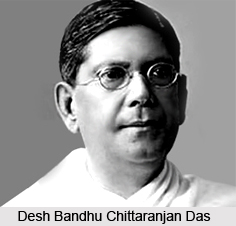
Basanti Devi was a prominent Indian independence activist during British rule and the wife of nationalist leader Chittaranjan Das. Following Das’s arrest in 1921 and his death in 1925, she emerged as an influential figure in the freedom struggle, actively participating in political and social movements. Even after independence, she remained dedicated to social work. In recognition of her lifelong contributions, she was honored with the Padma Vibhushan in 1973.
Ram Prasad Bismil
Ram Prasad Bismil was an Indian poet, writer, translator, and revolutionary who played a pivotal role in the struggle against British rule. He took part in both the Mainpuri Conspiracy of 1918 and the Kakori Conspiracy of 1925. Writing in Hindi and Urdu, he used several pen names—Ram, Agyat, and most famously Bismil, by which he became widely known. Though often referred to as “Pandit,” the title was an honorific acknowledging his deep knowledge across various subjects.
Deeply influenced by the Arya Samaj, Bismil emerged as one of the founding members of the Hindustan Republican Association, a revolutionary organization committed to armed resistance against colonial rule. His literary contributions, coupled with his fearless activism, made him a symbol of both intellectual and revolutionary zeal. On 19 December 1927, Ram Prasad Bismil was executed by the British for his role in the freedom struggle, leaving behind a legacy of courage, sacrifice, and patriotic inspiration.
Anugrah Narayan Sinha
Anugrah Narayan Sinha, fondly remembered as Bihar Vibhuti, was a distinguished nationalist leader, Gandhian, and one of the chief architects of modern Bihar. He actively participated in the Champaran Satyagraha and became a trusted associate of Mahatma Gandhi during the freedom struggle. Following independence, he served as the first Deputy Chief Minister and Finance Minister of Bihar from 1946 to 1957, playing a central role in shaping the state’s governance and development. As a member of the Constituent Assembly of India, he contributed to the framing of the nation’s Constitution and later served in independent India’s first Parliament.
Sri Krishna Sinha
Sri Krishna Sinha, popularly known as Shri Babu, was the first Chief Minister of Bihar, serving from 1946 until his death in 1961, with only a brief interruption during World War II. A stalwart of the freedom movement and a prominent Congress leader, he played a decisive role in shaping modern Bihar. Sinha is remembered as the first Chief Minister in India to abolish the zamindari system, a landmark reform that transformed agrarian relations in the state. He also led the historic movement that enabled Dalit entry into the Baidyanath Dham temple at Deoghar, striking a powerful blow against caste discrimination. Over the course of the independence struggle, he spent nearly eight years in British prisons, emerging as a fearless leader and mass mobilizer. Celebrated for his fiery oratory, which earned him the title Bihar Kesari (Lion of Bihar), Sinha inspired thousands with his “lionlike roars” at public gatherings.
Yamuna Karjee
Yamuna Karjee, born in 1900 in Deopar near Pusa in Bihar’s Samastipur district, came from a Bhumihar farming family. His father, Anu Karjee, passed away when Yamuna was just six months old, leaving behind a life of hardship that would deeply shape his outlook. From his school days, Karjee was drawn to India’s freedom struggle, particularly the Kisan and peasant movements led by Sahajanand Saraswati. His commitment to the cause soon brought him into close association with leading peasant revolutionaries such as Karyanand Sharma, Yadunandan Sharma, and Panchanan Sharma. Together, they worked to mobilize farmers and challenge the oppressive agrarian structures under colonial rule.
Kunwar Singh
Kunwar Singh was one of the most important freedom fighters in the Sepoy Mutiny of 1857. Kunwar Singh was born in Jagdishpur in the Shahabad (now in Bhojpur District) of Bihar.
Mahavir Tyagi
Mahavir Tyagi was a noted Indian freedom fighter and parliamentarian from Dehradun, in present-day Uttarakhand. Educated in Meerut, Uttar Pradesh, he initially served in the British Indian Army and was posted in Persia. However, the Jallianwala Bagh Massacre of 13 April 1919 deeply shook him, prompting his resignation in protest. He was later court-martialed in Quetta, stripped of his pay and benefits, and expelled from Baluchistan.
Returning home, Tyagi became a devoted follower of Mahatma Gandhi and threw himself into the national movement. A lifelong member of the Indian National Congress, he was especially active in the Kisan (peasant) movement and worked extensively in the western United Provinces. For his activism and defiance against colonial authority, he was imprisoned by the British on eleven separate occasions.
Jagjivan Ram
Jagjivan Ram, popularly known as Babuji, was a prominent independence activist and statesman who went on to become one of the most enduring figures in post-independence Indian politics. Over a career spanning more than three decades, he held multiple key portfolios, making him the longest-serving Union Cabinet minister in the country’s history.
In 1979, he briefly served as India’s Deputy Prime Minister, but his contributions stretched far beyond political titles. As Defence Minister, he played a crucial role during the Indo-Pak War of 1971, overseeing India’s military triumph and the creation of Bangladesh. Earlier, as Union Agriculture Minister in two separate terms, he was instrumental in driving the Green Revolution and modernizing Indian agriculture, particularly during the severe food crisis of 1974, when his leadership proved vital in averting famine.
Vasudeo Balwant Phadke
Vasudeo
Balwant Phadke was a pioneering Indian revolutionary and independence
activist who dedicated his life to freeing India from colonial rule. Deeply
moved by the hardships faced by farmers, he believed that Swaraj (self-rule)
was the only solution to their suffering. Rallying support from different
sub-communities within Hindu society, he organized a movement to challenge
British authority.
Phadke and his group resorted to armed resistance, funding
their struggle through raids on wealthy European businessmen. His boldness came
to the forefront when, in a daring surprise attack, he briefly captured control
of Pune, catching colonial forces off-guard. Remembered as one of the earliest
revolutionaries of India’s freedom movement, Phadke’s actions inspired later
generations to take up the cause of independence.
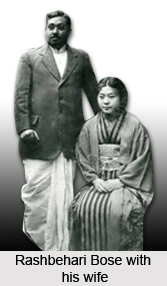
Rashbehari Bose
Rash
Behari Bose was one of the great revolutionaries of the first half of
the 20th century. He was born in Subaldaha village of Bardhaman district. He had completed his
education in Chandannagar. He had left Bengal as he was not supporting the
Alipore bomb case. Thereafter he went to Dehradun where through Amarendra
Chatterjee of Jugantar he was in touch with the revolutionaries of Bengal.
Through Jatindra Nath, one of the earliest political disciples of Aurobindo
Ghosh he came across several well known revolutionaries of Arya
Samaj in Uttar Pradesh and Punjab.
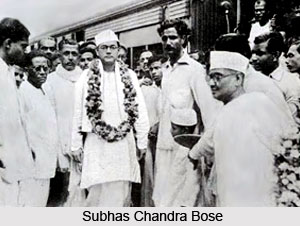
He prepared several secret activities in Uttar Pradesh, Delhi and Punjab. He came into attention of the British Police when he threw a bomb on Lord Hardinge’s (the Viceroy of India) procession in Chandni Chowk, Delhi on December 23, 1912. The British, however, foiled all attempts of Bose to create unrest and arrested several of Bose`s confidants, of which twenty- eight were hanged after trials under what came to be known as the Lahore Conspiracy Case. But he managed to flee from India in 1915 and went to Japan where he lived as a fugitive. In March 1942, he organised a conference to set up an Indian Independence League, the first session of which was held in June 1942 at Bangkok. Later in 1943, he handed over the charge of Indian National Army to Subash Chandra Bose in Singapore. Rashbehari Bose died in Tokyo on January 21, 1945.
Khudiram Bose
Khudiram Bose was one of those young
revolutionaries and freedom fighters whose deeds of bravery and sacrifice have
become the subject of many a folk lore. He was one of those brave men who
challenged the British rule in their own style. At the age of nineteen, he
became a martyr. Vande Mataram has been his core
philosophy throughout his life. He showed the guts to devote his soul to the
war of Independence.
Usha Mehta
Usha
Mehta was a devoted Gandhian and a prominent figure in India’s
independence movement. She is best remembered for establishing the Congress
Radio—also known as the Secret Congress Radio—an underground broadcasting
station that operated for a few months during the Quit India Movement of 1942,
spreading uncensored news and inspiring freedom fighters across the country. In
recognition of her unwavering dedication to the nation, the Government of India
honored her with the Padma Vibhushan, the country’s second-highest civilian
award, in 1998.
Rajkumari Amrit Kaur
Rajkumari
Amrit Kaur was a pioneering Indian activist and politician who played a
significant role in shaping independent India. A close associate of the freedom
movement, she became the first woman to serve as a minister in the central
government when she was appointed the nation’s first Health Minister in 1947, a
position she held for a decade, making her the longest-serving in that role.
During her tenure, she championed several healthcare reforms
and worked tirelessly to improve public health systems across the country. She
also briefly held the portfolios of Sports and Urban Development, and was
instrumental in establishing the National Institute of Sports in Patiala.
Beyond her ministerial contributions, Kaur was a strong advocate for women’s
rights and a member of the Constituent Assembly of India, which framed the
Constitution.
Muthulaksmi Reddy
Muthulaksmi
Reddy was an Indian physician, pioneering social reformer, and
recipient of the Padma Bhushan. In 1926, she became the first woman appointed
to the Madras Legislative Council, a milestone that marked the beginning of her
lifelong mission to “correct the balance for women” by fighting social
injustices and advocating for equality in moral standards. Graduating in 1912
with several gold medals to her credit, Reddy was among the first women doctors
in India. Deeply influenced by Annie Besant and later Mahatma Gandhi, she
dedicated her life to public service and women’s empowerment. Her legacy was
also honored in 1947, when her name was included on the first national flag
hoisted at the Red Fort.
Aruna Asaf Ali
Aruna
Asaf Ali was an Indian educator, political activist, and publisher who
played a prominent role in the country’s freedom struggle. She is best
remembered for hoisting the Indian National Flag at the Gowalia Tank Maidan in
Bombay during the Quit India Movement of 1942, a defining act of defiance
against British rule. Earlier, in 1932, she was imprisoned in Tihar Jail, where
she launched a hunger strike to protest the harsh treatment of political
prisoners. Her protest forced improvements in prison conditions, though she was
later transferred to Ambala and kept in solitary confinement. After her
release, she remained relatively quiet for a time, but by the end of 1942, she
reemerged as a key figure in the underground resistance. Following
independence, Aruna Asaf Ali continued her public service and went on to become
the first Mayor of Delhi, leaving a lasting imprint on Indian politics.
Ashfaqulla Khan
Another famous firebrand and young revolutionary of India was Ashfaqulla Khan
who sacrificed his life for his motherland. A prominent member of the Hindustan
Republican Association, Ashfaqulla Khan, and his associates carried on
the Kakori train robbery and was thus hanged
to death by the British.
Kasturba Gandhi
Kasturba
Gandhi was an Indian political activist who actively participated in
the country’s struggle for independence during British rule. She was the wife
and close companion of Mohandas Karamchand Gandhi, popularly known as Mahatma
Gandhi, and stood by his side in numerous movements and campaigns. In
recognition of her legacy, India observes National Safe Motherhood Day every
year on April 11, her birth anniversary.
Acharya Narendra Deva
Acharya
Narendra Deva (30 October 1889 – 19 February 1956) was a prominent
thinker and one of the foremost leaders of the Congress Socialist Party in
India. A firm believer in democratic socialism, he rejected violence on
principle and instead embraced satyagraha as a powerful tool of revolutionary
change. His political awakening began around 1915, influenced by B. G. Tilak
and Aurobindo Ghosh.
Alongside his role as a teacher, Deva developed a deep
interest in Marxism and Buddhism, which shaped much of his intellectual
outlook. He also took an active part in the Hindi language movement. From the
founding of the Congress Socialist Party in 1934, he played a central
leadership role and faced repeated imprisonment during India’s freedom
struggle. Deva also served as a member of the Uttar Pradesh Legislative
Assembly at different times.
Bhikaji Cama
Another name in the list of Indian freedom fighters is Madam Bhikaji Cama. She was among the famous women Indian freedom fighters who advocated for the cause of the freedom movement outside India. She had the honour of unfurling the flag of India at an international assembly. Madame Cama abandoned a luxurious life and lived in exile in order to serve her motherland.
Ram Prasad Bismil
A well-known young revolutionary by the name of Ram Prasad Bismil sacrificed his life for his motherland. He was a member of the Hindustan Republican Association and was a crucial member of the group which had a hand in the Kakori train dacoity.
Jatin Banerjee
The famous Jatin Banerjee, who was well-known as Bagha Jatin due to his courage and bravery, was also one of the freedom fighters of India. He name is often associated with another famous freedom fighter of the time name Aurobindo Ghosh (Sri Aurobindo), who dramatically rose to prominence between 1871 and 1910.
Maulana Abul Kalam Azad
Maulana Abul Kalam Azad, born on
November 11, 1888 in Mecca, was a great freedom fighter and also an
active member of the Indian National congress. He
participated in almost all the major movements in India. Maulana Abul Kalam
Azad presided over the special Congress session in the month of September 1923
and at the age of 35 years; he became the youngest person to get elected as the
President of the Congress.
The original name of Maulana Abul Kalam Azad was Abul Kalam
Ghulam Muhiyuddin. His ancestors came to India from Afghanistan. His mother was
an Arab and his father Maulana Khairuddin, was a Bengali Muslim of Afghan
origin. Maulana Khairuddin shifted to Mecca in 1857. He returned to India in
1890 and started living in Calcutta. His mother died when he was only 11 years
old. Initially Maulana Abul Kalam Azad received the traditional Islamic
education at home. After that he was taught Arabic, Persian, philosophy,
geometry, mathematics and algebra by some great teachers. He also acquired huge
knowledge in English, history, politics and general science.
Gopal Krishna Gokhale
Another famous freedom fighter of India was Gopal Krishna Gokhale. He was also a part of the Indian National Congress. He was regarded as the political Guru of the great Indian leader, Mahatma Gandhi. At Varanasi, in the year 1905, Gokhale presided over annual session of Indian National Congress. He opposed the entry of extremists in the Congress party.
Purushottam Das Tandon
He was also a famous freedom fighter of India who hailed from the state
of Uttar Pradesh. He was of the Punjabi Khatri
descent. This person is remembered widely for his contribution towards making
Hindi as the official language of India. Purushottam Das Tandon was revered as
Rajarshi. After getting a Law degree and an MA in history, he started to
practice in the year 1906, and joined the bar of Allahabad High
Court in the year 1908 as Tej
Bahadur Sapru`s junior. In order to concentrate on public activity, he
left practicing law in the year 1921.
Dr. Hakim Ajmal Khan
He was one of the renowned freedom fighters of India, famous physician and a
well-known educationalist. He founded the Jamia Millia Islamia in Delhi. Dr.
Hakim Ajmal Khan studied the Holy
Quran and traditional Islamic knowledge, before studying medicine.
Jayaprakash Narayan
Another notable freedom fighter of India was Jayaprakash Narayan. He was famously called JP. He was among the very few modern Indian leaders who worked hard for independence and also participated in Indian politics actively for a long time after India secured independence. Jayaprakash Narayan is especially known for leading the opposition to Indira Gandhi in the 1970s and for giving a call for peaceful Total Revolution He was arrested in the year 1930, and was imprisoned for some weeks since he organized a Salt March being inspired by the earlier actions of Mahatma Gandhi. His nationalist friend and an eminent writer of Hindi literature Ramavriksha Benipuri wrote a biography on Jayaprakash Narayan.
Vinayak Damodar Savarkar
Vinayak Damodar Savarkar was a prominent freedom fighter and a Hindu nationalist leader of India. He was also called Veer Savarkar. He was a good writer, poet, orator, a historian, philosopher and also a renowned social worker who dedicated his whole life in fighting for India’s Independence. Savarkar is considered to be a great revolutionary by some whereas some term him as a Machiavellian manipulator and a communalist. “First war of Indian Independence Movement: 1857,” written by Veer Savarkar was a great inspiration for several freedom fighters.
Bipin Chandra Pal
Bipin Chandra Pal began the Vande
Mataram journal. He was among the three Extremist Indian patriots of the
Indian National Congress who gave away his life fighting for the Independence
of India. The other two of the trilogy were Bal Gangadhar Tilak and Lala Lajpat Rai and together, the three
were called Lal-Bal-Pal. Bipin Chandra pal was jailed for six months since he
refused to provide evidence against Aurobindo
Ghose in the sedition case of Vande Mataram.
Mangal Pandey
Mangal Pandey is considered as one of the
first Indian freedom fighters and was
a Sepoy to rise against the British rule during the Great
revolt of 1857. He was a sepoy in the 34th Regiment of the Bengal
Native Infantry (BNI) of the British East India Company. Mangal
Pandey is well known in the arena of Indian history as he attacked his British
officers, sparking off the First War of Indian Independence or as the British
termed it, the Sepoy Mutiny of 1857. Mangal Pandey
perhaps played the most vital role in the Indian freedom struggle. Some
scholars also call him an accidental hero. Mangal Pandey at the age of 22
entered the British East India Company Bengal
Army in 1849. The role of Mangal Pandey in the British regiment was that of a
sepoy (soldier) in the 34th Regiment of the Bengal Native Infantry (BNI). He
was a tall lad, lean and well built. Mangal was part of the 5th Company of the
34th BNI regiment, famously acknowledged as fearsome attacking officers. The
Company is known to have contributed immensely in what came to be known as
the Sepoy Mutiny and the Great Revolt of 1857.
Annie Besant
Annie
Besant was an English socialist, theosophist, freemason, women’s rights
advocate, educationist, and a prominent campaigner for Indian nationalism. A
passionate supporter of both Irish and Indian self-rule, she made history in
1917 by becoming the first woman to preside over the Indian National Congress.
Her public life began in Britain, where she emerged as a leading voice for the
National Secular Society and a close associate of Charles Bradlaugh. In 1877,
the two-faced prosecution for publishing a birth control pamphlet by Charles
Knowlton. Besant soon became deeply involved in labor struggles, notably the
“Bloody Sunday” demonstration and the London matchgirls’ strike of 1888.
Her political journey in India saw her join the Indian National Congress and, during World War I, establish the Home Rule League to press for democracy and dominion status for India within the British Empire. This movement propelled her to the presidency of the Congress in late 1917, cementing her role as a central figure in India’s nationalist politics. Even in her later years, she remained active in advancing both Indian independence and theosophy, causes she championed until her death in 1933.
Sukhdev Thapar
Sukhdev Thapar was a revolutionary freedom fighter who played a key role in India’s struggle against British colonial rule. A prominent member of the Hindustan Socialist Republican Association (HSRA) and the Naujawan Bharat Sabha, he was deeply involved in organizing revolutionary activities in Punjab and across northern India. As the head of the HSRA’s Punjab unit, he was instrumental in shaping strategies and decisions for the movement.
Sukhdev participated in several landmark events, including the historic prison hunger strike of 1929, and became a central figure in the Lahore Conspiracy Case (1929–1930), officially titled Crown versus Sukhdev and Others. He was the main accused in the case, which brought him into the spotlight of India’s revolutionary struggle. On 23 March 1931, Sukhdev, along with Bhagat Singh and Shivaram Rajguru, was executed at Lahore Central Jail. Their bodies were secretly cremated on the banks of the Sutlej River, an event that turned the three into enduring symbols of courage and sacrifice in India’s fight for independence.
Surya Sen
Surya Sen was
born on 22 March 1894 in Chittagong. He as a revolutionary took part in non-cooperation
movement. A commemorative stamp was released on him in 1977 by the Government
of India. Surya Sen was a teacher by profession. One of his teachers
had initiated into revolutionary ideas in the year 1916 when he was studying in
the Chittagong College. Thereafter he joined the revolutionary group Anushilan.
In 1929, he became the president of the Chittagong district committee of the
Indian National Congress.
He became a teacher of the National school in Nandankanan
and later joined the Umatara School at Chandanpura. He initiated a secret
warfare against the colonial Government. One of his successful happenings was a
robbery at the treasury office of the Bengal Assam Railway at
Chittagong on December 23, 1923. The Chittagong Armoury Raid that was done on
April 18, 1930 was his major success. Thereafter he marched to Jalalabad hills
along with his fellow revolutionaries and post battle with the British troops,
he escaped from there.
Barindra Kumar Ghose
Barindra Kumar Ghose was the youngest son of Dr.Krishnadhan Ghose, renowned physician and a reputed district surgeon and Swarnalata Ghose, daughter to famous Brahmo religious and social reformer Rajnarayan Basu. Monmohan Ghosh, scholar of English literature, a poet and professor of English at Presidency College, Calcutta and at Dacca University, was Barindra`s second elder brother and his third elder brother was the national activist, revolutionary and spiritualist, Shri Aurobindo Ghose.
Prafulla Chaki
Prafulla
Chaki was born on December 10, 1888 in Bogra district. When he joined
Rangpur National School he came in contact with revolutionaries like
Jitendranarayan Roy, Abinash Chakravarti, Ishan Chandra Chakravarti. This led
him to practicing of the revolutionary philosophies.
Dr B R Ambedkar
Dr
B R Ambedkar had immense contribution in the shaping modern India. He
led millions of oppressed, to a life of self-respect, dignity, and
responsibility. Babasaheb, as he was also known as, always stressed the
importance of better education, so that position of common people in society
can be improved. It was he, who was primarily responsible for the formulation
of Constitution - adopted after India became independent. Babasaheb began the
revival of Buddhism in
India that has grown tremendously after his death, and continues to grow today
among his countless followers.
He was a veritable phenomenon of the 20th century. Dr.
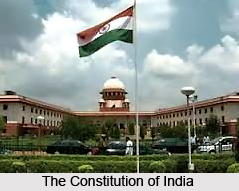
Bhimrao Ramji Ambedkar, was chiefly responsible for drafting of The Constitution of India. He was the
first Law Minister of India. On the 14th October, 1956, Babasaheb Ambedkar
embraced Buddhism. He continued the crusade for social revolution until the end
of his life on the 6th December 1956. He was honoured with the highest national
honour, `Bharat Ratna` in April 1990. B.R Ambedkar was
affectionately called Baba Saheb Ambedkar.
Homi Modi
Homi Modi
was born on 23rd September, 1881.He graduated from the prestigious St. Xavier`s
College in Bombay. He also obtained M A and a degree in Law. He was the member
of legislative Assembly from 1929 to1943. In 1929, he was selected as the
member of First Round Table Conference in 1929. Homi Modi represented India in
the International Labour Conference in Geneva in 1937. He was appointed as the
member for Supply in the Viceroy’s Executive Council. Homi Modi was also
selected as the member of Constituent Assembly of India.
After independence, he served as the Governor of Bombay and
Uttar Pradesh. Homi Modi was also involved with a number of company and
association including Tata Group of Hydro-Electric Company, Indian Institute of
Art-in Industry, Indian Hotel’s Company Limited, Associated Cement Companys
Limited, Indian Banks Association. Homi Modi served, as the chairman of the
Central Bank of India Limited. He became the President of Indo-American Society
and the Indian Council of World Affairs, Bombay Branch. Homi Modi passed away
in the year 1969.He received honorary LL.D. and D. LITT.
Benoy Krishna Basu
Benoy Krishna Basu was born on 11
September 1908, in Rohitbhog village of Munshiganj District. His father was an
engineer. Post his success in matriculation examination he enrolled into the
Mitford Medical School. He was influenced by a revolutionary of Dhaka
Hemchandra Ghosh to join Benoy joined the `Mukti Sangha`. It was a secret
society that was connected with the Jugantar Party. Due to his association with
revolutionary activities he was unable to complete his studies.
Jai Rajguru
Jai
Rajguru was an Indian freedom fighter. His original name was Jaykrushna
Mahapatra. He was born on October 29, 1739 near Puri in Odisha to
father Shri Chandra Rajguru and mother Smt. Haramani Debi. He came to be known
as Jayee Rajguru after his appointment as ‘Rajguru’ to the king. He grew up to
be an outstanding Sanskrit scholar and intellectual of the 18th century. Later
he fought for his motherland against the British. Rajguru not only proved to be
a great royal priest but also an accomplished Commander-in-Chief and a freedom
fighter. He was the first martyr in the national freedom struggle from Odisha.
Yadunandan Sharma
Yadunandan
Sharma was a prominent peasant leader and freedom fighter from Bihar,
remembered for his unwavering struggle against British rule and the zamindari
system. He spearheaded the historic Reora Satyagraha, a movement that demanded
justice and rights for tillers against the dominance of landlords and colonial
authorities. Sharma rose to become the foremost leader of peasants in the Gaya
district, serving as the trusted deputy to the legendary Sahajanand Saraswati.
Much of his life was centered in Neyamatpur village, where he lived in an
ashram that became a hub of resistance against exploitation and oppression. In
recognition of his influence, Pandit Jawaharlal Nehru visited the ashram in
December 1936.
Lala Lajpat Rai
Lala Lajpat Rai, popularly known as the
Sher-E-Punjab was
a philanthropist, a social reformer and a true nationalist. He was a great
national leader, who worked tirelessly to improve the education and to promote
the unity among the Hindus. Being a social reformer, he intended to bring a
unity in the society and to inculcate the spirit of nationalism throughout the
country. The historians considered Lala Lajpat Rai as the standard of revolt
against the "mendicant policy" of the Moderate leaders.
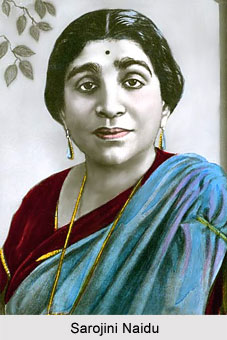
Sarojini Naidu
Sarojini
Naidu was the first Indian woman to become the President of
the Indian National Congress and
the first woman to become the governor of a state in India, the pride of Uttar
Pradesh. Sarojini Naidu was one of the most prominent leaders of the
Congress. She had been associated with the Indian National Congress even
before Mahatma Gandhi appeared on the scene in
India. Her first guru had been Gopal Krishna Gokhale who fuelled in her the
fire of patriotism.
Ammu Swaminathan
Ammu
Swaminathan was born on 1894 in the Palghat district of Kerala. She was
the youngest daughter of Govinda Menon. Ammu Swaminathan married to a famous
Barrister at the age of only 13. She received formal education mostly from her
husband. Ammu Swaminathan became the follower of Mahatma Gandhi and joined
Indian independence movement. She was one of the few women members in the
Constituent Assembly of India. After independence she was elected as the member
of Rajya Sabha from Madras State. Ammu Swaminathan was sent to Ethiopia, China,
USA, USSR as an ambassador of India.
Karyanand Sharma
Karyanand
Sharma was a prominent nationalist and peasant leader who dedicated his
life to resisting the exploitation of zamindars and British authorities. Early
in his activism, he was arrested and sentenced to one year in prison. After his
release, he deepened his involvement in peasant struggles and, in 1927,
organized a major tenant movement at Chanan to oppose the arbitrary extortions
of landlords, particularly targeting the Giddhaur Raj and Kaira estate. The
zamindars and their agents were notoriously oppressive, and while local leaders
of the Indian National Congress allowed Sharma to lead the agitation, they
offered little direct support. Despite this, the unity and determination of the
tenants forced the zamindars to concede. The triumph at Chanan proved to be a significant
morale-booster for peasants across Munger.
Rammanohar Lohia
Rammanohar
Lohia, a socialist political leader as well as a noted freedom fighter
of India was born in the village of Akbarpur, Uttar
Pradesh on 23rd March, 1910. He was born to Hira Lal, a patriot
and a teacher and Chanda. He did his intermediate from Banaras Hindu University. He did
his Bachelor of Arts from University of Calcutta in 1929.
Lohia then flew to Germany whereby he joined Berlin University and learnt
German.
Tridib Chaudhuri
Tridib
Chaudhuri was a noted Indian independence activist and politician, best
known as one of the founders and leaders of the Revolutionary Socialist Party.
Representing Baharampur in West Bengal, he served as a Member of Parliament in
the Lok Sabha from 1952 to 1984, and later as a member of the Rajya Sabha from
1987 until his death in 1997. Chaudhuri also played an active role in the Goa
Liberation Movement, adding to his legacy as a committed nationalist. In 1974,
he made history as the joint opposition candidate in the Indian presidential
election, becoming the first Bengali to contest for the presidency.
Govind Ballabh Pant
Govind
Ballabh Pant was a prominent Indian independence activist and
politician who became the first Chief Minister of Uttar Pradesh. A close
associate of Mahatma Gandhi, Jawaharlal Nehru, and Vallabhbhai Patel, he played
a vital role in the freedom struggle and later emerged as a central figure in
shaping independent India’s governance. As one of the foremost leaders of the
United Provinces (now Uttar Pradesh), Pant was instrumental in advancing
political reforms and strengthening the democratic framework of the state. He
also played a decisive role in the successful campaign to establish Hindi as
the official language of the Indian Union.
Vijaya Lakshmi Pandit
Vijaya Lakshmi Pandit hailed from
a well-known family. Her father Motilal
Nehru was the president of Congress and brother Jawaharlal Nehru went
on to become India`s Prime Minister. She was highly inspired by the personality
of Rani Lakshmi Bai of Jhansi and by Sarojini
Naidu. She participated in the Non-Co-operation Movement to fight
against the British rulers. Vijaya Lakshmi Pandit attended many
public lectures and represented the country abroad. She was a great fighter and
took part in many of the freedom movements. In the year 1936, Vijaya Lakshmi
Pandit was elected in the Uttar Pradesh Assembly. Her political profession made
her the first Women Cabinet Minister of India in the year 1937. Aruna
Asaf Ali was another renowned freedom fighter and a devoted
sociologist. She was selected as the first Mayor of Delhi. Sarojini
Naidu was a noted poet, and one of the great freedom fighters of the
country. Sarojini Naidu actively campaigned for the Khilafat Movement.
Jogendra Nath Mandal
Jogendra
Nath Mandal was a Bengali politician and Dalit leader who played a
pivotal role in the creation of Pakistan, where he became the country’s first
Minister of Law and Labour and later served as Minister of Commonwealth and
Kashmir Affairs. Before Partition, he had also held the law portfolio in the
Interim Government of India. As a prominent representative of the Scheduled
Castes, Mandal strongly opposed the partition of Bengal in 1947. He argued that
dividing the province would leave Dalits in West Bengal vulnerable to the
dominance of upper-caste Hindus, a concern that shaped much of his political
stance during that critical period.
Sheel Bhadra Yajee
Sheel
Bhadra Yajee was a freedom fighter from Bihar who took part in both the
non-violent and revolutionary streams of India’s independence movement. His
political journey began in 1928, when, as a student, he attended the Calcutta
Session of the Indian National Congress. Four years later, he joined the
Congress Socialist Party and became actively engaged in the Kisan movement.
Over time, Yajee built associations with both Subhas Chandra
Bose and Mahatma Gandhi. In 1939, he collaborated with Subhas Chandra Bose to
establish the All
India Forward Bloc and later became connected with the Indian National
Army movement. That same year, he was arrested and confined at the Red Fort.
Beyond the fight for independence, Yajee stood firmly against caste
discrimination and other social evils. He envisioned a transformed society led
by the active participation of peasants, workers, and the middle classes.
Maulana Mazharul Haque
Maulana
Mazharul Haque was an eminent educator, lawyer, and freedom fighter
closely associated with the Indian National Movement. A steadfast advocate of
Hindu-Muslim unity, he earned the admiration of many, including India’s first
President, Rajendra
Prasad, who dedicated his book ‘India Divided’ to Haque’s memory and
described him as a “devout Muslim and passionate patriot.”
After qualifying as a barrister in 1891, Haque briefly
served in the judicial services before beginning his law practice in 1896. By
1906, he had shifted from Chhapra to Patna, where he was elected vice-president
of the Bihar Congress Committee. Soon after, he rose to national prominence,
being elected to the Imperial Legislative Council in 1910 and 1911. At the
third Bihar State Conference of 1911, which he chaired, a strong demand was
made for the creation of a separate Bihar state. Haque played an important role
in fostering cooperation between the Indian National Congress and the Muslim
League in 1916. That same year, he joined Annie Besant’s Home Rule Movement,
and the following year he actively participated in the Champaran Satyagraha
alongside Mahatma Gandhi.
Sohan Singh Bhakna
Sohan
Singh Bhakna was an Indian revolutionary best known as the founding
president of the Ghadar Party and a key figure in the Ghadar Conspiracy of
1915. Arrested and tried in the Lahore Conspiracy Case, he was sentenced to
life imprisonment and spent sixteen years in jail before his release in 1930.
In the years that followed, Bhakna became deeply involved in the Indian labour
movement. He devoted much of his energy to the Kisan Sabha under the Communist
Party of India, continuing his lifelong struggle for workers’ and peasants’
rights.
Moturi Satyanarayana
Moturi
Satyanarayana was an Indian independence activist who worked alongside
Mahatma Gandhi until 1947 and later became a member of the Constituent Assembly
of India, contributing to the drafting of the nation’s Constitution. He went on
to serve as a nominated member of the Rajya Sabha until 1966. A strong advocate
of linguistic unity, Satyanarayana played a pivotal role in ensuring Hindi was
recognized as an official language in the Constitution, while also respecting
the importance of other major Indian languages. In his later years, he
dedicated himself to promoting Hindi in South India, furthering his vision of
cultural and linguistic integration.
Dr. Lakshmi Swaminathan
Dr.
Lakshmi Swaminathan was an Indian politician, activist, and
revolutionary of the independence movement. She served as an officer in the
Indian National Army (INA) and held the position of Minister of Women’s Affairs
in the Azad Hind government. Widely remembered as Captain Lakshmi, a title
derived from her INA rank, she earned this recognition after being captured in
Burma during the Second World War.
Sarla Devi Chaudhurani
Sarla Devi
Chaudhurani was an Indian educationist and political activist who
played a pioneering role in the women’s movement. In 1910, she founded the
Bharat Stree Mahamandal in Allahabad, recognized as the first national-level
women’s organization in India. Dedicated to advancing female education, the
organization quickly expanded, establishing branches in several cities
including Lahore, Allahabad, Delhi, Karachi, Amritsar, Hyderabad, Kanpur,
Bankura, Hazaribagh, Midnapur, and Kolkata, with the aim of improving the
status of women across the country.