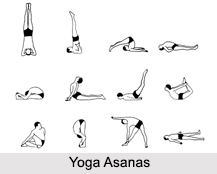
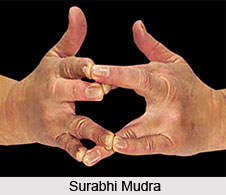
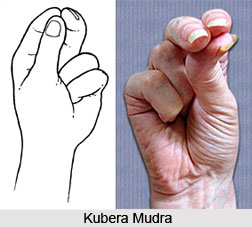
 Indian Yogic Philosophy on spirituality is intricately much deeper and rich than anywhere else. The strong roots have not only been preserved by the Indian culture and traditions since thousands of years, but have also spread to the western nations. It is based on this ideology that conception of Hatha Yoga has taken place. Since Hatha yoga has developed post-Vedic, it is important to place yoga within the context of Indian philosophy. To know Hatha, one has to understand at least some of the theoretical themes that reveal the practical endeavour of yoga. This elaborate theme is embedded in Indian philosophy or Darshanas. To understand the relation with Hatha Yoga, particular attention is required for the classical Yoga Darshana of Patanjali and its relevance to Hatha Yoga.
The Six Astika Darshanas
Vedic Samhitas may be seen as the roots of the Indian philosophical tradition. The Brahmanas, Aranyakas and Upanishads may arise from that root which then followed the multiple philosophical "schools" in the post-Vedic era. The authority of these schools is derived from their adherence to the Vedic scriptures. Although, they all are secondary to the Vedas and Upanishads themselves, each major "school" is presented not in the form of a long and rigorously argued treatise but as a series of terse statements, known as "Sutras". Sutras are the coded medium to convey knowledge in different ways.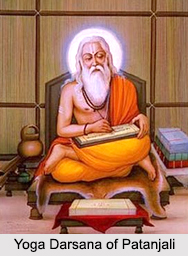 The traditions of interpretation, which are based upon these texts, are known as Darshanas. Sutras, like shruti are believed to be verbal expressions of truth or realization.
Darshana denotes a system of philosophy, or doctrine in the sense of a treatise or an enquiry into truth or reality. There are six principal Astika or Vaidika Darshanas, which embody the firm conviction in Veda. The Six Astika Darshanas are:
1. The Vaisesika Darshana founded upon the Vaisesika Sutra of Kanda.
2. The Nyaya Darshana founded upon the Nyaya Sutra of Gautama.
3. The Samkhya Darshana founded upon the Samkhya Sutra of Kapila.
4. The Yoga Darshana founded upon the Yoga Sutra of Patanjali.
5. The Purva Mimansa Darshanas founded upon the Mimamsa Sutra of Jaimini.
6. The Uttara Mimansa or Vedanta Darshana founded upon the Vedanta Sutra (or Brahma-Sutra) of Badarayana.
Hatha Yoga views itself as being thoroughly Vaidika. This fact is something, which is implicit within the general philosophy of the Hatha treatises and even more explicit in the codes of ethical conducts as prerequisite for the yoga. The interpretation of these Sutras is difficult task in itself due to the extremely complex format of sutras where by the maximum amount of meaning is condensed into the minimum number of words. Each word and phrase contains various possible interpretations. The Darshanas have a tremendous amount in common and they are all directed towards a goal of human liberation or Self-realisation. The intra and inter conflicts between various Darshanas can be regarded as the subjective choice available for the person or seeker.
Indian Yogic philosophy is much deeper rather than the knowledge for the sake of knowledge. The philosophical enterprise here acts as a method for cultivating virtue and self-understanding.