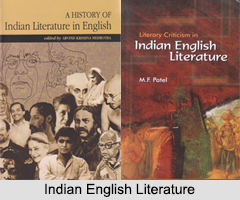
 Indian English Literature pertains to that body of work by writers from India, who pen strictly in the English language and whose native or co-native language could be one of the numerous regional and indigenous languages of India. Indian English Literature is also intimately linked with the works of associates of the Indian diaspora, who was born in Indian but presently resides elsewhere.
Commencing from Mulk Raj Anand, R. K. Narayan, Anita Desai, Sarojini Naidu, Toru Dutt to Salman Rushdie, Vikram Seth, Allan Sealy, Amitav Ghosh, Jhumpa Lahiri, Chitra Banerjee, Arundhati Roy, Vikram Chandra - the panache of fine Indian writers is long and much augmented.
Development of Indian English Literature
Indian English Literature precisely conforming to its gradual evolution had all begun in the summers of 1608 when Emperor Jahangir, in the court of the Mughals, had welcomed Captain William Hawkins, Commander of British Naval Expedition Hector, in a gallant manner. Though India was under the British rule, still, English was adopted by the Indians as a language of understanding and awareness, education and literary expression with an important means of communication amongst various people of dissimilar religions.
History of Indian English Literature
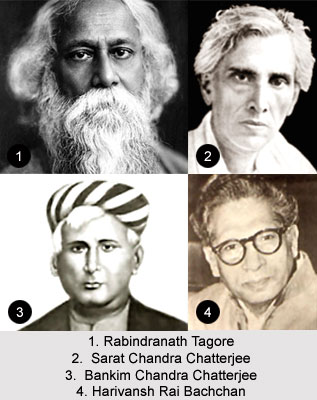
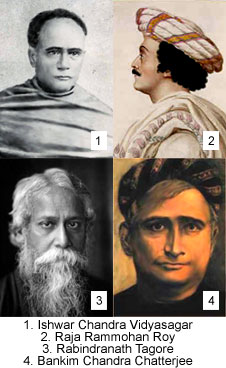
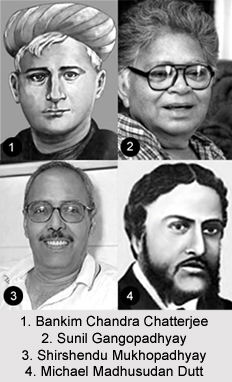
Indian English Literature dates back to two centuries. “The Travels of Dean Mahomet†by Sake Dean Mahomed and published in England in 1794 is the first book written by an Indian in English. Early Indian writers used unadulterated English in Indian words and style to convey an experience which was essentially Indian. Henry Louis Vivian Derozio is considered the first poet in the lineage of Indian English poetry followed by Rabindranath Tagore, Sri Aurobindo, Sarojini Naidu, Michael Madhusudan Dutt, and Toru Dutt, among others. Bankim Chandra Chattopadhyay wrote “Rajmohan`s Wife†and published it in 1864, making it the first Indian novel written in English. The novel earned tremendous admiration as one of the prominent Indian English novels. Bianca, or The Young Spanish Maiden (1878) by Toru Dutt was the first novel written by an Indian woman.
In the beginning, however, political writing in the novel or essay format was dominant, as can be seen in Raja Ram Mohan Roy and his extraordinary output. He had written and dedicated pages about social reform and religion in India, solely in the medium of English. The 19th and early 20th century witnesses diversity in Indian English literature with non-fictional prose-works like letters, political manifestos, diaries, philosophical works, articles, speeches, etc. “Indian Home Rule" or “Hind Swaraj†by Gandhiji in 1910 was written in indigenous English language.
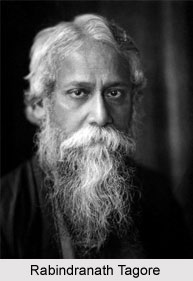
Kisari Mohan Ganguli is the first and the only one to translate the Mahabharata into English. Nobel laureate- Rabindranath Tagore wrote in both Bengali and English and even translated his works into English. Dhan Gopal Mukerji was the first Indian author to win a literary award in the United States. "Writers Workshop" is the first press for Indian English writing founded by P. Lal in the 1950s.
R. K. Narayan is an India writer who wrote in English. He created the fictitious town of Malgudi where he set his novels. His contemporary writer Mulk Raj Anand gained recognition for his English writing set in rural India. Raja Rao, an Indian philosopher and writer, authored “Kanthapura†and “The Serpent and the Rope†in English which are completely Indian in style and description. Narayan, Anand, and Raja Rao together are considered the trinity in Indian English literature.
 Style of Indian English Literature
"Stylistic influence" from the local languages appears to be an exceptional feature of much of the Indian English Literature - the local language construction and system is very much reflected in the illustrations, as is mirrored in the literal translation of local idioms. Yet one more breathtaking and praiseworthy feature of these English Indian writers is that they have not only "nativised" the "British mother tongue" in terms of stylistic features, but they have also acculturated English in terms of the "Indianised context".
Writers of Indian English Literature
Besides the legendary and hugely venerated Indian English literary personalities like Rabindranath Tagore or R. K. Narayan, later novelists like Kamala Markandaya, Manohar Malgaonkar, Anita Desai and Nayantara Sahgal, have ceaselessly captured the spirit of an independent India struggling to break away from the British and traditional Indian cultures and establish a distinct identity.
Indian Novelists writing in English
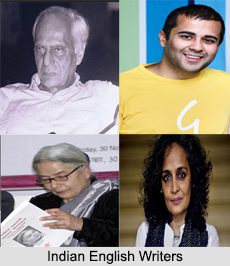
During the 1980"s and 90"s, India had emerged as a major literary nation. Salman Rushdie"s "Midnight"s Children" had become a rage around the world, even winning the Booker Prize. The worldwide success of Vikram Seth"s "A Suitable Boy" made him the first writer of the Indian Diaspora to enter the sphere of elite international writers and leave an indelible mark on the global literary scene. The writer in the genre of Indian English literature, who took the world with a storm, was Arundhati Roy, whose `The God of Small Things` won the 1997 Booker Prize and became an international best-seller overnight.
Other Indian English Literature Novelists of repute of the contemporary times include - V.S. Naipaul, Shobha De, G.V. Desani, M. Ananthanarayanan, Bhadani Bhattacharya, Arun Joshi, Khushwant Singh, O.V. Vijayan, Allan Sealy, Sashi Tharoor, Amitav Ghosh, Rohinton Mistry, Firdaus Kanga, Kiran Desai, Sudhir Kakar, Ardeshir Vakil, Jhumpa Lahiri and others. Former Prime Minister P.V. Narasimha Rao, Satish Gujral; R.K. Laxman, Prof. Bipin Chandra, Sunil Khilnani, J.N. Dixit, Yogesh Chadha and Pavan K.Varma are also outstanding Indian English writers of the recent times.
Indian Poets Writing in English
The mid-20th century Indian literature in English had witnessed the emergence of poets such as Nissim Ezekiel, P. Lal, A. K. Ramanujan, Dom Moraes, K. N. Daruwalla and Geive Patel. These authors heavily had made use of Indian phrases alongside English words and had tried to reproduce a blend of the Indian and the Western cultures.
Indian English literature is an honest enterprise to demonstrate the ever rare gems of Indian writing in English. Indian English has turned out to be a new form of Indian culture and voice in which India converses regularly. While Indian authors like poets, novelists, essayists, dramatists - have been making momentous and considerable contributions to world literature since the pre-Independence era, the past few years have witnessed a gigantic prospering and thriving of Indian English writing in the global market. Not only are the works of Indian authors writing in English surging on the best-seller list, they are also incurring and earning an immense amount of critical acclamation.