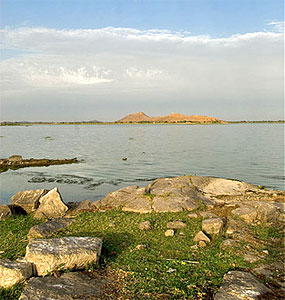
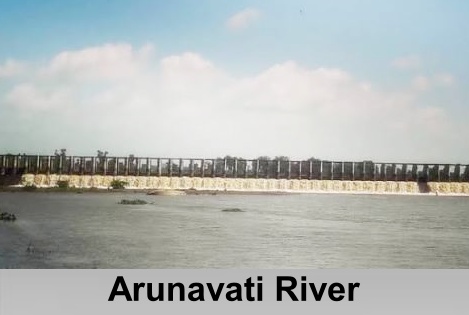
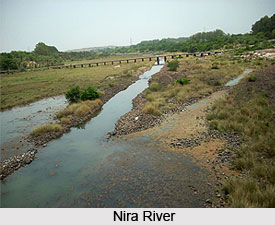
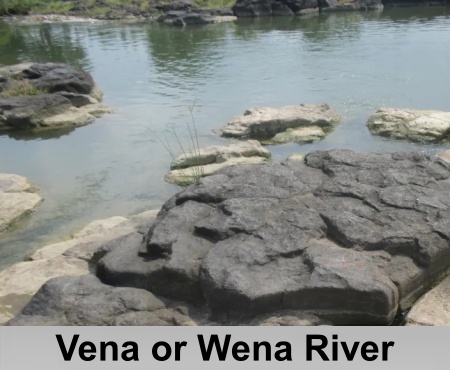
Thamirabarani River originates from the Agastyarkoodam peak of Pothigai hills of the Western Ghats, above Papanasam in the Ambasamudram taluk. It flows through Tirunelveli and Tuticorin Districts of the Tamil Nadu state into the Gulf of Mannar of the Bay of Bengal. The river has a distinct reddish tinge because the water contains copper. Thamirabarani River has its mention in the ancient Tamil and Sangam texts as well. The river flows for 125 kilometers out of which 75 kilometers are in the Tirunelveli district. Along with its tributaries, the river drains an area of 4400 square kilometers.
Etymology of Thamirabarani
Thamirabarani River contains small amount of copper, which gives the river water a distinct reddish tinge. In Tamil, copper is called Thamiram and hence the river is named Thamirabarani. The river was earlier called Tamraparni River; its old Tamil name is Porunai.
Geography of Thamirabarani River
Thamirabarani River is 130 kilometers in length and the Thamirabarani basin is situated between the latitudes of 8.21minutes N and 9.13 minutes N and between 77.10 minutes E longitudes. The 40 meters deep Vanatheertham waterfalls are located near the origin of the Thamirabarani River. The river is fed by its tributaries as well as by monsoon.
Tributaries of Thamirabarani River
Thamirabarani has several tributaries, which join at different points during its course. The tributaries are Peyar, Ullar, Karairar and Pamba rivers joining near the Papanasam Reservoir. A major tributary of Thamirabarani is the Servalar River, which joins at a distance of 22 kilometers from its origin. Manimuthar River originates in the Agathimalai Ranges and joins Thamirabarani near Ambasamudram. Gadana River joins at a distance of 43 kilometers from its origin. Pachaiyar River joins near Gopalasamudram. Chittar River flows for 73 kilometers before joining the Thamirabarani.
Dams across Thamirabarani River
Several anicuts, dams and reservoirs have been constructed across the Thamirabaran River for irrigation. The anicuts are Kodaimelaalagain anicut, Nathiyunni anicut, Kannadian anicut, Ariyanayagipuram anicut, Palavur anicut, Suthamalli anicut, Marudur anicut.
Fishes Found in Thamirabarani River
For being the only perennial river from South India, Thamirabarani River is full of fishes of various types. It is one of the richest rivers in the world with fish and is dominated by more than 16 species of native snakehead fish. It is estimated that nearly 669 fish species are found in the river. Apart from snakehead, some other species of fish found in the river are Catfish, Alligator Gar, Eels, Carp, Roaches, Plecos, Loaches and others.