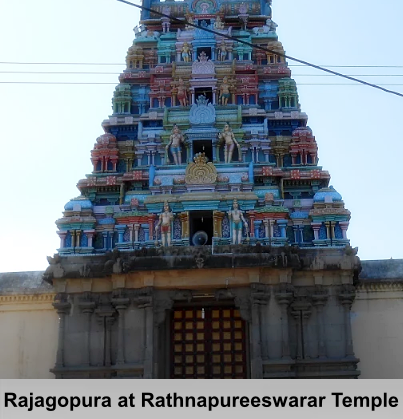
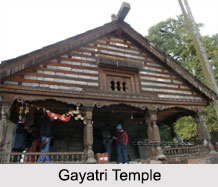
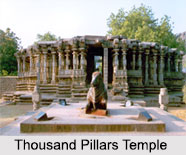
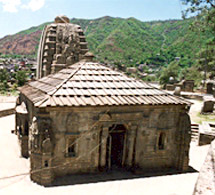
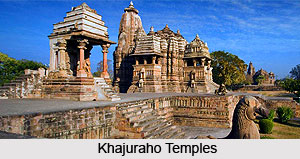
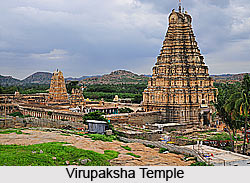
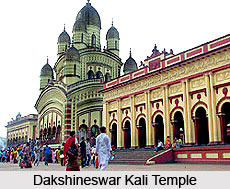
 Dating to the ancient days, there has been a plethora of shrines and temples all over the country. The North Indian Temples not only has Hindu temples, the place also houses Buddhist temples, Gurudwaras and Jain temples as well. The basic structure of the North Indian Temples in India is more or less the same and has similar features.
Architecture of North Indian Temples
The North Indian Temples were typically built in the Nagara Style of Architecture. This style of architecture is characterized by its distinctive shikhara, a superstructure, tower and a sanctuary, which is the main part of the temple and is also known as the vimana. In the vimana, a small chamber called the garbhagriha or the inner sanctum is present where the main idol or deity is kept. The garbhagriha is preceded by more than one mandapa or pavilion which is connected to the sanctum by an open or closed vestibule. The entrance to the sanctum is richly decorated with figures of River Goddesses and floral motifs with figural and geometrical ornamentation.
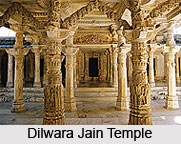
According to the Nagara style, the temple structure consists of two main buildings. The main place of worship is taller and has an adjoining shorter mandapa. The key difference between these two is the shape of the sikhara. The sikhara is usually curvilinear in outline, and smaller rectilinear shikharas frequently top the mandapas as well. The shikharas of the North India temples basically resembles an upturned cone that is decorated with miniature conical shikharas. There are also some temples in North India which developed their own local flavour, setting aside their basic native style. In the main shrine, a bell shaped structure helps to increase the height of the temple. There is the kalasa at the top as in all Hindu temples. The ayudha or emblem of the presiding deity is also present. Fundamentally, there is no structural difference between the Hindu and the Jain temples in the North except that the need for housing the various Tirthankars dominates the disposition of space in the latter. Moreover, the Jain Temples achieve their effect from the grouping together of a number of shrines on such high spaces as the hills can provide, and are characterised by an air of seclusion and aloofness. Here, listed below are some of the popular North Indian Temples.
 Temples in Jammu and Kashmir
The northern most state in India, apart from the appealing scenery and nature, Jammu and Kashmir has a number of towering temples. The most popular temples here are the Amarnath Temple at Pahalgam, the Vaishno Devi Temple and the Raghunath Temple, which is known to be one of the largest North Indian Temples. Other temples here include the Shankaracharya Temple, Avantipur Temple, the Bahu Fort and Temple, and even gurudwaras of Shri Guru Nanak Dev Ji and Nangali Sahib.
Temples in Himachal Pradesh
Himachal Pradesh is said to be the land of Gods, often called `Devabhoomi. From Hindu temples to Jain temples to mosques, the landscape of Himachal Pradesh is dotted with multiple shrines. There are a number of temples dedicated to village deities. Some of the caves found here include Chamunda Devi temple situated at Kangra, Jwalamukhi Temple at Dharamshala, Jhakhu Temple at Shimla, Chaintpurni Temple at Una, Naina Devi Temple at Bilaspur, Bhutanath Temple at Mandi, Bhimakali Temple at Sarhan, Lakshmi Narayan Temple at Chamba, etc.
 Temples in Haryana
The North Indian Temples of Haryana are mostly of the ancient era. These primitive temples are not just places of worship. Most of these are architectural masterpieces and are treasuries of erudition and ethnicity. The famous temples in Haryana are the Bhawani Amba Temple, Jawala Maleshwara Tirath, which is considered to one of the oldest North Indian temple. Then there is the Mansa Devi Temple, Birla Mandir, Sthaneshwar Mahadev Temple, Shiv Temple, Sheetala Devi Temple which are some of the important temples.
Temples in Punjab
To witness the rich history, culture and traditions of the state of Punjab, one must visit the numerous temples and shrines, where devotees throng every year. The most prevalent religion in Punjab is that of Sikhism , which can be seen in many of the temples and gurudwaras. The most famous North Indian Temple of Punjab is the Harmandir Sahib or the Golden Temple. The other temples include mainly the gurudwaras of Baba Atal Sahib, Manji Sahib and Alamgir along with temples of Devi Talab, Ram Tirth and Panch Mandir are also quite famous.
 Temples in Uttarakhand
There are various temples situated in the Uttarakhand that gather devotees throughout the year. Char Dham makes one of the major pilgrimage centres that include the four most worshiped Hindu temples. These four temples are the Yamunotri Temple, Gangotri, Kedarnath and Badrinath. According to Hindus, the Char Dham Yatra is an auspicious journey of highly religious significance. Other than the Chardham, other sacred cities like Haridwar and Rishikesh has numerous temples of deities like the Neel Kanth Mahadev in Rishikesh and the hill top temples of Mansa Devi and Chandi Devi in Haridwar. Among the other famous temples there are the Vishwanath Temple in Almora and the Binsar Mahadev Temple in Ranikhet. These are some of the most important pilgrimage attractions in Uttarakhand
Temples in Uttar Pradesh
Some of the most ancient and sacred temples of India are situated in the state of Uttar Pradesh. Important temples here include the Kashi Vishwanath Temple, Sarnath Temple, Vindhyanchal Temple, Baldeva Dauji Temple, Ram Janmabhoomi, Banke Bihari Temple and others.
Temples in Delhi
Temples in Delhi are a blend of ancient and modern Indian architectural styles. There is a sizable population of Hindu, Jain and Buddhist temples in Delhi along with a small number of shrines that belong to different beliefs. Some of the important temples, which are remarkable in Delhi, are as follows -Iskcon Temple, Chattarpur Mandir, Lotus Temple, Hanuman Mandir , Kali Bari Mandir, Kalkaji templele,le, Lakshmi Narayan Temple, Shani Dham Temple, Yogmaya Temple, etc.
North Indian Temples
India has a rich cultural and historical heritage because of its temples and pilgrimage sites. The North Indian Temples are in plenty and cater to people of all religion.