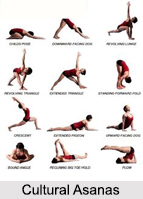
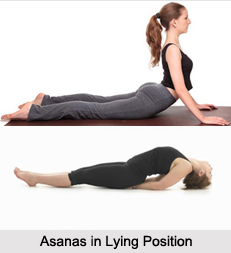
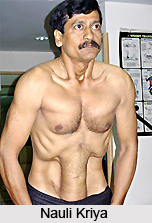
 Nauli Kriya is one of the shatkriyas (six actions) mentioned in Hathapradipika. It is an abdominal exercise, meant for cleansing the colon. Nauli is one of the cultural asanas that is usually practiced by accomplished yogis. The characteristic feature of nauli is the isolation and manipulation of the right and the left abdominal recti muscles. Uddiyana is a basic technique required for nauli and nauli forms an essential part of the basti kriya. One, who maintains uddiyana easily for 15-20 seconds, can perform nauli perfectly. Nauli is practiced only after the practice of Uddiyana asana. Nauli is classified into middle, left and right, in respect to the movement of the abdomen.
While maintaining uddiyana, both the knees are pressed with the help of the palms and a forward and slightly downward thrust is given at the same time to the abdominal portion between the umbilicus and the pubic bone. This brings about a contraction of the abdominal recti muscles between the pubic bone and the ribs and a prominent appearance of these muscles. Since other abdominal muscles are kept in a relaxed condition and only the abdominal recti muscles are contracted, the vertical isolation of these muscles is possible. The equal pressure on both the knees further helps the practitioner to achieve the perfect isolation of both the abdominal recti muscles and to make them stand side-by-side in the centre. This is known as Nauli Madhyama or Madhya nauli.
Practice of Nauli Kriya
First, the practitioner should practice and master the technique only up to Madhya nauli. The isolation of both the recti muscles should be complete and their projection should be prominent, compared to the rest of the abdomen. Once the control on Madhya nauli technique is gained, the remaining part of nauli technique could be practiced easily. The whole practice should be painless. The success in `basti` or `vajroli kriya` also depends on this fine and easy control.
While maintaining Madhya nauli, the practitioner leans little more on the right side and relaxes his left side of the abdomen. The pressure on the right knee is increased and at the same time the pressure on the left knee is removed. Thus, only the right rectus muscle is contracted and rolled off to the extreme right side. The left rectus is kept relaxed and passive. This isolation and projection of only right rectus muscle is called Dakshina nauli.
Now, leaning little more on the left side and simultaneously applying more pressure on the left knee makes the left rectus muscle isolated and rolled off to the extreme left side. The right rectus is relaxed at the same time. Thus, the manipulation of the left rectus muscle on the left side is known as Varna nauli. One has to maintain left or right nauli for a sufficient time.
When the practitioner gets full control over this static aspect of nauli, i.e., Dakshin, Varna, and Madhya nauli, one can proceed for nauli chabn. The rolling of the recti muscles may be clockwise or anti clockwise for several times. The whole sequence of rotation is gone through in a quick succession, without any discomfort, pain or strain at any stage. The whole manipulation is continued till one strongly desires to breathe in. In fact, it is not a rotation or rolling as people speak often, but it is the alternate isolation of these three aspects of nauli one after the other which appears as if moving from right to left or left to right. The above diagram will help to understand the whole process better.
Such three to seven rounds are practiced at a time, daily. The practitioner may take rest and breathe normally for a couple of seconds between two rounds if necessary. Nauli is practiced with an empty stomach.
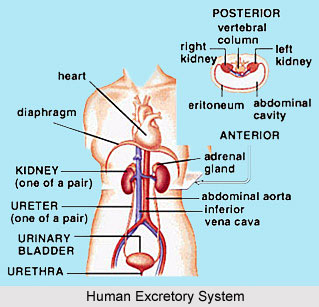
The main characteristic of nauli is the development of sub-atmospheric pressure inside the various abdominal organs like stomach, urinary bladder, colon and esophagus. Swami Kuvalayananda investigated the creation of negative pressure in colon during nauli for the first time in 1924. He named this partial vacuum in colon as Madhavdas Vacuum, in the honour of his guru Swami Madhavdas Maharaj. In the beginning, the creation of such negative pressure was thought because of anti-peristaltic movement by some authorities. They tried to explain the suction of water in colon during basti. But the theory of anti-peristalsis could not explain the water or oil suction in urinary bladder during vajroli. The negative or the suction pressure is developed due to ascending action of the diaphragm and the isolation of the abdominal recti muscles. The negative, pressure was found in various degrees in different cavities and was maximum in colon. The X-ray studies on nauli have revealed that the right and the left domes of the diaphragm move up independent of each other in Dakshina and Vama nauli respectively. Different parts of the colon also move due to rolling manipulation in nauli and thus cause redistribution of the colon contents. The lumbar portion of the spinal column is stretched during nauli.
Benefits of Nauli Kriya
Thus, nauli is an excellent exercise for the abdominal viscera. It maintains the optimum tone of the abdominal recti muscles by their repeated contraction and relaxation. The recti muscles become stronger and support the internal organs well. The abdominal wall cannot bulge out. It is claimed that nauli relieves constipation, indigestion and improves functioning of the liver. Nauli promotes the blood circulation in the pelvic region due to high negative pressures and tones up the nerves in this area. Increased circulation of blood removes the waste products more effectively and prevents congestion in the lower abdomen.
Thus, it also acts as a cleansing process on the physical level. It helps to mobilize fat, deposited on the abdominal wall and maintains the shape of the abdominal muscles. The nerve plexuses and their fine terminals in the pelvic region are stimulated mechanically. The nature of sensation may vary from individual to individual. Thus, nauli renders gastro-intestinal system healthy by acting powerfully on the abdominal organs. The endocrinal glands in the abdominal area are also stimulated. Since the gastric cavities are affected due to the negative pressure and are stretched or relaxed alternately, the autonomic nervous system associated with them is also stimulated.
The autonomic nervous system then becomes capable of establishing optimum level of physiological functions. Anxiety can alter the tone of the stomach muscles and gastric glands secrete more acid. So it is quite possible that people are tackling emotional make up while practicing kriyas like nauli and kapalbhati. One should therefore relax sufficiently after practicing kriyas and should drink milk to calm down.
The blood circulation is increased in the abdominal area due to negative pressure development. The negative pressure and the increased blood supply to visceral organs can stimulate the hormone secretions. Similarly in females, the uterus is also subjected to the negative pressure. Therefore, they should practice nauli kriya cautiously.