





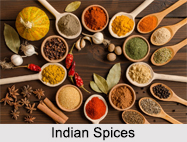
 Indian Spices are used to rustle up scrumptious delicacies. They are more than just ingredients to add flavour and aroma to foods. The Indian spices play an important role in its economy as well. The Indian climate supports the growth of an array of spices and as a result the nation produces 75 types of spices out of the 109 listed with the International Organization for Standardization (ISO). Indian Spices are used to rustle up scrumptious delicacies. They are more than just ingredients to add flavour and aroma to foods. The Indian spices play an important role in its economy as well. The Indian climate supports the growth of an array of spices and as a result the nation produces 75 types of spices out of the 109 listed with the International Organization for Standardization (ISO).
History of Indian Spices Even in the ancient and medieval ages the Indian spices played a significant role in strengthening its economic condition. The history of Indian spices narrates a long story of trading with the ancient civilisations of Rome, China, etc. With changing times, however, the spice trade grew in leaps and bounds and the Spices Board of India was set up to administer the spice trading. States like Kerala, Punjab, Gujarat, Manipur, Mizoram, Uttar Pradesh and several others are the hubs for growing spices. Besides exporting, these spices are also being used within the country for flavouring foods and in medicines, pharmaceutical, perfumery, cosmetics and several other industries. Medicinal Use of Indian Spices Besides serving as culinary ingredients, Indian spices have medicinal properties too and are, hence, good for health. In addition to this, spices are well known as appetizers and digestives and are considered essential in the culinary art all over the world. Some of them have anti-oxidant properties while others have preservative properties and are used in some foods like pickles and chutneys, etc. Some spices also possess strong anti-microbial and antibiotic activities. Types of Indian Spices Different parts of the spice plants are used to add flavour to the dishes. Indian spices are used in the forms of dried seeds, leaves, flowers, barks, roots, fruits and certain spices are grinded and used in the powder forms. At times a handful of spices are grind together and a paste is made to spice up Indian cuisines. • Seed Types Spices: Seeds are used in their original forms to enhance the flavours of certain food items. Some common seeds which are used as spices are Ajwain, Anardana, Aniseed, Caraway, Celery, Celeriac, Coriander, Cumin, Indian Dill, Fennel, Fenugreek, Mustard,Poppy Seeds, etc. 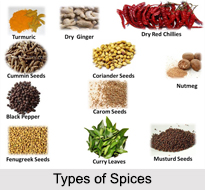 • Leaf Types Spices: Leaves of some plants are used as a flavouring agent that has a distinctive flavour when added to food. Some of the commonly used spices which come under the leaf category are Basil, Laurel Leaves, Tejpat, Curry Leaves, Peppermint Leaves, Mint, Parsley, Sage, Savory, Rosemary Leaves and others. • Leaf Types Spices: Leaves of some plants are used as a flavouring agent that has a distinctive flavour when added to food. Some of the commonly used spices which come under the leaf category are Basil, Laurel Leaves, Tejpat, Curry Leaves, Peppermint Leaves, Mint, Parsley, Sage, Savory, Rosemary Leaves and others.
• Flower/Fruit Types Spices: Other types of spices can be derived from the flowers and fruits of a certain plants. Some common flowers which are used as spices are Rose, Caper, Rhododendron, Juniper, Kokam, Mace and Nutmeg, Vanilla, etc. • Root Types Spices: Similarly the roots or parts of roots, of many plant species have become specialised to serve as spices. The roots used as spices are Galangal, Garlic, Ginger, Onion, Sweet Flag, Horse Raddish, Stone Leek, Lovage, Shallot and Turmeric. • Miscellaneous Types Spices: Some spices do not come under any category of seed, fruit, etc but yet belong to the family of spices. Some common miscellaneous spices are Black Pepper, Long Pepper, Chabika, Clove, Amchur, Asafoetida, Karpoor, Arrowroot, Musk Mallow and others. Besides these, the Indian spices are also used in Ayurvedic medicines; as preservatives and perfumes. It does not matter in what forms these are used as the Indian spices are sure to cast a magical spell on whoever uses them. |
| ||||||||||||||||||||||||||||

