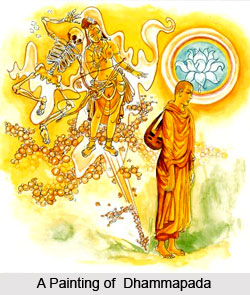
 Virtue or leading a virtuous life is an important postulate in the philosophy of action. In Dhammapada, Lord Buddha maintains that the short span of a single day of virtuous and meditative man is better than an unrestrained and wicked life of hundred years. The fragrance of the virtuous man is unsurpassed and it pervades every direction. He has said that the avoidance of sins and acquirement of virtue is pleasant. The offerings made to those who are free from malice bring great reward. Buddha had mentioned that the gift of the Precepts excels all gifts. Dharma is the only truth. One must choose the path of virtue to attain Nirvana. The first and the most important thing in a virtuous life is sticking to Truth and carrying out in action what one utters.
The outcome of leading a virtuous life is excellent, which rises up to the gods as the highest. He has said that an individual is never troubled with any kind of temptation when he becomes virtuous, vigilant and emancipated through true knowledge. This section has emphasized on the fact that greediness is the worst kind of disease and bodily existence the greatest of pains, taking cue from this the Lord had said that when an individual realises this it becomes easier for him to attain Nirvana. While discussing about the pleasure that Nirvana offers, Dhammapada mentions several instances of different kinds of pleasure which includes the pleasure of motherhood and the pleasure of fatherhood. At the same the text has said that it is virtue which remains pleasant till old age. Similarly there is a lot of pleasure associated with the acquisition of wisdom and avoidance of sins.
This section of the Dhammapada has emphasised on the fact that if by renouncing some little pleasures one is able to attain greater pleasures of life, it should be the duty of individuals to renounce the little pleasures in lieu of the greater pleasures. Lord Buddha had taught that Dharma is the only truth. The Dhammapada narrates that the gift of the Dhamma excels all gifts. The flavour of the Precepts excels all flavours. The delight in the Precepts excels all delights. The extinction of carving conquers all sorrow.
As Dhammapada concludes its explanation on a virtuous life it explains that an individual should act according to his words. Words which are devoid of actions are completely useless. Hence only the words of such an individual are worthwhile who acts according to his words. On the contrary big words without action are like empty vessels.
Therefore it is evident that Lord Buddha had given a lot of focus to a virtuous life. He had said that only by leading a virtuous life one can attain happiness in life.