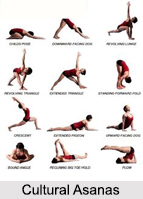
Uttana Kurmasana is also referred to as the "Upside-down Tortoise Posture", "Kachhua or Kachua Asan", "Uttan Kurm Asan", "Uttana Karma Asana", "Intense or extended Tortoise posture". In the Yogic texts this yoga posture has been defined as a cultural asana. It is known so as the posture looks like an upside down tortoise.
Etymology of Uttana Kurmasana
In Sanskrit the word "Kurma" is known as "Tortoise". Thus this asana is also known as the "Upside-Down Tortoise Posture" as per the lay out or positioning.
Practice of Uttana Kurmasana
•Sitting in the staff pose.
•After that slowly going into the pose of Vajrasana.
•Now the back needs to be stretched from the tailbone towards the head. The back should be kept straight but not stiff start bending forwards and reach out for the floor and rest the head on the floor.
•Place the nose closer to the knees thereafter stretch out both the arms backwards to the feet.
•In this position the palms and the feet should rest parallel to each other and the palms must also face upwards to the ceiling.
•In order to revert to normal position one needs to come out slowly come back to the first or the beginning position and relax down.
Benefits of Uttana Kurmasana
•Helps to open out the thighs, hips, back and shoulders.
•Increases concentration since it keeps the focus of the mind inwards.
•Useful in various ailments of neck.
•Helps in the improvement of the respiratory rate.
•Even reduces down the bulkiness in and around the abdomen.
•Also increases the blood flow to the brain.
•Very beneficial for those suffering from constipation, indigestion and nervous weakness.
Precautions for Uttana Kurmasana
•Should not be practiced by a person with recent or chronic injury to the hips, shoulders, neck or back.
•Also if suffering from muscle pull should not practice this asana.
•This is also a good exercise to control irregular menstruation or painful cramps on or during the menstruation period.
•This is also a fat shedder which is evident as one bends down and massages the stomach holding in the organs with a locked inhale.