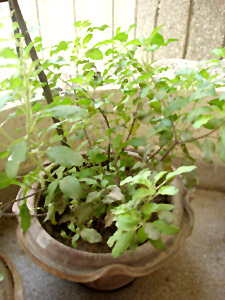
 Tulsi in Hindu Rituals symbolises purity. It has cultural significance as well as possesses medicinal properties. Those who have this plant at home worship it daily in the morning. It is seen that in the morning children are made to put tulsi leaves in a glass of water which is kept in the prayer room. This is offered after the prayers are over. Lord Vishnu is generally offered to Lord Vishnu. Vaishnavas follow the daily worship of tulsi during the month of Karthika. The plant Tulsi derived its name from Tulsi Devi. Tulsi Devi was one of Lord Krishna`s eternal consorts. Tulsi leaves are used in temples for the worship and on several occasions like marriage. The Tulsi plant is considered to promote longevity and life long happiness. In the month of Karthika Hindus perform special Tulsi Puja which starts after Sharad Purnima. Tulsi Vivaah takes place during this time. On this day Tulsi plant is decorated like a bride. Here tulsi is ceremonially married to Lord Krishna on the twelfth of the month of Karthika in the lunar calendar. The stems, leaves, seeds and the soil of Tulsi are considered as sacred. According to the ancient religious texts Tulsi plant is considered as the one who helps in bringing people closer to the divine force.
The name `tulsi` means "the unparalleled one". There are two types of Tulsi - Krishna tulsi and Rama Tulsi. Water mixed with tulsi petals is given to the dying in order to raise departing souls to heaven. According to Brahma Vaivarta Purana this plant is an expression of Sita. Krishna tulsi is used in the worship of Lord Hanuman.
This article is a stub. You can enrich by adding more information to it. Send your Write Up to content@indianetzone.com