
Trial and Torture to Elicit Confession lays down, in chapter VIII of Book IV in Arthashastra, whether the accused is a stranger or a relative to the complainant ,his defence witness shall be in the presence of the complainants, be asked according to the defendant`s country, caste, name, occupation, family, friend, property and residence. The answers obtained shall be compared with defendant`s own statement; he shall be asked to describe the nature of work he was engaged in the previous day but also the place where he spent the night till he was caught and put to prison. If his answers are counter checked with the reliable referees and found correct then they shall be acquitted or else shall be subject to torture.
Trial and Torture to Elicit Confession states that in case of three days of commission of the crime no suspected person shall be arrested till there is no room for questions and can be detained only unless there is some strong evidences to bring home the charges. Persons who charge the innocent man with theft or conceal a theft shall themselves be liable to punishment .If the innocent person is able to prove the intentional intrigue as well as hatred of the complainant towards the innocent then he shall be acquitted and if any person keeps the innocent in confinement shall be punished with first amercement.
Trial and Torture to Elicit Confession mentions that the guilt of an accused shall be established only with the production of such evidences as the instruments used by the accused, the accomplices or abettors, the stolen articles and the middlemen involved in selling and purchasing the stolen articles. The validity of these used items shall be checked with reference to the scene of the theft and the circum stances connected with the possession and distribution of these stolen articles. If on a contrary there is no such evidence then the accused shall be treated as innocent. Ignoramuses , youngsters, the aged the afflicted, persons under intoxication, lunatics, those suffering from hunger, thirst, fatigue of a journey, and all those who have made confessions on their own accord and the persons who are substantially weak to commit a crime shall be exempted from, torture.
Trial and Torture to Elicit Confession claims that those whose crime is proved shall be subject to torture except those who are carrying babies or have just passed the stage of delivery; in that case their level of torture shall be half of the prescribed torture; no women shall be liable to cross examination; those of Brahmin origin or who has learned Vedas as well as ascetics shall be subject to espionage and anyone who violates these laws shall be punished with first amercement. Arthashastra acknowledges four types of tortures which include six punishments, seven kinds of whipping, two kinds of suspension from above and water tube. It further gives a description of each form of torture and the punishment incurred upon the guild. Each day a fresh torture can be employed. Regarding those who have committed crimes or those who rob in accordance with the threat previously made by them, or have been caught using the stolen items, or are caught in the very act oh theft itself or have attempted to seize the king`s treasure or have committed a couple of crimes shall be subject to any of the above mentioned punishments for either once or for multiple times. In case of a Brahman, no Brahman shall be accused of the crime and no Brahman offender shall be tortured. He shall have to leave some sign of his crime which will indicate his origin. After proving his crime the king shall be of the power to either send the Brahman offender to the mines for life or banish him.
Thus, in the Removal of Thorns, Kautilya lays down some of the strict steps to administer justice with severe punishments. As the Book IV of Arthashastra is mainly intended to check the increasing crimes in the region, Chapter on Trial and Torture to elicit confession is mainly written to describe the laws of punishment.
Trial and Torture to Elicit Confession
Trial and Torture to Elicit Confession has been included in Chapter VIII of Book IV in Arthashastra. It mainly highlights the procedures laid by the state to trial and execute an accused. While it defines the procedure for defending the accused, it at the same time; lays down the list of punishments for various types of crime which has been recognised by Arthashastra as a crime.
Recently updated articles in History of India
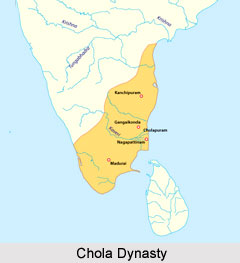
Chola Dynasty
Chola Dynasty is a Tamil dynasty and had longest duration of ruling in parts of South India. Chola dynasty had ruled South India successfully for a ex...
Suhungmung
Suhungmung was the fourteenth ruler of the Ahom dynasty who ruled from the period 1497 to 1539 AD. His reign was significant in terms of expansion of...

Princely State of Dadhalia
Princely State of Dadhalia was located in the present state of Gujarat. The state covered a total area of 28 sq miles and comprised of 15 villages. Th...
Princely State of Rupal
Princely State of Rupal was a part of the Baroda Agency, a sub division of Western India States Agency. It was under the administrative control of the...
Archaeological Sites of West Bengal
Archaeological sites of West Bengal reveal several aspects of ancient India. Excavations by the Archaeological Survey of India have furnished artefact...
Related articles in History of India
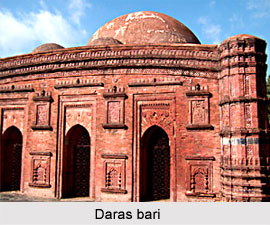
Mughal Architecture during Babur
Mughal architecture during Babur marked the foundation of a new architectural era in India, blending Timurid, Persian, and local influences. His reign...
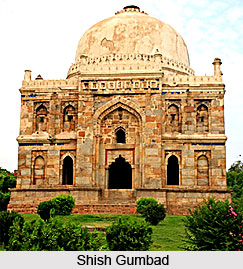
Architecture during Sayyid and Lodi Dynasty
Architectures during the Sayyid and Lodi dynasty were mainly the tombs and monuments for the dead rulers. It were carefully designed and meticulously...
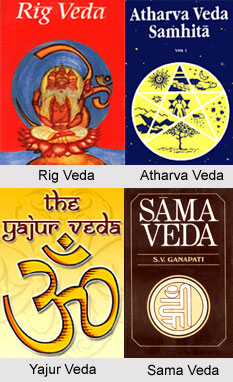
Brahmanical Sources of Ancient History
Brahmanical Sources of ancient history are contained in the Vedas and they constitute one of the most important literary sources of information about...
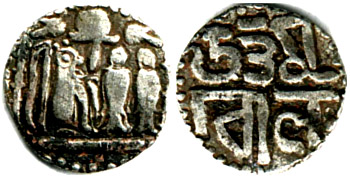
Coins of Chola Empire
Coins of Chola Empire were issued in gold, silver and copper and carried the Chola emblem.
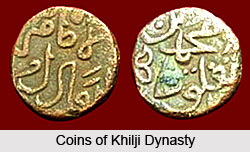
Coins of Khilji Dynasty
Coins of Khilji Dynasty had an influential feature that was followed by the other dynasties.