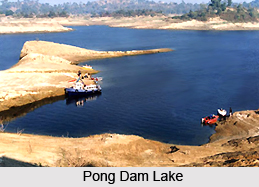
 Tourism in Pong Dam includes the landscape beauty of nature during dawn and dusk and the bird sanctuary named as Pong Lake Bird Sanctuary. Pong Dam is located on Beas River, near the upstream of Talwara, in the North Indian state of Himachal Pradesh. It is also referred to as the `Beas Dam` and it aims to preserve water for the purpose of generating hydro electric power and irrigation. The construction of Pong Dam commenced in the year 1961, as a portion of Beas Project.
In 1974, the construction of Pong Dam was finished and it was known to be the tallest dam in the country. There exists a lake adjacent to this dam, which has turned out to be a famous bird sanctuary.
Pong Dam Lake is the highest earth filling dam in India located in Kangra District on the border of Himachal Pradesh and Punjab.
Pong Dam lake stretches its cross at about 314 sq. km., and its northern tip touches the supporting walls of the forest rest house; an alarming change in water levels that nonetheless makes the region a strategic birding site. Over the last three decades, the reports show over a hundred thousand avian guests at this wetland. Pong Dam Lake is the house of over 85 species including Bar-headed Geese, Common Pochards, Common Coots, Northern Pintails, Northern Shovellers, Common Teals, cormorants, shelducks, gulls and many others. In 1980, there were about 20000 birds visiting this spot.
From Pong Dam Lake, one can find the natural mystic beauty of Dhauladhar Mountains. Pong Lake Bird Sanctuary, located near Pong Dam Lake is declared as a bird sanctuary in 1983 and one of the 25 international Ramsar sites in 2002, in India. The reservoir is additionally one of the leading fish habitats in the Himalayan states, and provides vital habitat to a host of mammals including leopards, sambar, wild pigs, barking deer and oriental small-clawed otters.
Pong Dam Lake was harnessed for irrigation and electricity generation in Himachal Pradesh. The avian habitats appeared in the draw-down area of Pong Dam Lake are lapwings, egrets, Grey Herons, Purple Herons. While in the open deep water, the fauna found mainly are grebes and cormorants. The dry sand banks with little or no vegetation, waterside vegetation and swamps below the out-fall from the dam; and shallow water at the resTourism in Himachal Pradesh ervoir margin are places for the birds like the crane, stork and other high flying birds. Pong dam Lake is fostering the activities like ecological tourism and fishing, which helps in strengthening the economical pillar in Himachal Pradesh.