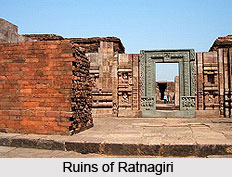
 The tourism of Jajpur is developed around the archaeological museum of Ratnagiri, which is one of the important site museums of archaeological Survey of India. The museum of Ratnagiri has a large number of sculptures, inscribed slabs, terracotta seals and sealing, votive stupas, shrines etc., which bear the testimony of Ratnagiri, was a flourishing monastic settlement. The Ratnagiri museum is the key attraction for those who have a keen fondness for the ancient culture.
Before the establishment of the museum the antiquities were placed in the sites, storeroom and in other places which lacked the proper display for mass awareness. However the museum highlight the antiquities, culture and heritage of the district of Jajpur. Apart from the archaeological antiques, the museum itself is also the matter of profound interest to the tourist. The Ratnagiri Museum is an aesthetically planned three terraced magnificent building, which was completed in 1990 and after necessary arrangements the museum was opened to the public on 15th August, 1998.It has 3400 listed antiquities of which 220 are displayed in the galleries. A variety of traditional collection belonging to the different dynasties is fascinating enough to the lovers of the ancient culture.
Consisting of four big galleries with long paced corridors the Ratnagiri Museum, draws a special significance in the tourism of Jajpur specially because of the sufficient number of antiquates, mainly related to tartaric Buddhism. A wide ranging variety of antiquates including small votive stupas, sculptures of different medium and dimensions in stone, bronze, ivory etc., stone and copper inscriptions, inscribed potsherds, innumerable terracotta seals and sealing, terracotta figures, variety of other metal objects like chhatras, haloes, ornaments, triangular objects, finials, flowers, decorated bands, small vessels, glass bangles, coins etc in the museum constitute to be the chief attraction for the tourists arrive here. Among the displayed item of embodying the Buddhist culture mention may be made of stone images of Buddha in various poses, Avalokitesvara, Khasarpana, lokesrpana, lokesvara, Manjusri, Tara, one six armed deity-all belonging to 9th to 11th century AD. Special mention may be made of an image of seated Tara and an image of Manjushri in dhyanamudra both of which mark the excellence of modeling.
Apart from the Buddha images, the stone images of Durga and Vaisnavi, inscribed stone slabs, stone disc etc are no less important, to fetch the tourist. The stepped corridor of the Ratnagiri museum is designed with the few monolithic votive stupas and photo blow-ups of excavated sites and remains of Udayagiri, Lalitgiri and Ratnagiri.
The Ratnagiri museum itself and the antiquates it store encourage the tourism industry of Jajpur to attain a thriving prosperity.