
 Churu district is situated in the North-East corner of Rajasthan. It is a place of great historical significance. The town is said to have been found by a Jat named Chuhru in 1620 AD. Churu, like an oasis, situated in the middle of the shifting golden sand dunes, opens the gate to the great Thar Desert in India. Churu District has a proud history from the time when its people fired silver cannon balls to defend its honour and freedom. Churu has freezing temperatures in winter and scorching heat in summer and its people have always struggled against famine and drought.
Churu District
Churu district is located centrally in the north eastern part of the state of Rajasthan. It is well known for its beautiful havelis which are prime tourist attractions in the district.
Introduction
Churu district is situated in the North-East corner of Rajasthan. It is a place of great historical significance. The town is said to have been found by a Jat named Chuhru in 1620 AD. Churu, like an oasis, situated in the middle of the shifting golden sand dunes, opens the gate to the great Thar Desert in India. Churu District has a proud history from the time when its people fired silver cannon balls to defend its honour and freedom. Churu has freezing temperatures in winter and scorching heat in summer and its people have always struggled against famine and drought.Location of Churu District
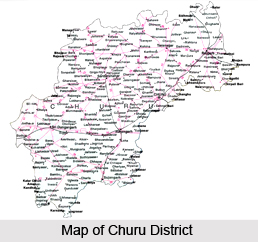
Churu district is located centrally in the north-eastern part of Rajasthan. It lies between 27 degrees 24 minutes to 29 degrees latitude and 73 degrees 40 minutes to 75 degrees 41 minutes longitude. Before independence, it was a part of Bikaner State. The district came into existence in 1948 comprising three tehsils- Churu, Rajgarh and Taranagar when the administration of Bikaner state was reorganized. The district, having a diversified climate and culture, occupied nearly 4.5 percent of the total area of the state. It is bound on the north by the Ganganagar district, on the east by Sikar and Jhunjhunu districts of Rajasthan and Hissar district of Haryana, on the south by Nagaur district and on the west by Bikaner district. Now it comprises of 5 sub-divisions, 6 tehsils, 2 sub-tehsils, 10 Municipalities and 908 villages.
Administration of Churu District
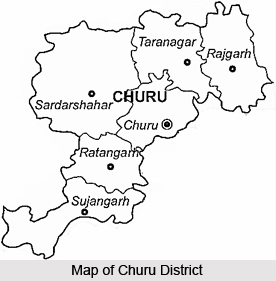 Administration of Churu District is carried out by the District Collector and District Magistrate who are at the head of District administration. The Additional District Magistrate and the Chief Executive Officer, Zila Parishad, are the two main helping hands at the district headquarters. As per the size and need of the citizens, the district has been divided into five sub divisions. A Sub Divisional Officer (SDO) works at the sub division level to provide support and leadership to the administrative system at the local level. The five sub divisions in the district of Churu are: Churu, Sujangarh, Ratanagarh, Sardarshahar and Rajgarh.
There are six tehsil headquarters in this district. Each one has a Tehsildar as the administrative officer, who works in accordance with the land-record system to serve rural farmers and land-holders. The tehsils of the district are: Churu, Sujangarh, Ratangarh, Sardarshahar, Rajgarh and Taranagar. A tehsil contains a number of "Patwar-Mandals", each of which has a `Patwari` to serve the landholders and farmers at the village level. There is one Additional tehsil - Bidasar and two Sub tehsils - Bhanipura and Sidhmukh.
Churu district is divided into 6 blocks (Panchayat Samitis) for the purpose of implementing and coordinating various developmental schemes. Each block has a Block Development Officer (BDO) to serve as an extension and developmental executive at the block level.
The six blocks of the Churu district are:
1. Churu
2. Sujangarh
3. Ratangarh
4. Sardarshahar
5. Rajgarh
6. Taranagar
Various development works and projects at the rural level (Gram Panchayat Level) are run through Block offices. One Gram Sevak is appointed at each Gram Panchayat to keep record of the development works and to project required development works. "Gram Sabha" (Village Meetings) are organized at fixed intervals to discuss about development of villages. There are 249 Gram Panchayats in the district. Due weightage has been given to public representatives in Panchayat Raj Institutions at each level.
Economy of Churu District
Cultivation, which is dependent on monsoon, is the chief occupation of the people of the district. Irrigation is scarce. So the people migrate to other states and gulf countries for their livelihood. In such adverse conditions, the District Industries Centre has been trying to put the district among the industrially developed districts of the state. The major produce of the industries includes Wooden and Iron handicraft, Flour mill, P.V.C. wire, Cable, Condiments, Stone Door Frames, Mosaic Tiles, Cold Drinks and Mineral Water, Washing Soap, Namkeen and Bhujia industries, Plaster of Paris, Wooden Furniture, Gwar Gum, Papad, Namkeen, Oil Mill, Water Cooler Body, etc. Bidasar is a newly established industrial area.
Tourism in Churu District
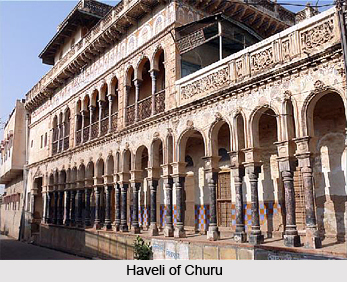 Tourism in Churu District is an enchanting affair as the place is full of antiquity and retains the essence of an era gone by. Beautiful temples, forts, and magnificent havelis rank high among the various places of attraction that Churu district offers to its visitors. The city has a magnificent fort which is believed to have been built by Thakur Khushal Singh in the year 1739 AD. The proud fort stands in the middle of the town where it is said that the brave Thakur Sheoji Singh tried to defend its honour by firing silver canon balls at the attacking army of the Raja of Bikaner. Apart from the many places of historic interest, there is also a wildlife sanctuary for the wildlife enthusiasts. Discussed below are the various place of tourism in the district of Churu.
The Kothari and Surana Havelis are a group of handsome painted havelis built by two prominent Oswal Jain merchant families, the Kothari and Surana clans. Amongst them are `Malji Ka Kamra` (Malji`s Haveli), an exotic stucco extravagaza built by Malaji Kothari around 1925 and the massive Surana Double Haveli, said to boast 1111 windows and doors built in the 1870s. Just south of the main bazaar, this haveli built around 1880 boasts the finest frieze in the entire Shekhawati region. It illustrates Dhola and Maru on a camel fleeing the wicked Umra-Sumra, Sassi and Punu side by side on horseback, two set of lovers from folk tales. To the south-west is a mosque, Jama Masjid, and a little Muslim haveli decorated with non-figurative work.
 Sethani ka Johara is situated some 3 kms west by the Ratangarh road. It is a beautiful reservoir built by Bhagwan Das Bagla`s widow as a relief project during the terrible `Chhapan Akaal`, the Famine of 1956 Vikram Samvat era (1899AD). The water attracts birds and mammals such as `Nilgai`, a large antelope.
Churu has some good memorial domes, chattris, mostly raised to rich merchants, north of town. Historically the most significant is `Aath Kambh Chhatri` (Eight Pillar Dome) west of the vegetable market. It was built in 1776 on a Rajput`s cremation site. Its base has been virtually buried by windblown sand. The interior is covered with murals, one detail depicting an early European mercenary on foot, bearing a musket. Further north are chhatris of the Mantri , Bagla and Lohia merchant families.
Ratannagar, the mini Jaipur, is said to have been built and developed by Seth Nand Ram Kedia from Bissau, in Vikram Samvat 1917 (1860 A.D.) and named after Bikaner ruler, Raja Ratangingh. The town was developed in a planned manner having wide pathway crossing one another at a 90 degree angle and proper drainage system. At every Chouraha, there is a beautiful circular tree stand. Beautiful gardens and well decorated palatial havelis in a sequential row give a heritage look to the same. The main havelis are: Champalal Sohanlal Hiralal Hirawat haveli, Bilas Rai Arjundas Kedia haveli, Chandi Prasad Kedia haveli, Laxminarayan Chandgothia haveli, Ganga Prasad Chandgothia haveli, Hari Charan, Dwarka Das, Basudev gadodia haveli, Mool Chand Poddar haveli and Jalan haveli. Raghunathji, Laxminarayanji and Chandgothia temples are also decorated with beautiful wall paintings. The paintings in Godia `Chhatri` are worth seeing. The Ratnagar forest adjoining it is home to a great many varieties of animals.
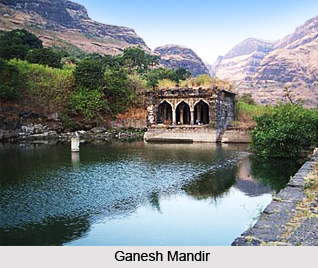
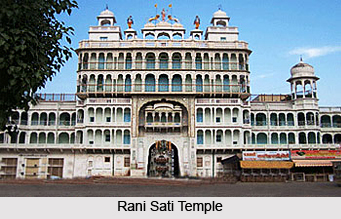
The religious places situated in Ratannagar are Shyam Vatika, Onkar Ashram, Ganesh Mandir, Veer Hanuman temple, Rani Sati temple, Idgah mosque, Jumma mosque, Madina mosque and Dargha Peer Sahib. Other tourist places around the town include Ramgarh, Mahansar, Bissau, Churu and Mandawa, Mukandgarh, Fatehpur, Laxmangarh and Nawalgarh as nearby towns.
 Salasar houses the famous Balaji Temple which attracts a large number of devotees from all over India. Shri Hanumanji, the famous Hindu deity of vigour and loyalty, having been pleased by the devotion and worship of Shri Mohan Das Mahraj, appeared in the form of a statue on Saturday, Shrawan Sukla Navami, Virat Samvat 1811 at Asota village. The statue was brought to Salasar where the temple was built. Later, the devotees added more buildings to the main temple. Two large fairs are held on Chaitra (April) and Ashwin purnimas(October) every year. Lacs of devotees from all over the country and abroad come and offer their wishes to great Lord Hanuman in the temple and have a `Darshan` of Shri Balaji throughout the year.
Talchhapar Sanctuary is famous for the endangered black-buck. Other wild animals found in the sanctuary are chinkara, fox, jungle cat and rojra along with many resident and migratory birds. It lies along the way of the migratory passage of many birds and therefore it is also popular with bird lovers. Talchhapar, which is actually a flat saline depression, has a unique ecosystem. Talchhapar area was a game reservoir for the erstwhile Maharaja of Bikaner State and was declared a reserved area for the protection of wild animals and birds in the year 1962. Total area of Talchhapar Sanctuary is 719 hectares. The sanctuary area is mostly covered by grass with very few and sparse trees of Khejri, Salvadora, Ber, Ker and Neem tree. Main types of grass found in the area are Sewan, Doob, Dhaman Lampla, Lana and Moth etc. The area has a lush green look during te rainy season but dries up again during the summer season.
Thus discussed above are the various places of tourism in the district of Churu, Rajasthan.
Recently updated articles in States of India
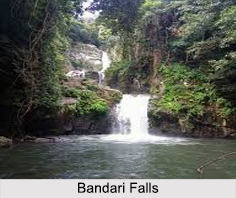
Bandare Waterfalls, Meghalaya
Bandare Waterfalls in South Garo Hills, Meghalaya, is a secluded natural attraction surrounded by dense subtropical forests and rugged mountain terrai...
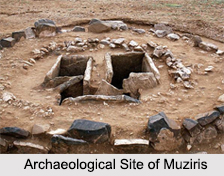
History of Thissur District
Early History of Thissur District explains flourishing of the port cities. Now these port cities are transformed into archaeological sites.
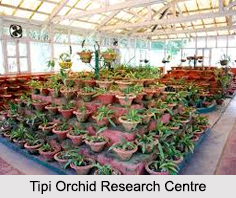
Tippi Orchid Research Centre, Arunachal Pradesh
Tippi Orchid Research Centre in Arunachal Pradesh is renowned for its rich collection of exotic and endangered orchids. Surrounded by lush rainforest...
Tourism in Nashik District
Pilgrimage tourism in Nashik district involves visiting the various places of Hindu and Jain worship located here. Some of the holiest sites for Hind...
Mangadu, Kerala
Mangadu in Kerala’s Kollam district is a significant megalithic site known for its urn burials, cist burials, menhirs, and stone circles. Excavations...
Related articles in States of India
East Indian States
East Indian States comprises of Bihar, Jharkhand, West Bengal, Odisha and also the Union Territory of Andaman and Nicobar Islands. It defines the cult...
Purnia District in Bihar
Purnia District is located in Bihar and extends from River Ganga to Nepal. The district has a rich Hindu history and glorious past.
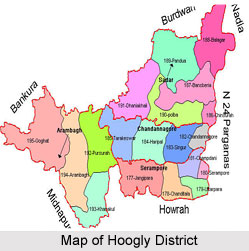
Hooghly district
Hooghly District along the bank of the river Hooghly is one of the principal trading ports of West Bengal.
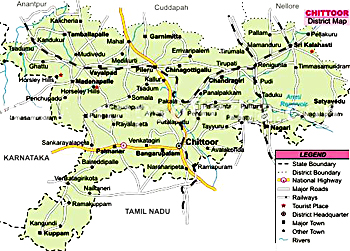
Geography Of Chittoor District
Geography of Chittoor district is spread along the topography of the land which is divided into two natural divisions; Chittoor has a dry and healthy...
Districts of West Bihar
Districts of West Bihar is comprised of medieval monuments that were built by the different governors of Mughal era.