
Time of Invasion which is included in the Chapter I of book IX in Arthashastra highlights the Work of an Invader in choosing the right time to wage a war. Time mainly consists of cold, hot and rainy periods. Arthashastra demarcates the division of time according to the night, the day, the fortnight, the month, the season, solstices, the year and the Yuga which includes a period of five years. Within this division of time the conqueror is supposed to undertake such work which is conducive to the growth of his power and prosperity; the time which is congenial to the army of the conqueror and inconvenient for the enemy`s army, shall be considered as the best time for an attack; while the time which is reverse to the above is the worse time while the time which is convenient for both shall be considered as the time of middling quality. The conqueror as such should wait for such an hour which is inconvenient for the enemy and best for him.
Time of Invasion had been an important factor in deciding the fate of the war which has been distinctively marked by Arthashastra continues to hold its relevance even in future. All the wars which are fought depend on time to a large extend. Its relevance had made it one of the most important war strategies even during the modern day war fare. Number of debates raise the question as to which is of more significance - time, place or strength; Kautilya stresses that of strength, place and time each is helpful to the other; whoever is possessed with these three things should, after having placed one third or one fourth of his army to protect his base of operation against his rear enemy and the wild tribes in his vicinity and after taking with him sufficient army and treasury as will be required to undertake the work, may decide to march in the month of December (M rg s¡rsha) against his enemy whose food storage is old and insipid and who has not gathered new foodstuff nor has prepared proper fortification for his own security. In case the conqueror decides to destroy the enemy`s rainy crop and autumn handfuls then he should march in the month of March (Chaitra) which shall destroy enemy`s autumn crops and vernal handfuls. If the conqueror decides to march in the month of May and June (Jeshtha) then he shall benefit by destroying the rainy crops of the enemy. Or if he decides to march in the dew season then he shall destroy those crops which are grown in the summer or hot season which requires less water while irrigating the land. In all the cases if the conqueror chooses to march in the summer season against those countries on which the sun is enshrouded and which is fully manoeuvring for the conquerors army and is of reverse for his enemy army, then he has to take a long march which shall begin in the month of December and January and shall continue in the month of March and April while it can be accompanied with small marches which shall take place between May and June. Marching against the enemy under troubles has been explained in March after Proclaiming War.
Thus, Kautilya advises the conqueror should choose to march only when all his resources are sufficient in case his enemy`s troubles are not sufficiently assessed and should select a weather which is not too hot nor to cold and is congenial for the conqueror`s army. Regarding the march it has been advised that the march should be of less duration, when the march takes place at a whether free from heat, the army should include more elephants while in deserts, it should march in the rainy season with four contingencies. Overall the conqueror should make all efforts to prepare his army for all circumstances.
Time of Invasion
Time of Invasion forms the second important factor which the invader should see and check before he proceeds to wage a war. Chapter I of Book IX in Arthashastra describes the relevance of Time in selecting the right time to charge.
Recently updated articles in History of India
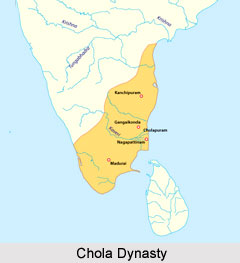
Chola Dynasty
Chola Dynasty is a Tamil dynasty and had longest duration of ruling in parts of South India. Chola dynasty had ruled South India successfully for a ex...
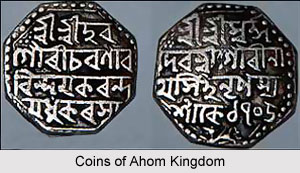
Suhungmung
Suhungmung was the fourteenth ruler of the Ahom dynasty who ruled from the period 1497 to 1539 AD. His reign was significant in terms of expansion of...
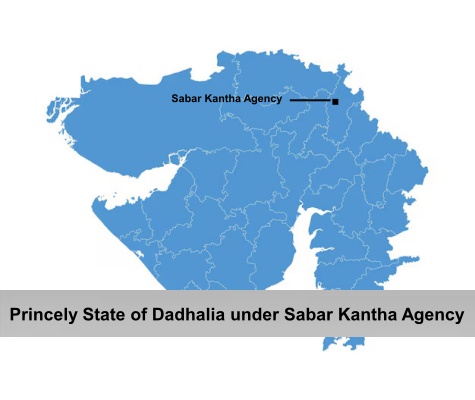
Princely State of Dadhalia
Princely State of Dadhalia was located in the present state of Gujarat. The state covered a total area of 28 sq miles and comprised of 15 villages. Th...
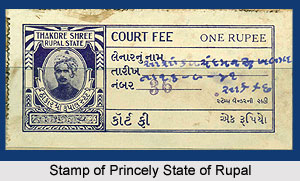
Princely State of Rupal
Princely State of Rupal was a part of the Baroda Agency, a sub division of Western India States Agency. It was under the administrative control of the...
Archaeological Sites of West Bengal
Archaeological sites of West Bengal reveal several aspects of ancient India. Excavations by the Archaeological Survey of India have furnished artefact...
Related articles in History of India

Mughal Architecture during Babur
Mughal architecture during Babur marked the foundation of a new architectural era in India, blending Timurid, Persian, and local influences. His reign...

Architecture during Sayyid and Lodi Dynasty
Architectures during the Sayyid and Lodi dynasty were mainly the tombs and monuments for the dead rulers. It were carefully designed and meticulously...

Brahmanical Sources of Ancient History
Brahmanical Sources of ancient history are contained in the Vedas and they constitute one of the most important literary sources of information about...

Coins of Chola Empire
Coins of Chola Empire were issued in gold, silver and copper and carried the Chola emblem.

Coins of Khilji Dynasty
Coins of Khilji Dynasty had an influential feature that was followed by the other dynasties.