
The political revolution of Chandragupta against the Nandas finally resulted in their complete downfall. According to native sources and Buddhist texts, though Dhananada was unpopular because of his tyrannical autocracy, yet he was very powerful and the strength of his army had caused terror even in the heart of the gallant Greeks. The Buddhist and the Jaina scholars unanimously opined that Chandragupta had met with an initial failure when he encountered the Nandas, with his attempt to overthrow them. According to "Mahavamsa Tika", Chandragupta`s initial attempt to overthrow the Nandas lacked an effective strategy. Chandragupta committed a blunder of making a direct attack in the capital city of the Nandas, the core of the Nanda Empire, without paying heed to post a garrison in his rear. Consequently he was surrounded and defeated by the Nanda army. Hence Chandragupta`s attempt to overthrow the Nandas, in its infant stage was not an easy job for him.
According to historians, the shock of his defeat, lead Chandragupta to plan for a proper strategy. He began his campaign against the Nandas with a renewed attempt to uproot them from the Magadha soil. He initiated his second invasion of Magadha, leading from the front after safeguarding his back end by posting effective battalion. Finally Chandragupta killed Dhananada, the then Nanda ruler and seized Pataliputra. However the Jain writer Hemchandra differs from the other historians in this point and puts that Dhananada was not killed but was allowed to leave the kingdom. Whatever the views of the historians are, Chandragupta defeated his opponents and conquered the Nanda territory. The victory made Chandragupta the master of the Magadhan dominion of the Nandas. Chandragupta annexed the territories of Sind and Punjab to the newly conquered Magadhan Empire and thus he expanded his kingdom. While a group of historians unanimously opined that the sole credit of overthrowing the Nandas goes to Chandragupta Maurya, Justin, the commentator of classical history exerts greater emphasis on the role of Chanakya in overpowering the Nandas from the Magadhan throne.
Historians also are at difference regarding the moral justification of Chandragupta`s invasion against the Nandas. Brahmanical writers denounced the Nandas as `irreligious fellows` because they belonged to the Sudra caste and had inclinations towards Jainism. For this reason, however the Brahmanical writers supported the campaigning of Chandragupta against the Nandas. But rationally, views of the Brahmanical writers were not denials of the Nandas. Chandragupta`s war against the Nandas can be justified on two grounds- first that Dhanananda, the then Nanda ruler was an oppressive ruler who became popularly infamous among his subjects and secondly Dhanananda did not play any effective role to liberate north west from the Greeks in spite of having a powerful mercenary.
Political Revolution against Nandas
Overthrowing the Nandas from the throne of Magadha, Chandragupta accentuated his supremacy in north India.
Recently updated articles in History of India
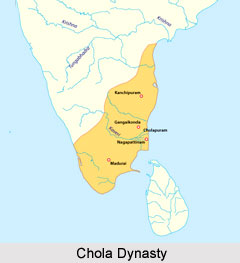
Chola Dynasty
Chola Dynasty is a Tamil dynasty and had longest duration of ruling in parts of South India. Chola dynasty had ruled South India successfully for a ex...
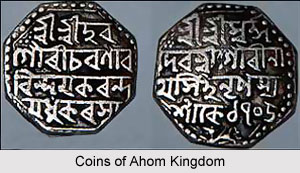
Suhungmung
Suhungmung was the fourteenth ruler of the Ahom dynasty who ruled from the period 1497 to 1539 AD. His reign was significant in terms of expansion of...
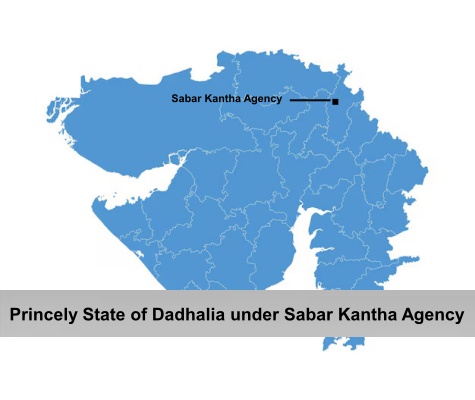
Princely State of Dadhalia
Princely State of Dadhalia was located in the present state of Gujarat. The state covered a total area of 28 sq miles and comprised of 15 villages. Th...
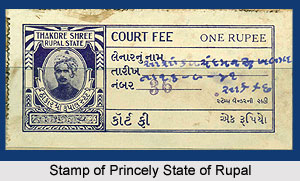
Princely State of Rupal
Princely State of Rupal was a part of the Baroda Agency, a sub division of Western India States Agency. It was under the administrative control of the...
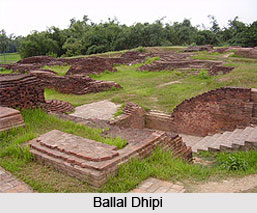
Archaeological Sites of West Bengal
Archaeological sites of West Bengal reveal several aspects of ancient India. Excavations by the Archaeological Survey of India have furnished artefact...
Related articles in History of India
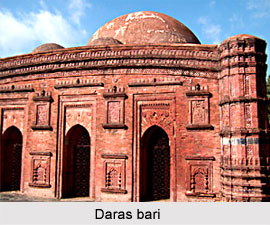
Mughal Architecture during Babur
Mughal architecture during Babur marked the foundation of a new architectural era in India, blending Timurid, Persian, and local influences. His reign...
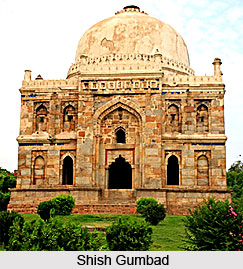
Architecture during Sayyid and Lodi Dynasty
Architectures during the Sayyid and Lodi dynasty were mainly the tombs and monuments for the dead rulers. It were carefully designed and meticulously...

Brahmanical Sources of Ancient History
Brahmanical Sources of ancient history are contained in the Vedas and they constitute one of the most important literary sources of information about...
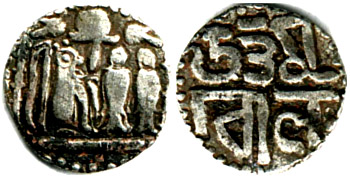
Coins of Chola Empire
Coins of Chola Empire were issued in gold, silver and copper and carried the Chola emblem.
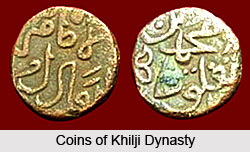
Coins of Khilji Dynasty
Coins of Khilji Dynasty had an influential feature that was followed by the other dynasties.