
After the Constituent Assembly of the Kashmir state had taken important decisions referred to immediately above, it was deemed necessary to receive the concurrence of the Indian Government. Accordingly, the representatives of Kashmir Government conferred with the representatives of Indian Government and arrived at an agreement. This arrangement was later on known as the "Delhi Agreement, 1952".
The main features of this agreement were:
•In view of the uniform and consistent stand taken up by the Jammu and Kashmir Constituent Assembly that sovereignty in all matters other than those specified in the Instrument of Accession continues to reside in the State, the Government of India agreed that, while the residuary powers of legislature vested in the Center in respect of all states other than Jammu and Kashmir, in the case of the latter they vested in the State itself;
•It was agreed between the two Governments that in accordance with Article 5 of the Indian Constitution, persons who have their domicile in Jammu and Kashmir shall be regarded as citizens of India, but the State legislature was given power to make laws for conferring special rights and privileges on the `state subjects` in view of the `State Subject Notifications of 1927 and 1932: the State legislature was also empowered to make laws for the `State Subjects` who had gone to Pakistan on account of the communal disturbances of 1947, in the event of their return to Kashmir;
•As the President of India commands the same respect in the State as he does in other Units of India, Articles 52 to 62 of the Constitution relating to him should be applicable to the State. It was further agreed that the power to grant reprieves, pardons and remission of sentences etc; would also vest in the President of India.
•The Union Government agreed that the State should have its own flag in addition to the Union flag, but it was agreed by the State Government that the State flag would not be a rival of the Union flag; it was also recognized that the Union flag should have the same status and position in Jammu and Kashmir as in the rest of India, but for historical reasons connected with the freedom struggle in the State, the need for continuance of the State flag was recognized.
•There was complete agreement with regard to the position of the Sadar-i-Riyasat; though the Sadar-i-Riyasat was to be elected by the State Legislature, he had to be recognized by the President of India before his installation as such; in other Indian States the Head of the State was appointed by the President and was as such his nominee but the person to be appointed as the Head, had to be a person acceptable to the Government of that State; no person who is not acceptable to the State Government can be thrust on the State as the Head.
The difference in the case of Kashmir lies only in the fact that Sadar-i-Riyasat will in the first place be elected by the State legislature itself instead of being a nominee of the Government and the President of India. With regard to the powers and functions of the Sadar-i-Riyasat the following argument was mutually agreed upon.
a. The Head of the State shall be a person recognized by the President of the Union on the recommendations of the Legislature of the State;
b. He shall hold office during the pleasure of the President;
c. He may, by writing under his hand addressed to the President, resign his office;
d. Subject to the foregoing provisions, the Head of the State shall hold office for a term of five years from the date he enters upon his office;
e. Provided that he shall, notwithstanding the expiration of his term, continue to hold the office until his successor enters upon his office.
•With regard to the fundamental rights, some basic principles agreed between the parties were enunciated; it was accepted that the people of the State were to have fundamental rights. But in the view of the peculiar position in which the State was placed, the whole chapter relating to `Fundamental Rights` of the Indian Constitution could not be made applicable to the State, the question which remained to be determined was whether the chapter on fundamental rights should form a part of the State Constitution of the Constitution of India as applicable to the State;
• With regard to the jurisdiction of the Supreme Court of India, it was accepted that for the time being, owing to the existence of the Board of Judicial Advisers in the State, which was the highest judicial authority in the State, the Supreme Court should have only appellate jurisdiction;
•There was a great deal of discussion with regard to the "Emergency Powers", the Government of India insisted on the application of Article 352, empowering the President to proclaim a general emergency in the State; the State Government argued that in the exercise of its powers over defence (Item 1 on the Union List), in the event of war or external aggression, the Government of India would have full authority to take steps and proclaim emergency but the State delegation was, however, averse to the President exercising the power to proclaim a general emergency on account of internal disturbance.
In order to meet the viewpoint of the State`s delegation, the Government of India agreed to the modification of Article 352 in its application to Kashmir by the addition of the following words:
"but in regard to internal disturbance at the request or with the concurrence of the Government of the State."
At the end of clause (1):
Both the parties agreed that the application of Article 356, dealing with suspension of the State Constitution and 360, dealing with financial emergency, was not necessary.
The facts analyzed above make it clear that the State of Jammu and Kashmir enjoys a special position in the Union of India, and this position of the State has been permitted by Article 2 of the Constitution itself. " In arriving at this arrangement", declared Sheikh Mohammad Abdullah, the then Prime Minister of Jammu and Kashmir, "the main consideration before our Government was to secure a position for the State which would be consistent with the requirements of maximum autonomy for the local organs of the State power which are the ultimate source of authority in the State while discharging obligations as a Unit of the federation".
The Jammu and Kashmir Constituent Assembly discussed this arrangement and finally adopted a motion of approach on August 21, 1952. The agreement was discussed in the Union Parliament on August 7, 1952 and accepted.
But inspite of all these discussions and decisions in the Kashmir Constituent Assembly, the implementation of the agreement was not forthcoming. This aroused suspicion in the minds of the public about the intentions of the leaders of the Government. In the working committee of the National Conference there was sharp criticism of the Government`s policy. There was a serious rift in the Cabinet itself. The difference of opinion reached a peak when Sheikh Abdullah, instead of implementing the agreement, started advocating secession, which would make Kashmir an `independent State`. The people of the State were quick to perceive the danger of such a course for they had seen that the tribal attack in 1947, which had caused much devastation, was a direct consequence of Kashmir`s isolated position.
There were `inflammatory rumours that United States was backing the Kashmir`s independence". Sheikh Abdullah was accused both by his colleagues in the Cabinet and by the public outside of trying to create a State for himself. In fact, three members of the Cabinet submitted a memorandum to Sheikh Abdullah accusing him of various charges. It soon became obvious that the capacity of the Administration to function efficiently was doubtful. The whole matter was spotlighted, when the Sadar-i-Riyasat, who, taking cognizance of the situation, on August 8, 1953, dismissed Sheikh Abdullah from the post of Prime Minister of Kashmir and dissolved the Cabinet.
Delhi Agreement 1952
The representatives of Kashmir conferred with the representatives of Indian Government & signed this agreement in 1952.
Recently updated articles in History of India
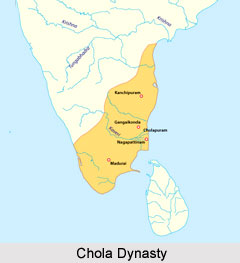
Chola Dynasty
Chola Dynasty is a Tamil dynasty and had longest duration of ruling in parts of South India. Chola dynasty had ruled South India successfully for a ex...
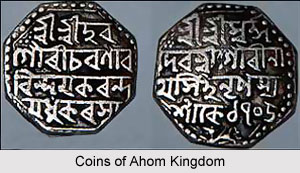
Suhungmung
Suhungmung was the fourteenth ruler of the Ahom dynasty who ruled from the period 1497 to 1539 AD. His reign was significant in terms of expansion of...
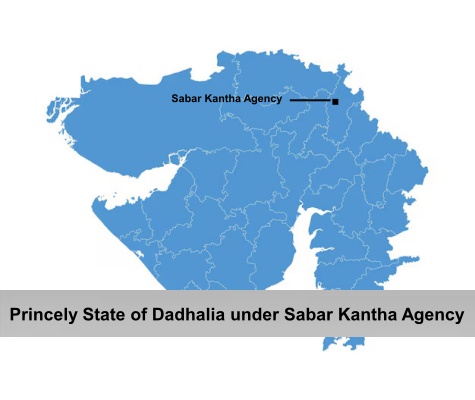
Princely State of Dadhalia
Princely State of Dadhalia was located in the present state of Gujarat. The state covered a total area of 28 sq miles and comprised of 15 villages. Th...
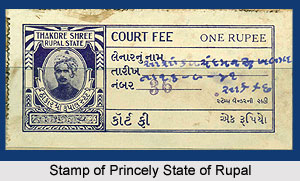
Princely State of Rupal
Princely State of Rupal was a part of the Baroda Agency, a sub division of Western India States Agency. It was under the administrative control of the...
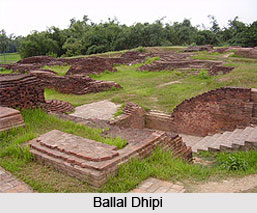
Archaeological Sites of West Bengal
Archaeological sites of West Bengal reveal several aspects of ancient India. Excavations by the Archaeological Survey of India have furnished artefact...
Related articles in History of India
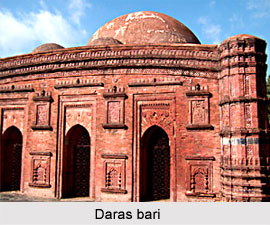
Mughal Architecture during Babur
Mughal architecture during Babur marked the foundation of a new architectural era in India, blending Timurid, Persian, and local influences. His reign...
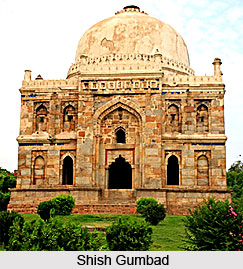
Architecture during Sayyid and Lodi Dynasty
Architectures during the Sayyid and Lodi dynasty were mainly the tombs and monuments for the dead rulers. It were carefully designed and meticulously...
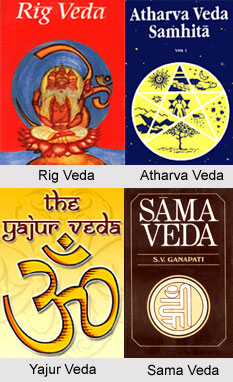
Brahmanical Sources of Ancient History
Brahmanical Sources of ancient history are contained in the Vedas and they constitute one of the most important literary sources of information about...
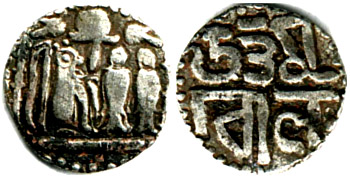
Coins of Chola Empire
Coins of Chola Empire were issued in gold, silver and copper and carried the Chola emblem.
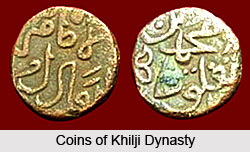
Coins of Khilji Dynasty
Coins of Khilji Dynasty had an influential feature that was followed by the other dynasties.