 Technological developments in British India created history whilst making India burgeoning in wealth. Technological development was such a field which British India adopted to make life easier and smoother. Changes came all over and the introduction of electronic telegraph, steam engine and sophisticated railways made life lot smoother.
Within the period of 1789-1793, the British East India Company`s Court of Directors introduced the screw press in India for the packing of cotton. In 1793, the Court sent to Bombay some of the Whitney saw-gen machines for the cleaning of cotton. They obtained only limited value due to India`s short staple cotton.
In 1822, the Company introduced steam vessels for use on India`s rivers, particularly on the Ganges, the Indus and the Hooghly.
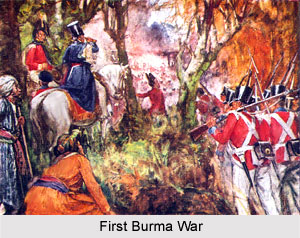 Within the period of 1824-26, in the course of the First Burma War, steam vessels played a decisive role in moving troops and supplies up the Irrawaddy. Technological developments under British India comprised huge industrial progress, with sophistication being employed in every sphere of business transactions.
During times of 1825-34, even more significant developments in technology could be witnessed. In February 1825, James Henry Johnston (1787-1851) placed a steam vessel in service between Great Britain and India via the Cape. In 1830, Johnston recommended the use of iron construction for steam ships and subsequently built one in England which was launched in April 1834 for service to Calcutta.
In 1829,steamships began to operate routinely between Bombay and the Red Sea and on India`s rivers.
In 1831, the application of steam power in the new Calcutta mint allowed for the production of up to 300,000 coins in a day.
In 1839, Adolph Bazin introduced the first plans for the electronic telegraph in India. Such scientific, technical and industrial progress in India was a true boost for making contact with the outside world, without much effort and pain. Technological developments in British India was a fast approaching goal and it was such an arena which perhaps could never have occurred in India, had the British never landed in the soil. Technology during those years was pretty poor; one had to travel and shell out huge amounts of money in order to make such an effort and become successful. As such developments and improvements in the technological field were received with a warm welcome.
In the years of 1841-54, Robert M. Stephenson conceived the idea of introducing railways in India. On May 7, 1845 the East India Company`s Court of Directors issued its formal sanction to the Governor-General of India supporting the need for the building of railways in India. Stephenson founded the East Indian Railway Company in 1845. The first rail journey occurred on April 16, 1853 in India between Bombay and Thana (presently Maharashtra">Thane, in Maharashtra), a distance of twenty-one miles. In Bengal a rail line connecting Howrah and Hooghly went into service on August 15, 1854 for passenger traffic. Due to the lack of iron making technology in India during that time, most rolling stock, rails and iron bridging materials were imported from Great Britain.
The years of 1851-57 had even more reason to rejoice after the historical introduction of railways in India. Technology was developing in leaps and bounds, with British government shelling out huge amounts to make India advanced. William Brooke O`Shaughnessy (1809-1899) erected the first telegraph line in 1851, stretching from Calcutta to Chunchura. In 1853, the Company authorised lines connecting Calcutta, Agra, Bombay and Madras.
In 1856, telegraph lines were extended over 4250 miles of India, connecting forty-six stations. They linked such major centres as Calcutta to Agra and Bombay to Madras and were to play a key communication role during the Sepoy Mutiny of 1857.
In 1857, O`Shaughnessy was named first Director-General of Telegraphs in India. More than anything else, it was the introduction telegraphs and railways that wholly altered the technological scenario of India. Indians had never witnessed something like it, although these developments were not free from opposition. Technological developments under British India can be stated as the most illustrious beginning, which bore its fruits much later.
In the years of 1868-69, Carl Louis Schwendler (1838-1882) advanced the application of electricity in India as regards its interrelationship with defective insulators used on the telegraph lines. Applying the laws of Faraday`s magneto-induction, he conducted a number of experiments on the supply of electrical current for the telegraph. Electricity, accompanied with such esteemed technological advancements truly made India developed in a sudden span of time.