
An Islamic leader, Sayyid Ahmad Barelwi was the leader of the Revivalist Movement, called the Tariqah-i-Muhammadiyah. This movement preached of both a return to past purity and an open struggle, a jihad with non-Muslims. Sayyid Ahmad Barelwi had interpreted the fatwa of `Abdul `Aziz that declared British India dedar ul-harb (the house of war) as a territory ruled by non-Muslims. By the late 1820s one of Sayyid Ahmad Barelwi`s disciples, Titu Mir (1782-1831), started to preach in rural western Bengal. He expounded a fundamentalist policy that predestined elements of popular Islam as mistakes and called upon his followers to practice equality among their coreligionists, and to take on a unique appearance as an outward sign of their religious pledge. Titu Mir opposed Hinduism and the landlord class and quickly won supporters among the peasants. His Revivalist Movement, however, ended in 1831 when he and his followers rose against the government. They briefly controlled three districts, but were restrained by British troops. In 1832, another disciple of Sayyid Ahmad, `Inayat `Ali, came to Bengal. He began traversing the rural areas and expounded to the Muslim peasants a sanitized Islamic doctrine. `Inayat `Ali traveled until 1840 and settled in the district of Jessore.
Within four years another disciple of Sayyid Ahmad Barelwi reached Bengal. In 1835 Mawlana Karamat `came to Bengal, where he remained an efficient proponent of Islam and Revivalist Movement until his death in 1873. Karamat `Ali sailed across the rivers of Bengal and Assam for nearly forty years in a flotilla that constituted a traveling-cum-residential college`. His Ta`aiyuni movement taught a purified Islam shared by the Tariqah-i-Muhammadiyah and other nineteenth-century Islamic movements. He met with Shari`at `Ullah in 1836-7 and conflict between the two became public in 1839 at Bansal, the scene of a debate between Karamat `Ali and the Fara`izis.
The primary point of disagreement lay on the factor that whether or not congregational prayers could be legally held on Fridays and on the annual Id festivals. Below this rested the question of whether British India should be classed as dadar ul-harb or dadar ul-Islam (the house of Islam). Here the Muslims could and should practice their religious rituals. Both the Tariqah-i-Muhammadiyah and the Fara`izis adopted the former interpretation, and based it on the fatwa of `Abdul-`Aziz. Karamat `Ali, however did not accept this view. Thus for the Ta`aiyunis these prayers were suitable and even required. Although the two movements mutually agreed on basic points of theology, such as an acceptance of the Hanafi school of law, a rejection of polytheism and erroneous innovations, and an emphasis on puritanical Islam, the doubt of prayers remained an hostile point of difference between them.
Tariqah-i-Muhammadiyah and the Fara`izis clashed repeatedly and the tracts of defending each position were made public as this controversy came to symbolize personal dogmas. In general, the Ta`aiyunis were more modest than the Fara`izis or the Tariqah-i-Muhammadiyah. Karamat `AH, himself a Shi`ah, whole-heartedly accepted the pir-muridi system of religious teachers and their disciples that was never accepted by other movements. Not all Islamic movements publicly disagreed. The Ahl-i-Hadith, another successor of the Tariqah-i-Muhammadiyah came to Bengal. The Tariqah-i-Muhammadiyah too practised Jum`ah and `Id prayers, but there is little indication of conflict between it and the Fara`izis. Internal Muslim discord was settled in the twentieth century by a strengthened intellect of common unity.
The proponents of a purified Islam and the socio-religious movements they created produced serious changes among Bengali Muslims, particularly in the rural areas. The sense of mutual identity of being a Muslim was clarified and made clear. Popular tracts, nasibat ndrnabs, written in Bengali, discussed all aspects of Muslim belief and life. This literature was intended to instruct ordinary Muslims in the basic tenets of Islam. It also described the proper life for all Muslims. The creation of extensive religious literature in Bengali inspired Muhammad Naimuddin`s translation of the Qur`an into Bengali and completed in the years 1892-1908. Public religious debates popularized the basic concepts of Islam and became occasions of social enlistment and social assimilation as well.
Tariqah-i-Muhammadiyah
Sayyid Ahmad Barelwi is an Islamic leader who launched a Revivalist Movement called the Tariqah-i-Muhammadiyah.
Recently updated articles in History of India
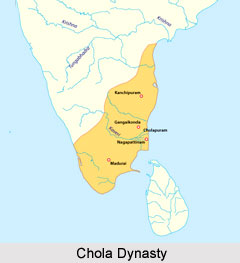
Chola Dynasty
Chola Dynasty is a Tamil dynasty and had longest duration of ruling in parts of South India. Chola dynasty had ruled South India successfully for a ex...
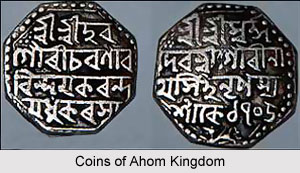
Suhungmung
Suhungmung was the fourteenth ruler of the Ahom dynasty who ruled from the period 1497 to 1539 AD. His reign was significant in terms of expansion of...
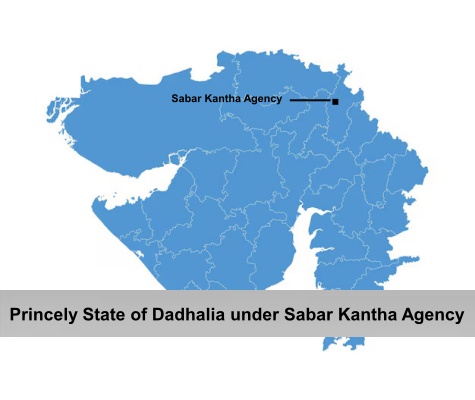
Princely State of Dadhalia
Princely State of Dadhalia was located in the present state of Gujarat. The state covered a total area of 28 sq miles and comprised of 15 villages. Th...
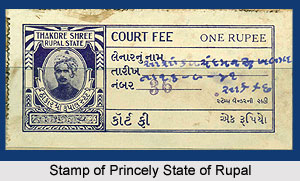
Princely State of Rupal
Princely State of Rupal was a part of the Baroda Agency, a sub division of Western India States Agency. It was under the administrative control of the...
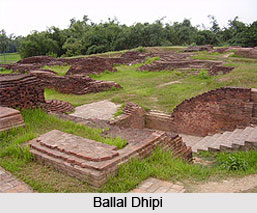
Archaeological Sites of West Bengal
Archaeological sites of West Bengal reveal several aspects of ancient India. Excavations by the Archaeological Survey of India have furnished artefact...
Related articles in History of India

Mughal Architecture during Babur
Mughal architecture during Babur marked the foundation of a new architectural era in India, blending Timurid, Persian, and local influences. His reign...

Architecture during Sayyid and Lodi Dynasty
Architectures during the Sayyid and Lodi dynasty were mainly the tombs and monuments for the dead rulers. It were carefully designed and meticulously...

Brahmanical Sources of Ancient History
Brahmanical Sources of ancient history are contained in the Vedas and they constitute one of the most important literary sources of information about...

Coins of Chola Empire
Coins of Chola Empire were issued in gold, silver and copper and carried the Chola emblem.

Coins of Khilji Dynasty
Coins of Khilji Dynasty had an influential feature that was followed by the other dynasties.