
Tantra has devised some unique forms of communication. It employs a tantric system of language called sandhyabhasa in its composition. With the help of this technique the intended meaning is conveyed through coded formulas. Hence the terms and phrases belonging to this class are not to be understood in the literary sense. The actual meaning is generally elucidated by the commentary. The language of the Tantric texts is basically a language of communication between the Guru and the disciples as well as the circle of initiates. The sadhaka is duty-bound to communicate using the tantric code language.
Sandhyabhasa is only the direct, vocal method of communication but there are other modes of secret communication as well. Choma, the secret language is widely used in the Ganacakra and other gatherings. This consists of secret hand-sign language used in the Assembly of the Initiates to express realisation. As the emphasis is on direct personal experience of the Innate, doctrinal expositions have no place in such assemblies. It has been said that as words and concepts would only confuse the disciples and would hinder their concentration and hence the natural language is replaced by an artificial sign language.
Other non-verbal modes of communication are also used as in `purification by Smile, by Gaze and by Embrace`. Songs and dance are also employed in the gatherings of the Initiates. With the help of the dance the disciple attunes himself to the form of the deity to be emanated. Song is the recitation of the mantra. By the employment of these modes of communication the theories, practices and experiences of the process are taught and directly experienced.
Tantric texts reveal a unique literary style. Some of the important characteristics of the tantric language are there is profuse use of symbolism especially in expressing the various positive categories of the doctrine. The concluding statement often expresses either in brief or in detail, a feeling or experience of peace and happiness more often than not in the form of a magical formula.
Finally it can be said that the essence of Tantric language lies in codes and symbolic language.
Tantric Language
Tantric Language and the literary style are profuse with symbolic codes and languages. The language mostly revolves around the commentary of the Guru and the disciple. Tantric language not only involves verbal communication but also involves song and dance.
Recently updated articles in Religion in India
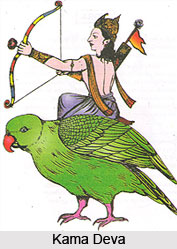
Kusumayudha
Kusumayudha is a name of Kamadeva, the Hindu God of Love. Depicted with a sugarcane bow and flower-tipped arrows, he represents attraction and longing...
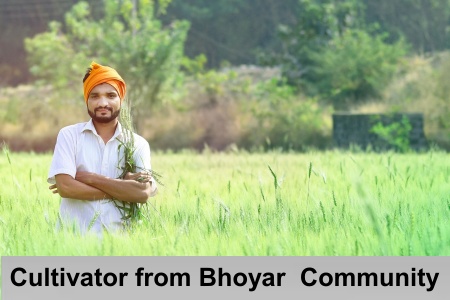
Bhoyar Caste
Bhoyar Caste is largely found in the Central Provinces of the country. Traditional occupation of Bhoyars is agriculture. They are good cultivators and...
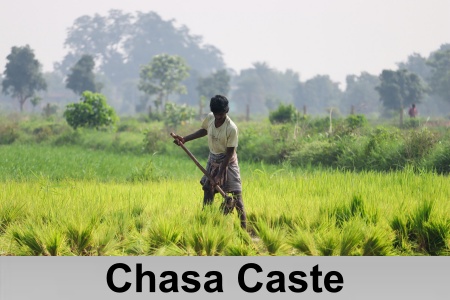
Chasa Caste
Chasa caste is a prominent agrarian community native to Odisha. Traditionally associated with cultivation and farming, Chasas have historically played...
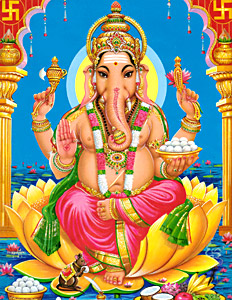
Vigneswara, A Form of Lord Ganesha
Lord Vigneswara is another form of Lord Ganesha or Vinayaka, prominently worshipped as the God of intelligence and good luck in the Indian subcontinen...
Maheswara
Maheswara, meaning “the Great Lord,” is a revered name of Lord Shiva in Hindu tradition. It represents Shiva’s supreme authority over creation, preser...
Related articles in Religion in India

Religion in Indus Valley Civilization
Religion in Indus Valley Civilisation included Hinduism, Buddhism and Jainism. Details about the religion in Indus Valley Civilization have been gathe...

Iyer Brahmin
Iyer Brahmins are originally from Tamil Nadu of South India. They are known for their adherence to Advaita philosophy and Smarta traditions. Tradition...

Kumbhakar / Kumhar Caste
Kumbhakar or Kumhar caste is a traditional artisan community in India known for pottery making. Derived from Sanskrit word Kumbhakar, meaning potter,...

Gujjars in Mughal Era
Gujjars in the Mughal era enjoyed great power. Further their power increased with the decline of Aurangzeb, Mughal emperor.

Gotra in Hinduism
In Hinduism, gotra refers to a lineage system tracing descent from ancient sages, primarily through the paternal line. Originating from Vedic traditio...