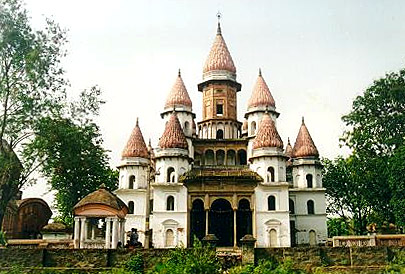
 In Hooghly district of West Bengal, the Hamsesvan temple at Bansberia is an ideal example of temple-architecture inspired by the tradition of Tantra. The interior is like the six Chakras in the form of goddess Hamsesvari, through which Kundalini, goes upwards. Besides the three Tantric nerves, Ida, Pingala and Susumna, Vajrakhya and Citrini are also indicated.
Goddess is seated on a lotus and resting on a stem emerging from Shiva`s navel lying on a Trikona Yantra. In her lower left hand she carries a human head and Abhayamudra in her upper right hand. In the other hands she carries a sword and a conch. The name Hamsesvari is Tantric.
There was a twofold motive responsible for Tantric representations in architecture. One is the religious and the other is secular. As far as being secular is considered visual expression of the passionate feelings of the architect might have motivated their work.
This article is a stub. You can enrich by adding more information to it. Send your Write Up to content@indianetzone.com.