
Superintendent of Armoury shall employ experienced workmen of tried ability to manufacture in a given time and fixed wages wheels, weapons, mail armours and accessory instrument for use in battle, in construction or in destroying the enemies. Chapter XVIII of Book II in Arthashastra empowers the Superintendent of Armoury to supervise both the manufacturing of weapons as well as their proper utilization according to the requirements. As these weapons get usually affected by moisture, sun and dust, they require proper maintenance under direct supervision of the superintendent. The weapons must be kept in proper places and should be regularly dusted and maintained so that they could be easily and swiftly used whenever required in a short notice.
Superintendent of Armoury shall be responsible for the maintenance of weapons according to Arthashastra. The weapons specified in this book are Sarvatobhadra, jamadagnya, bahumukha, visvasaghati, samgati, yanaka, parjanyaka, ardhabahu and urdhvabahu which are the immovable machines (sthirayantram) heavy in structure. Panchalika, devadanda, sukarika, musala, yashti, hastivaraka, talavrinta, mudgara, gada, spiktala, kuddala, asphatima, audhghatima, sataghni, trishula, and chakra are movable machines and light in structure. Sakti, prasa, kunta, hataka, bhindivala, varahakarna kanaya, karpan, trasika and the like are some of the weapons which have edges like a ploughshare (halamukhani). Arthashastra discusses in detail the description of each weapon which are to be manufactured in the same way as mentioned. Accordingly the bows are made up of tala (kind of palm tree), chapa (kind of Bamboo), daru (kind of wood) and sringa (made of horns and bones). Further bow strings are made up of murva, arka, sana, gavedhu, venu and snayu which are different types of arrows whose edges are made up of iron, bones and wood as to cut, rend and pierce. Arthashastra then describes three kinds of swords which are named as Nistrimsa, Mandalagra, and Asiyashti. The handle of these swords are made up of horns of the rhinoceros, buffaloes, the tusk of elephant, of wood and o the roots of the bamboo. Parasu, kuthara, pattasa, khanitra, kuddala, chakra, and kandachchhedana are razor-like weapons. Yantrapashana, goshpanapashana, mushtipishana, rochan (mill-stone), and stones are other weapons (ayudhani).
Superintendent of Armoury, after collection of various kinds of weapons, concentrates on the personal protection of the warrior. He makes provisions for the variety of armours, namely, Lohajalika, Patta, Kavacha and Sutraka which are made up of either iron or skins of hooves and horns of porpoise, rhinoceros, bison, elephants and cows. Likewise Arthashastra makes provisions for variety of covers like, sirastrana (cover for the head), kanthatrana (cover for the neck), kurpasa (cover for the trunk), kachuka (a coal extending as far as the knee joints), varavana (a coat extending as Far as the heels), patta (a coat without cover for the arms) and nagodaraka (gloves) forming the varieties of armour. Further Arthashastra makes provision for the use of weapons for self defence. This includes the veti, charma, hastikarna, talamula, dhamanika, kavata, kitika, apratihata, and valahakanta. Accessories to protect the horses, elephants, chariots, goads and hooks are also mentioned by Kautilya.
Thus, Superintendent of Armoury shall be precisely responsible for ascertaining the availability of these resources at the time of requirement. He should ascertain the demand and supply, their application, their wear and tear, as well as their decay and losses. As the armoury stands as a major asset of the state which helps to exhibits the strength of the state on its enemy; its maintenance remains a vital concern for Kautilya as discussed in Arthashastra.
Superintendent of Armoury
Superintendent of Armoury is chapter XVIII of Book II of Arthashastra. Superintendent of Armoury is mainly responsible for keeping accounts and manufactures weapons and other accessories used for defence.
Recently updated articles in History of India
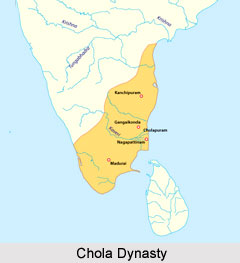
Chola Dynasty
Chola Dynasty is a Tamil dynasty and had longest duration of ruling in parts of South India. Chola dynasty had ruled South India successfully for a ex...
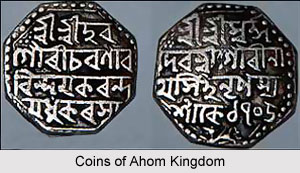
Suhungmung
Suhungmung was the fourteenth ruler of the Ahom dynasty who ruled from the period 1497 to 1539 AD. His reign was significant in terms of expansion of...
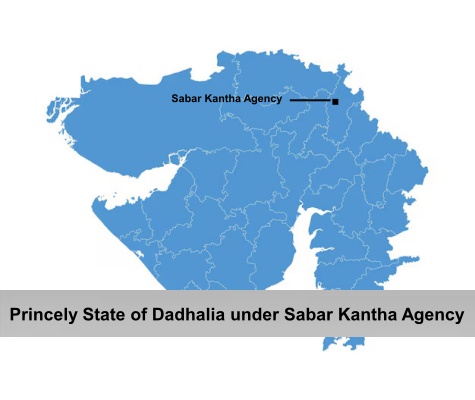
Princely State of Dadhalia
Princely State of Dadhalia was located in the present state of Gujarat. The state covered a total area of 28 sq miles and comprised of 15 villages. Th...
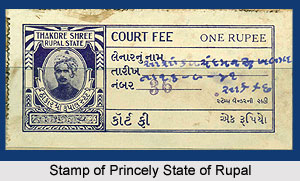
Princely State of Rupal
Princely State of Rupal was a part of the Baroda Agency, a sub division of Western India States Agency. It was under the administrative control of the...
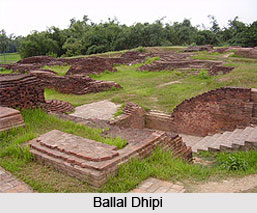
Archaeological Sites of West Bengal
Archaeological sites of West Bengal reveal several aspects of ancient India. Excavations by the Archaeological Survey of India have furnished artefact...
Related articles in History of India

Mughal Architecture during Babur
Mughal architecture during Babur marked the foundation of a new architectural era in India, blending Timurid, Persian, and local influences. His reign...

Architecture during Sayyid and Lodi Dynasty
Architectures during the Sayyid and Lodi dynasty were mainly the tombs and monuments for the dead rulers. It were carefully designed and meticulously...

Brahmanical Sources of Ancient History
Brahmanical Sources of ancient history are contained in the Vedas and they constitute one of the most important literary sources of information about...

Coins of Chola Empire
Coins of Chola Empire were issued in gold, silver and copper and carried the Chola emblem.

Coins of Khilji Dynasty
Coins of Khilji Dynasty had an influential feature that was followed by the other dynasties.