Sunnu
Sunnu hymn of creation is the second hymn in Guru Granth Sahib that is long and has sixteen verses.

Share this Article:

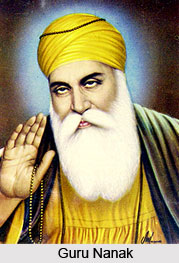
Sunnu, Hymns on CreationSunnu hymn from the content and after comparing it with the language and content of Guru Nanak`s other writings it becomes clear that this is addressed to a person with a Buddhist background. Guru Nanak had come into contact with Sant and Nathas who were a religious group who shared Buddhist religious thoughts.

Guru Nanak had used this language while having a dialogue with a Lama. However this hymn does not present any views about the pre-creation state except in verse one. Guru Nanak here speaks about the absolute nature of the Creator who is infinite and unique. It is said that He is not the same as His creation nor is he alike it. This is the inkling one gets from his hymn. In the tenth verse Guru Nanak makes it clear that the Absolute Lord caused it. Guru Nanak`s thoughts make it clear how his concept of creation is opposed to the theistic view.

The created beings` list given in the Sunnu hymn is similar to the Dhundukara hymn. Again the phrase Sunnu itself is very striking. Various translations give various meanings. However Talib`s translation considers it as `void`. The concept of sunyavadu or voidness of appearance has a Buddhist background. Mahayana sect of Buddhism believed in it. This concept does not accept theories of causality. Cause and effect are considered as identical. According to the Buddhist theory causal changes is a transformation of a single underlying substance. Practical phenomena are frail and relative yet the inner nature of it constitutes Voidness.

Sunnu here means the eternal Lord Himself who always subsisted. The world is seen from the view of digressive reason and perception is not real. Instead one must substitute an apprehension of the negated. Void refers to the absolute. Guru Nanak has made it very clear in first, tenth and fifteenth verses how unique and separate the Creator is as he Himself is the cause of all that we see in this world.

This article is a stub. You can enrich by adding more information to it. Send your Write Up to content@indianetzone.com
Share this Article:

Related Articles

More Articles in Religion in India


Religion in Indus Valley Civilization
Religion in Indus Valley Civilisation included Hinduism, Buddhism and Jainism. Details about the religion in Indus Valley Civilization have been gathered from archaeological artefacts.
Shaivism Religion
Shaivism is the second largest “religious community” in modern India with its roots deeply seated in the Hindu Vedic belief.
Vaishnavism
Vaishnavism is among the more popular denominations of Hinduism, with its own distinctive ideas about spirituality and morality. Vaishnavism concentrates on worshipping god Vishnu and of his incarnations.
Hinduism Religion
Hinduism is more of a philosophy which is a way of living according to the understanding of the principles of Vedas and Upanishads.
Islam
Islam is a religion that beliefs in Allah as the one and only God and creator of the Universe. Islamic law or Sharia is characterised by the five pillars of Islam which comprise the essential duties of every Muslim.
Christianity
Christianity is a religion based on the teachings and life of Jesus Christ and it is the largest religion in the world.
Buddhism
Buddhism is a religion and a philosophy that encompasses a wide variety of beliefs, practices and traditions that are chiefly based on the teachings of Gautama Buddha and its later disciples.
Jainism
Jainism chronologically preceded the religion of Buddhism. It is considered as one of the oldest religions of India. Jainism in India shared with Hinduism and Buddhism. It is an integral part of South Asian religious belief and practice, but it is not a Hindu sect and not a Buddhist heresy, as earlier scholars believed.
Zoroastrianism
Zoroastrianism, closely related to Judaism, Christianity and Islam was founded by Zoroaster.
Sikhism
Sikhism is a religion started by Guru Nanak in land of Punjab in 15th century A.D.
Iyer Brahmin
Iyer Brahmins are originally from Tamil Nadu of South India. The Iyers have always taken an interest in preserving the arts and sciences.
Barai Caste
Barai Caste is the professional cultivator caste of betel leaf. Tamboli and Pansari are the terms used indifferently to the people of Barai Caste. The diversity of names of the sub-divisions of Barai Caste highlights the mixed elements that formed the caste.
Dangi Caste
Dangi Caste is largely distributed in the high land regions, and the word Dangi is said to have originated from the geographical features of their territory. Main occupation of the members of Dangi Caste is cultivation.
Nadar Caste
One of the most renowned castes of Tamil Nadu is the Nadar caste. The Nadar community is a mixture of sub-castes and classes of different origins, which came under one banner of Nadar caste gradually.
Kumbhakar Caste
Kumbhakar is the potter caste who manufactures all kinds of earthen vessels.
Gujjars in Maharashtra
Gujjars in Maharashtra have several sub-castes. Here, in this state the Gurjars are listed as a separate caste. They are included in the Maharashtra OBC list.
Awasthi Brahmin
Awasthi is a surname or a family name of a particular sub-caste of Brahmins in the Indian continent.
Bhoyar Caste
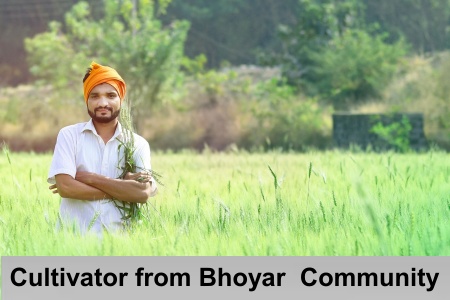
Bhoyar Caste is largely found in the Central Provinces of the country. Traditional occupation of Bhoyars is agriculture. They are good cultivators and mostly grow sugarcane.
Gujjars in Mughal Era
Gujjars in the Mughal era enjoyed great power. Further their power increased with the decline of Aurangzeb, Mughal emperor.
Origin of Vaishnavism
Origin of Vaishnavism shares its attributes to many sources and religious evolution, dating back to pre-Vedic epoch.
Gotra in Hinduism
In Hinduism, gotra refers to a lineage system tracing descent from ancient sages, primarily through the paternal line. Originating from Vedic tradition, it plays a crucial role in identity and marriage customs. Individuals from the same gotra are considered to share a common ancestor and are traditionally prohibited from intermarrying.