 Sundarbans National Park, located in the East Indian state of West Bengal is a Biosphere Reserve, Tiger Reserve and National Park. It forms a part of the Sundarbans lying over the Ganges Delta, next to the Sundarbans Reserve Forest in Bangladesh. Thick mangrove forest covers the delta. It is accredited as one of the largest reserves for the Bengal tiger. It houses a rich diversity of invertebrate, reptiles and birds. The region was previously notified as the core area of Sundarbans Tiger Reserve in the year 1973. However in 1977 the place was declared as a Wildlife Sanctuary. It was declared as a National Park on 4th May 1984. The administration and management of Sundarbans is governed by the Directorate of Forest. The Ministry of Environment and Forests and the State Government provides financial aid to the park. It is a World Heritage Site which is facing several threats owing to the natural calamities and excessive human interferences.
Geography of Sundarbans National Park
Sundarbans National Park is located at an average elevation of 7.5 metres above sea level. It comprises 54 small islands which are crisscrossed by a number of tributaries of the River Ganga. The temperature of the region varies from 20 to 48 degree Celsius. Heavy rainfall and high humidity (80 percent) are common characteristics. Mid June to mid September is the season of monsoon. From the month of May to October, frequent storms can be witnessed here. This estuarine delta hosts seven rivers with numerous watercourses.
Flora and Fauna of Sundarbans National Park
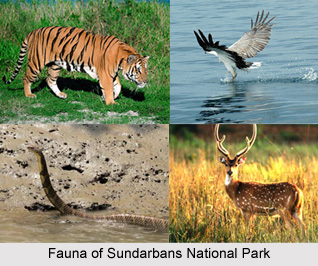 Sundarbans National Park is an active delta at the mouth of Bay of Bengal. Thus it has a complex geomorphologic and hydrological character and vast regions of mangrove forests. The unique ecosystem shelters a variety of flora and fauna. Sundari tree, a special kind of mangrove, has rendered the name to the place which is found abundantly in this region. One of the unique features of these trees is their spikes which grow above the ground. These spikes help in the respiration of the tree. When forest encounters water logging during the rainy season, these spikes are very helpful for the plants. Sundarbans National Park is the abode of over 400 Tigers. The Royal Bengal Tigers dwelling here swim in the saline waters and are known for their man eating tendencies. From November to February, these tigers can be seen basking in the sun on the river banks. Other wildlife of the region include Chital, Pangolin, Flying Fox, Jungle Cat, Fox, Indian Grey Mongoose, Wild Boar, Macaques, Leopard Cats, Fishing Cats and many more.
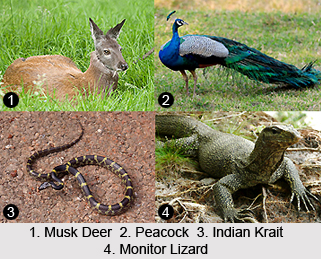
Sundarbans National Park is the home to a number of birds such as Whistling Teals, White-Eyed Pochards, Woodpeckers, Common Kingfishers, Rose Ringed Parakeets, Jungle Babblers, Red Junglefowls, Marsh Harriers, Pariah Kites and others. Reptiles of the park enlist animals like Common Kraits, Dog Faced Water Snakes, Russell`s Vipers, King Cobras, Pythons, Chameleons, Estuarine Crocodiles etc. There are also several endangered species which reside here including Mangrove Horseshoe Crab, Hawks Bill Turtle, Ground Turtle, Gangetic Dolphin, Olive Ridley Turtle, River Terrapin and Saltwater Crocodile.
 Aqua Fauna of Sundarbans National Park
Many fishes and amphibians are also found in the Sundarbans National Park. Prominent species includes Tree Frogs, Common Toads, Skipping Frogs, Gangetic Dolphins, Prawn, Shrimps, King Crabs, Common Carp, Star Fish, Silver Carp, Electric Rays, Butter Fish, Sawfish and many more. Coastal waters of Sundarbans serve as ideal habitats for endangered cetaceans. Critical populations of the place include Pantropical Spotted Dolphins, Spinner Dolphins, Indo-Pacific Bottlenose Dolphins, Finless Porpoises, Humpback Dolphins, Ganges River Dolphins, Irrawaddy Dolphins and Bryde`s Whales.
Visiting Information
Sundarbans National Park can be only visited by travelling through boat through the various lanes of meandering rivers. Nearest airport is located in Kolkata, at a distance of around 140 kilometres. Canning Railway Station, 29 kilometres away from the gateway of Sundarban, is the nearest railway station. The park also has a good connectivity with kolkata - Basanti Highway.