Subarnapur District

Subarnapur district is one of the major districts of Odisha. It is also known as Sonepur, dotted with many temples of Hindu religion

Introduction

Subarnapur District, OdishaSubarnapur district is the district in Odisha, centred with many archaeological sites of Buddhism era. Sonepur is the district headquarters. This district has two subdivisions Sonepur and Birmaharajpur. Subarnapur district is famous in the tourism map of Odisha, as this district has many Hindu temples of ancient and medieval era.

Subarnapur district is spread over an area of 2284.89 sq. km. It is even considered as Second Varanasi of India.

History of Subarnapur District

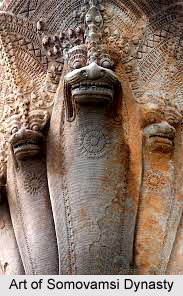
History of Subarnapur DistrictHistory of Subarnapur district dates back to 8th century AD and since then the place had been ruled by a number of dynasties. Formerly known as Swarnapur, it was initially a part of Khinjali Mandal which was under the rule of the Bhanjas, being the feudatory of the Bhaumakaras of Toshali. In 850 AD, the place was captured by the Somavamsi ruler Janmajaya I from the Bhanjas and the foundation of Suvarnapur kingdom was laid by him. With time, the kingdom extended its boundaries up to Utkala. In 1023, Yayati-II was the ruler of the kingdom and he divided his empire into two parts for better management of the administration of the newly captured territories. The two parts were named as Utkal Desa and Kosala Desa. Utkal Desa was ruled by the king himself and Abhivava Yayati nagar (present day Jajpur) served as its capital. Kosala Desa was ruled by a princely royal blood and its headquarters was situated at Subarnapur. The Telgu-chodas being the feudatory of the Chindaka Nagas of Bustar region captured Subarnapur in 1070 AD from the then Somavamsi viceroy. He ruled over this region for a long period of about 45 years. The Telgu-chodas were then expelled by the Kalachuris in 1113 AD. Their reign in Subarnapur extended for about 100 years.

When the Somavamsis were expelled by the Ganga dynasty from the Utkala region, the region came under the rule of the Ganga dynasty monarch Anangabhimadeva-III (1211-1238 AD). Later the Bhanjas occupied the place and Subarnapur was then made the capital of the kingdom. However, the capital was later shifted to Boudh owing to the expansion policy of the Chouhan rulers of Patnagarh.

Ramai Deo had established the Chouhan rule first in Patnagarh, which is in the present day Balangir district. A branch of this family also established their rule over Sambalpur. Balabhadradeva, a successor of this branch conquered Subarnapur region from Siddhabhanja Deva, the Bhanja ruler of Boudh. Madhukaradeva was the next Chouhan ruler who converted the newly captured territory a vassal state and gave the administration to his second son Madan Gopal. He was also the founder of the Chouhan kingdom of Subarnapur in 1640 AD. Subarnapur remained under their rule till it merged with the Odisha province on 1st January 1948. Subarnapur, on 1st April 1993, was made the district headquarters.

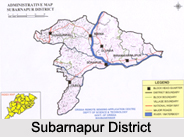
Location of Subarnapur District

Subarnapur is also known as the City of Temples. It is situated between 20 degree 30 minutes North to 21 degree 11 minutes North latitude and 83 degree 27 minutes East to 84 degree 16 minutes East longitude.

Culture of Subarnapur District

The great poet and prophet of Mahima Dharma, Santh Bhima Bhoi belonged to Subarnapur district. This region is also known for `Danda-nata` which is a religious folk tradition that is performed in the month of Chaitra. This place was known as Paschima Lanka.

Administration of Subarnapur district

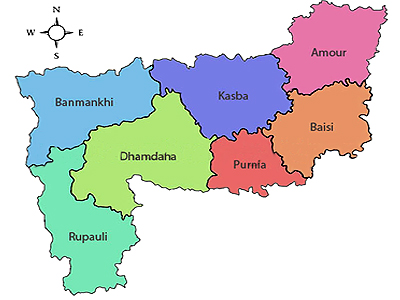
The Tehsils of Subarnapur district are Sonepur, Binika, Rampur, Birmaharajpur, Tarbha, and Ullunda. Sonepur is its Municipality. The district is a part of Balangir Lok sabha constituency.

Demography of Subarnapur District

According to the 2011 census, Subarnapur district has a population of 652,107. This gives it a ranking of 512th in India (out of a total of 640). The district has a population density of 279 inhabitants per square kilometre (720/sq mi). Its population growth rate over the decade 2001-2011 was 20.35%. Subarnapur has a sex ratio of 959 females for every 1000 males, and a literacy rate of 74.42%.

Education of Subarnapur District

Sonepur College is a well known college of the district. Other colleges are PS College, Ulunda, Birmaharajpur College, Dunguripali College, Subalaya College, A.E.S. College, Sidhartha College, Dharmasala College and Bhutiapali College.

Tourism in Subarnapur District

Some of the major temples of Subarnapur district are Sasisena Temple, Sureswari Temple, Subarnameru Temple, Kosaleswara Temple and Lankeswari Temple. The major tourist attraction of this state are Mahima pitha, Metakani Temple, Patali Srikhetra, Papakshya Ghat, Kapileswar temple, Nabagrahakunda and Anganadi of Digsira.

Recently updated articles in States of India

History of Thissur District
History of Thissur District Thumbnail

History of Thissur District

Early History of Thissur District explains flourishing of the port cities. Now these port cities are transformed into archaeological sites.

Tippi Orchid Research Centre, Arunachal Pradesh
Tippi Orchid Research Centre, Arunachal Pradesh Thumbnail

Tippi Orchid Research Centre, Arunachal Pradesh

Tippi Orchid Research Centre in Arunachal Pradesh is renowned for its rich collection of exotic and endangered orchids. Surrounded by lush rainforest...

Tourism in Nashik District
Tourism in Nashik District Thumbnail

Tourism in Nashik District

Pilgrimage tourism in Nashik district involves visiting the various places of Hindu and Jain worship located here. Some of the holiest sites for Hind...

Mangadu, Kerala
Mangadu, Kerala Thumbnail

Mangadu, Kerala

Mangadu in Kerala’s Kollam district is a significant megalithic site known for its urn burials, cist burials, menhirs, and stone circles. Excavations...

Devaswom
Devaswom Thumbnail

Devaswom

History of Devaswom is not very ancient and can be dated back to late seventeenth century.