
Spanda, the supreme reflects different meanings consisting of a vibration, an explosion, an arising, a throb, source of spontaneous expression or a reflection. Being oriented through thought and intention to organize into authentic action, Spanda refers to consciousness. Spanda may be described as a desire to live according to the innermost urging of the soul and attending to the rhythm of the nature of the body as they harmonize within the greater scale of natural life, seasons and cycles.
Spanda Karika which is based on the experience of the "Siddhas" consists of fifty one verses that reveal the inner most principles of Shiva Sutra. Losing the spark of "Spanda" can lead to the disconnection of vitality of the self and can cause loss of energy, focus and a sense of prosperity. According to modern Physics, the matter is described as waves of various lengths, without the presence of anything essentially solid, is defined as vibrations. The physical reality is one part of Tantric Shaivism which explains the entire matrix of energy pulsation.
Spanda is considered as the cardinal universal "shakti" and the vital aspect of transcendental reality. Spanda can also be depicted as the inner rhythm of aesthetic spiritual experience, which can be characterized as a flash of thought or an inner perception as pain or pleasure. In the process of its five primary actions (emanation, dissolution, existence, bestowal of grace and concealment), Spanda becomes the first flutter of pure consciousness.
Spanda , the sacred shudder that exists in the human body and soul, is the essence of "Tantra" where true yoga initiates. The conscious connection of soul is felt through the practice of yoga. Starting from the breath, it connects the soul with God by the inner vibration. Tantra , meaning fabric refers to "connectivity" which signifies the relation of the inner soul with the vastness of the Cosmos. Tandava , a cosmic meditation, is the dance of Spanda . "Tantra "which needs complete devotion of soul and body, can not be attained without mastering Spanda, the universal resonance.
Spanda
Spanda, the Sanskrit word represents the pulse of the cosmos.
Recently updated articles in Religion in India

Kusumayudha
Kusumayudha is a name of Kamadeva, the Hindu God of Love. Depicted with a sugarcane bow and flower-tipped arrows, he represents attraction and longing...

Bhoyar Caste
Bhoyar Caste is largely found in the Central Provinces of the country. Traditional occupation of Bhoyars is agriculture. They are good cultivators and...
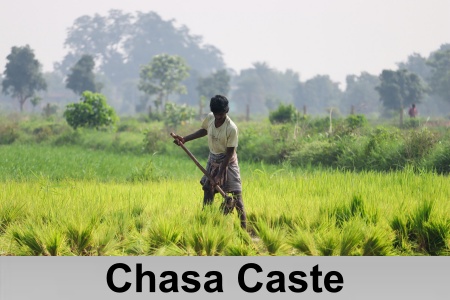
Chasa Caste
Chasa caste is a prominent agrarian community native to Odisha. Traditionally associated with cultivation and farming, Chasas have historically played...
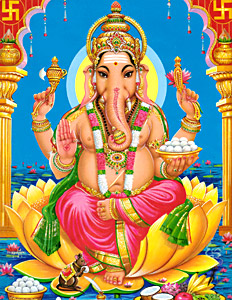
Vigneswara, A Form of Lord Ganesha
Lord Vigneswara is another form of Lord Ganesha or Vinayaka, prominently worshipped as the God of intelligence and good luck in the Indian subcontinen...
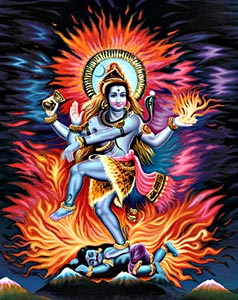
Maheswara
Maheswara, meaning “the Great Lord,” is a revered name of Lord Shiva in Hindu tradition. It represents Shiva’s supreme authority over creation, preser...
Related articles in Religion in India
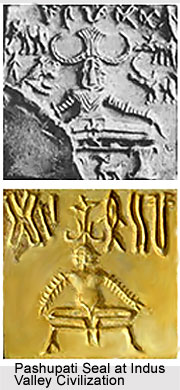
Religion in Indus Valley Civilization
Religion in Indus Valley Civilisation included Hinduism, Buddhism and Jainism. Details about the religion in Indus Valley Civilization have been gathe...
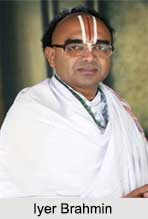
Iyer Brahmin
Iyer Brahmins are originally from Tamil Nadu of South India. They are known for their adherence to Advaita philosophy and Smarta traditions. Tradition...
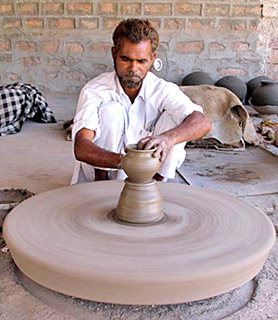
Kumbhakar / Kumhar Caste
Kumbhakar or Kumhar caste is a traditional artisan community in India known for pottery making. Derived from Sanskrit word Kumbhakar, meaning potter,...

Gujjars in Mughal Era
Gujjars in the Mughal era enjoyed great power. Further their power increased with the decline of Aurangzeb, Mughal emperor.
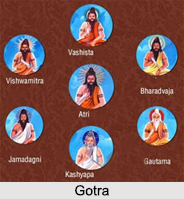
Gotra in Hinduism
In Hinduism, gotra refers to a lineage system tracing descent from ancient sages, primarily through the paternal line. Originating from Vedic traditio...