 Sitatapatra is a protector against supernatural danger. She is venerated in both the Mahayana Buddhism and Vajrayana Buddhism traditions. The Goddess of the White Umbrella or Sitatapatra is one of many powerful female deities.
Iconography of Sitatapatra
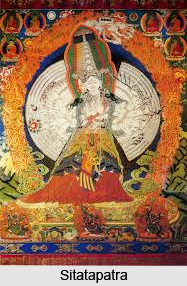
The Goddess of the White Umbrella manifests her power with her thousand heads, arms, and legs. She has eyes on the palms of each of her hands and soles of her feet, and each head has three eyes. She was standing triumphantly within an aureole blazing with the fire of wisdom, the goddess tramples the enemies of spiritual attainment (such as anger, greed and delusion) with her numerous feet. The primary hands of Sitatapatra are the white umbrella of protection and the wheel of the Dharma. Her other hands brandish various weapons and form a halo around her. In front of the goddess are three Mahakalas.
Concept of Sitatapatra
Sitatapatra is also known as Ushnisha Sitatapatra. Sitatapatra is a powerful independent deity as she was emanated by Gautama Buddha from his "ushnisha". Whoever practices her mantra will be reborn in the pure land as well as gaining protection against supernatural danger and black magic.
Mantras of Sitatapatra
The Shurangama Mantra of the Surangama Sutra is the most commonly practiced mantra invoking her. The Great White Umbrella is a sadhana for healing illness, dispelling interferences and spirit harms, quelling disasters, and bringing auspiciousness. To do the worship in full requires Kriya tantra abhisheka of Sitatapatra
Vajrayana Goddesses
Sitatapatra is one of the most complex Vajrayana goddesses. Sitatapatra was emerged from Buddha`s ushnisha when he was in Trayastrimsa heaven. Gautama Buddha announced her role to cut asunder completely all malignant demons, to cut asunder all the spells of others...to turn aside all enemies and dangers and hatred. Her benign and beautiful form belies her ferocity as she is a "fierce, terrifying goddess, garlanded by flames, a pulverize of enemies and demons".
Naming of Sitatapatra
In the Mahayana Buddhism "Sitatapatra Sutra", she is called "Aparajita" or "undefeatable" and is also identified as a form of goddess Tara from the Vairocana family and is also called Mahamaya, which is also the name of the Buddha`s mother.
Female Counterpart of Avalokitesvara
Sitatapatra is regarded as a female counterpart to Avalokitesvara, the Bodhisattvas of compassion. Like him, Sitatapatra manifests in many elaborate forms: having a thousand faces, arms and legs, or simply as a feminine deity of great beauty. Known foremost for her "white parasol" she is most frequently attributed with the "golden wheel". The auspiciousness of the turning of the precious wheel is symbolic of the Buddha`s doctrine, both in its teachings and realizations.