
In the Puranas the Siddhas are mentioned as the demi-gods or angels of undefined attributes and character. Siddhas in Buddhist mythology are said to inhabit together with the Vidyadharas, Munis, and human beings in the region between the earth and the sun. In Hinduism they are usually described as attending upon Lord Indra, although they have chiefs and kings of their own.
In the Vishnu Purana the Siddhas are portrayed as pure and holy beings, exempt from greed, love and hatred. They do not take part in the reproduction of living beings, and in detecting the unreality of the properties of elementary matter. Siddhas are about eighty-eight thousand in number and reside in the regions of the sky, north of the sun, until the destruction of the universe.
Siddhas
Siddhas are demi-gods as mentioned in the Buddhist mythology.
About Siddhas
Types of Siddha
Siddha is a term well known in Indian religion and culture. This term is more specific to Jainism. Those who believe in Jainism may acknowledge and practice Siddha. It is a practice of perfection, which is evident in it"s meaning in Sanskrit and Indian religion. In Sanskrit, Siddha means the perfected one and Indian religion defines a Siddha as the one who is accomplished. This perfecton is a kind of enlightenment of a higher level, achieved in physical as well as spiritual areas. What separates a Siddha from others is the attainment of siddhi or capabilities which is not possible to be realized by ordinary corporeal beings. These capabilities may therefore be termed as paranormal. In Tamil, Siddha translates into a great thinker or a wise man. Siddhars, naths, ascetics, sadhus and yogis are known to perform sadhana. So, they can broadly be referred to as Siddhas.
Characteristics of a Siddha in Jainism : Jainism preaches that attainment of salvation is the supreme aim of mankind and for the achievement of this aim, Jainism also highlights that every soul has a potential to be liberated. But what restricts a soul is his servility to his own karmas. An important prerequisite for the attainment of liberation is ones strict control over his materialistic passions and temptations, otherwise the soul remains trapped in the transmigratory cycle of birth and death. It is important to note that before attaining salvation, a person first becomes Arihant where the Ghati (destructive) karmas are destroyed first and then the rest four Aghati (non-destructive) karmas are destroyed by the end of lifespan. This kind of freedom from bondage is the most vital aim for those who have undertaken the path of becoming a Siddha.
Siddha in Jainism are the liberated souls who have destroyed all karmas and will no longer collect any new karma. They have therefore attained Moksha, which is indicative of freedom from the transmigratory cycle of birth and death. They are above the omniscient beings called the Arihantas. Characteristically, they are soul in its purest form and therefore do not have a body like ordinary beings. They are even formless. Since they are free from karmas, they do not experience any kind of suffering. They do not have any kind of materialistic desires to achieve and are therefore experiencing the ultimate and unobstructed bliss called Aksha Sukh. They reside in Siddhashila which is situated on top of the Universe.
More specifically, the soul of a siddha possesses infinite faith or belief in the tattvas or essential principles of reality (Ksayika Samyaktva), infinite knowledge (Kevala Jnana), infinite perception (Kevaladarsana), infinite power (Anantavirya), fineness (Suksmatva), inter-penetrability (Avagahan), it is neither heavy nor light (Agurulaghutva) and is undisturbed and experiences infinite bliss (Avyabadha).
Different Ways of Achieving Siddha : Jainism highlights fifteen different ways of achieving liberation or salvation.
Jin Siddha : Jin Siddha comprises of an individual constructing the Tirthankar Nam karma (gotra) in the third life from the last, thereby becoming a Tirthankar in the last life. A Tirthankar is the founder of the four-fold order of monks, nuns, laymen, and laywomen. He will again establish the Jain Sangh, which will lead to his salvation. Some of the Tirthankars who followed this path are Rishabhdev, Ajitnath, Shantinath, Nemitath, Parshvanath and Lord Mahavira.
Ajin Siddha : Following the Ajin Siddha path one becomes Arihant and attains salvation. Arihant is the one who has successfully and completely destroyed his inner foes such as materialistic desires, greed, anger and hatred. This process was followed by Gautamswami.
Tirth Siddha : When the individual has taken shelter in the Jain Sangh established by the Tirthankar, thereby attaining salvation, this path is called the Tirth Siddha.
Atirth Siddha : Atirth Siddha is characterized by becoming Arihant prior to the establishment of Jain Sangh by a Tirthankar. The individual following this path attains salvation after the Jain Sangh is established. One noteworthy example of the follower of this path is Marudevamata.
Gruhasthaling Siddha : Individuals who follow the Gruhasthaling Siddha path have a peculiar type of dualism living as manusya. They are gregarious living the life of a regular householder, but from the inside they are totally detached. They neither have any attachment nor do they hold grudges or malice in their heart for anyone or anything around. They thus are endowed with a spiritual attitude which improves with time, thereby helping them destroying ghati karmas and becoming Arihants. With a shorter life span, they may attain salvation in about one antrmuhurt. With a longer life span, then may take up monkhood and oblige the world to bring the awareness until their death. This process was followed by Chakravarti king, Bharat.
Anyaling Siddha : A person with right code of conduct, right faith and right knowledge can also attain salvation. This path was followed by Vallakchiri.
Svaling Siddha : Svaling Siddha is characterized by a sadhu attaining salvation as a renounced sadhu. A noteworthy example of this sadhu is Muni Shri Prasannchandra.
Purushling Siddha : Purushling Siddha takes place when a man attains salvation. A noteworthy example of such a man is Sudharmaswami.
Striling Siddha : A woman can attain salvation too and achieve Striling Siddha. However, Digambar sect does not believe that woman can attain salvation. Some of the women who have achieved Striling Siddha are Chandanbala and Mrugavatiji.
Napusankling Siddha : Napusankling Siddha relates to a person with neutral gender who can attain salvation. This kind of Siddha was achieved by Gangeyamuni.
Pratyek Siddha : Pratyek Siddha relates to self-awareness of a person, which becomes the tool for destroying the ghati karmas trigord. He then becomes Arihant and then moves a step forward to becoming a Siddha. This kind of siddha was attained by Karkandu Muni.
Svayambuddha Siddha : Svayambuddha Siddha relates to self-inspiration (Kevali) used as a weapon for destroying the ghati karmas, thereby becoming Arihant and Siddha. This path was followed by Kapil Kevali.
Buddha Bodhit Siddha : Buddha Bodhit Siddha path involves being enlightened by a spiritual teacher, thereby filled with intense desire to renounce the world to become a Siddha. Some of the followers of this path are Gautamswami and Vayubhuti.
Ek Siddha : Sometimes, one soul or person achieves salvation among the group of other monks and nuns. He thus achieves Ek Siddha. Lord Mahaviraswami is known to attain Ek Siddha.
Anek Siddha : Sometimes many monks attain salvation together at the same time, consequent to all their lives ending at the same time. This is called Anek Siddha. Lord Rishabhdev and other monks with him are known to achieve this kind of Siddha.
It is important to note that Jainism strongly upholds that it is the attitude that matters and not the label. This implies that not only a Jain, but anyone can reach the ultimate and the supreme level of salvation. He needs to lead a life filled with goodness and purity which is imperative to gain salvation.
Representation of Siddha in Jainism
The siddha and the other ascetics constitute the panca-paramesthin, the five chief divinities of the Jainas. Their figures are represented on a silver or brass tray called a siddha-cakra (saint-wheel). This tray is sacred and is known to possess magical powers. It is washed and anointed in the twice-yearly ceremony known as oli. Rice, sweetmeats and fruits are also offered to it during this ceremony.
In the Digambara sect the saint-wheel is called navapada meaning nine dignities or nine virtues. It has panca-paramesthin along with the Jina (savior) image, temple, scriptures, and dharma-cakra (sacred wheel of the law).
Characteristics of a Siddha in Jainism : Jainism preaches that attainment of salvation is the supreme aim of mankind and for the achievement of this aim, Jainism also highlights that every soul has a potential to be liberated. But what restricts a soul is his servility to his own karmas. An important prerequisite for the attainment of liberation is ones strict control over his materialistic passions and temptations, otherwise the soul remains trapped in the transmigratory cycle of birth and death. It is important to note that before attaining salvation, a person first becomes Arihant where the Ghati (destructive) karmas are destroyed first and then the rest four Aghati (non-destructive) karmas are destroyed by the end of lifespan. This kind of freedom from bondage is the most vital aim for those who have undertaken the path of becoming a Siddha.
Siddha in Jainism are the liberated souls who have destroyed all karmas and will no longer collect any new karma. They have therefore attained Moksha, which is indicative of freedom from the transmigratory cycle of birth and death. They are above the omniscient beings called the Arihantas. Characteristically, they are soul in its purest form and therefore do not have a body like ordinary beings. They are even formless. Since they are free from karmas, they do not experience any kind of suffering. They do not have any kind of materialistic desires to achieve and are therefore experiencing the ultimate and unobstructed bliss called Aksha Sukh. They reside in Siddhashila which is situated on top of the Universe.
More specifically, the soul of a siddha possesses infinite faith or belief in the tattvas or essential principles of reality (Ksayika Samyaktva), infinite knowledge (Kevala Jnana), infinite perception (Kevaladarsana), infinite power (Anantavirya), fineness (Suksmatva), inter-penetrability (Avagahan), it is neither heavy nor light (Agurulaghutva) and is undisturbed and experiences infinite bliss (Avyabadha).
Different Ways of Achieving Siddha : Jainism highlights fifteen different ways of achieving liberation or salvation.
Jin Siddha : Jin Siddha comprises of an individual constructing the Tirthankar Nam karma (gotra) in the third life from the last, thereby becoming a Tirthankar in the last life. A Tirthankar is the founder of the four-fold order of monks, nuns, laymen, and laywomen. He will again establish the Jain Sangh, which will lead to his salvation. Some of the Tirthankars who followed this path are Rishabhdev, Ajitnath, Shantinath, Nemitath, Parshvanath and Lord Mahavira.
Ajin Siddha : Following the Ajin Siddha path one becomes Arihant and attains salvation. Arihant is the one who has successfully and completely destroyed his inner foes such as materialistic desires, greed, anger and hatred. This process was followed by Gautamswami.
Tirth Siddha : When the individual has taken shelter in the Jain Sangh established by the Tirthankar, thereby attaining salvation, this path is called the Tirth Siddha.
Atirth Siddha : Atirth Siddha is characterized by becoming Arihant prior to the establishment of Jain Sangh by a Tirthankar. The individual following this path attains salvation after the Jain Sangh is established. One noteworthy example of the follower of this path is Marudevamata.
Gruhasthaling Siddha : Individuals who follow the Gruhasthaling Siddha path have a peculiar type of dualism living as manusya. They are gregarious living the life of a regular householder, but from the inside they are totally detached. They neither have any attachment nor do they hold grudges or malice in their heart for anyone or anything around. They thus are endowed with a spiritual attitude which improves with time, thereby helping them destroying ghati karmas and becoming Arihants. With a shorter life span, they may attain salvation in about one antrmuhurt. With a longer life span, then may take up monkhood and oblige the world to bring the awareness until their death. This process was followed by Chakravarti king, Bharat.
Anyaling Siddha : A person with right code of conduct, right faith and right knowledge can also attain salvation. This path was followed by Vallakchiri.
Svaling Siddha : Svaling Siddha is characterized by a sadhu attaining salvation as a renounced sadhu. A noteworthy example of this sadhu is Muni Shri Prasannchandra.
Purushling Siddha : Purushling Siddha takes place when a man attains salvation. A noteworthy example of such a man is Sudharmaswami.
Striling Siddha : A woman can attain salvation too and achieve Striling Siddha. However, Digambar sect does not believe that woman can attain salvation. Some of the women who have achieved Striling Siddha are Chandanbala and Mrugavatiji.
Napusankling Siddha : Napusankling Siddha relates to a person with neutral gender who can attain salvation. This kind of Siddha was achieved by Gangeyamuni.
Pratyek Siddha : Pratyek Siddha relates to self-awareness of a person, which becomes the tool for destroying the ghati karmas trigord. He then becomes Arihant and then moves a step forward to becoming a Siddha. This kind of siddha was attained by Karkandu Muni.
Svayambuddha Siddha : Svayambuddha Siddha relates to self-inspiration (Kevali) used as a weapon for destroying the ghati karmas, thereby becoming Arihant and Siddha. This path was followed by Kapil Kevali.
Buddha Bodhit Siddha : Buddha Bodhit Siddha path involves being enlightened by a spiritual teacher, thereby filled with intense desire to renounce the world to become a Siddha. Some of the followers of this path are Gautamswami and Vayubhuti.
Ek Siddha : Sometimes, one soul or person achieves salvation among the group of other monks and nuns. He thus achieves Ek Siddha. Lord Mahaviraswami is known to attain Ek Siddha.
Anek Siddha : Sometimes many monks attain salvation together at the same time, consequent to all their lives ending at the same time. This is called Anek Siddha. Lord Rishabhdev and other monks with him are known to achieve this kind of Siddha.
It is important to note that Jainism strongly upholds that it is the attitude that matters and not the label. This implies that not only a Jain, but anyone can reach the ultimate and the supreme level of salvation. He needs to lead a life filled with goodness and purity which is imperative to gain salvation.
Representation of Siddha in Jainism
The siddha and the other ascetics constitute the panca-paramesthin, the five chief divinities of the Jainas. Their figures are represented on a silver or brass tray called a siddha-cakra (saint-wheel). This tray is sacred and is known to possess magical powers. It is washed and anointed in the twice-yearly ceremony known as oli. Rice, sweetmeats and fruits are also offered to it during this ceremony.
In the Digambara sect the saint-wheel is called navapada meaning nine dignities or nine virtues. It has panca-paramesthin along with the Jina (savior) image, temple, scriptures, and dharma-cakra (sacred wheel of the law).
Recently updated articles in Indian Puranas
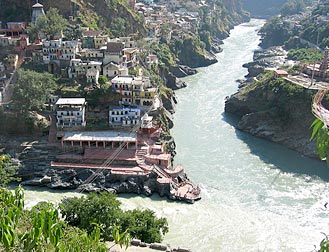
Mandakini, Holy River
Mandakini River is a significant Himalayan river in Uttarakhand, renowned for its ecological, cultural, and religious importance. Originating near the...
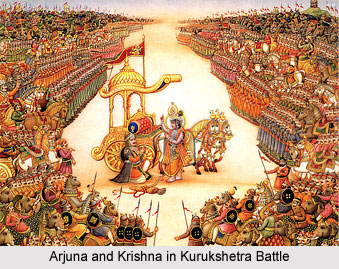
Kausika, Son of Vasudeva
Kausika is a minor figure in Hindu mythology and is identified in the Vishnu Purana as the only son of Vasudeva and his wife Vaishali. He is recognize...
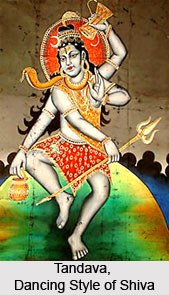
Tandu, Attendant of Lord Shiva
Tandu is revered as the divine attendant of Lord Shiva and the foremost exponent of the Tandava dance. According to the Natya Shastra, he instructed S...
Niramitra, Mahabharata
Niramitra was a son of Nakula and Kareṇumati in the Mahabharata. A descendant of the Pandavas and the Kuru dynasty, he fought on the Pandava side duri...
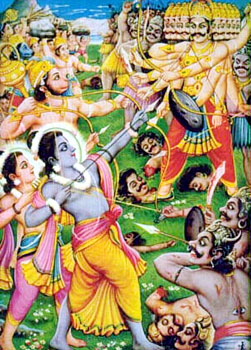
Mahodara, Ramayana
Mahodara was a prominent Rakshasa warrior, minister, and army chief who served under Rāvaṇa during the Battle of Lanka in the Ramayana. Celebrated for...
Related articles in Indian Puranas
Adhyayas in Agni Purana
Adhyayas in Agni Purana are all encompassing. The chapters have dealt with a variety of subjects related to human lives. A large number of chapters ha...
Indian Puranic Tribes
The existence of Indian Puranic tribes is often mixed with mythology and fiction that depict them as superhuman or sub.
Puranic Texts
Puranic Texts are vital according to Hindu, Jain or Buddhist religion; they describe the history of the Universe.

Puranic Shaivism
Puranic Shaivism established during the Gupta Dynasty. This puranic religion developed and expanded, and was accompanied by the development of Brahman...

Nilamata Purana
Nilamata Purana is a Kashmiri Purana that is referred by Kalhana. It is considered as one of the sources of ancient history of Kashmir.