 The closing decades of the 19th century and the early years of the 20th century marked the genesis of a new ands younger group within the Indian National Congress. The emergence of the younger group added a new vitality and gave a new dimension to the policies and programs of the Indian National Congress. This new group was sharply critical of the ideology and method of old leadership. These new groups were called the Extremists. Extremist ideals mainly guided the second phase of the Indian Nationals Congress from 1905 to 1919.Extremists advocated that the adoption of Swaraj as the s goal of the Congress to be achieved by more self-reliant and independent methods.
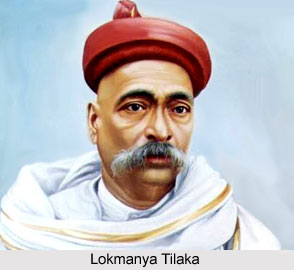
The process of split in the house of the Indian National Congress began when Lokmanya Tilaka clashed with the Moderates over the questions of Social reform. In July1895, Tilak and his followers completely ousted Gokhale and Ranade from the administrative body of the s Poona Sarvojonik Sabha. Later Gokhale founded a separate organization named "The Deccan Sabha".
In the second phase of the Indian National Congress, Lokmanya Tilaka had the chief contribution. Unlike the Moderate leaders, Tilak criticized the government strongly. Tilak was the first Congress leaders to suffer the several imprisonments for the sake of the country. The Moderate Congress who controlled the Indian National Congress during these periods did not permit this. At the Lucknow session of the Congress, Tilak`s attempt to move a resolution condemning the governor Sandhurst`s administration`s of Bombay was also blocked by the Moderates. The Moderates put forward that since Sandhurst`s administration in Bombay was a provincial issue and hence it could not be discussed in the National Congress. Right from this issue there was a split between the Moderate and the Extremist leaders. It was because of these ideological differences with Tilak and his followers, the moderate leaders decided to keep Tilak out of the powers and positions of the Indian National Congress. Moreover they also decided to give Tilak no chance to become the President of the Congress. However the growing discontent between the Moderates and the Extremists resulted in the split of the Indian National Congress. The difference of the political ideology between the moderates and the Extremists marked the second phase of the Indian National Congress. The growth of extremism was the significant feature of the second phase of the Indian National Congress.