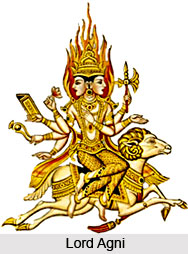
 Sacrificial rituals in later Vedas were known to be performed by the Aryans. The daily domestic sacrifices are discussed in the Grihya Sutras. These rituals are still performed by some orthodox Brahmanic families. These sacrifices are centered on Lord Agni. They were performed at dawn and dusk which involved chanting of Vedic mantras while pouring offerings of milk and ghee. The complicated sacrifices include the darsapurnamasas which begins at the start of the two lunar fortnights months according to the Hindu calendar, the days of the new and full moons. This sacrifice was regulated by the moon which was directed to several great gods of the Vedic pantheon. The sacrifice of the chaturmasya was performed at four-monthly intervals at the beginning of each of the three seasons of the Vedic calendar. These sacrifices were inexpensive and did not involve animal sacrifice.
Agnistoma is an annual ceremony that originally takes place in spring but performed in other parts of the year. This rite could be done on a single day but it might last much longer and be developed into a very complicated and expensive ritual. This also involves the pressing of soma and animal slaughter. These rituals could be performed by ordinary tribesmen of the Brahmin, Kshatriya and Vaishya castes. The effects of these sacrifices on political attitudes have been felt all through the history of India.
The Rajasuya sacrifice was a royal sanctification ceremony and it was considered that a king who had not performed this ritual was not a true king. It is believed that these rituals raised him to a divine status. After the success of this the vajapeya sacrifice is performed which is a complex and expensive process. Here the King`s strength needs to be proved. This is considered as a rejuvenation ceremony. Ashvamedha is a horse sacrifice ceremony which is also a bit difficult and expensive.
This article is a stub. You can enrich by adding more information to it. Send your Write Up to content@indianetzone.com.