
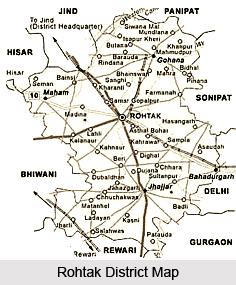
 Rohtak District is one of the administrative districts of Haryana. It lies in the south east of Haryana. Rohtak is the administrative headquarters of Rohtak District. This district is bounded by Jind District and by Sonipat district in the north, by Jhajjar district on the south, Jhajjar and Sonipat district in the east and Hisar and Bhiwani districts in its west. Administration of Rohtak District is headed by a Deputy Commissioner. This district has two sub-divisions namely Rohtak and Meham. The sub-tehsil of Rohtak District is Sampla. There is no perennial river in Rohtak District. Underground water level is relatively high. The district is faces the problem of brackish water and water logging in many parts. The sub soil water depth varies from 4 to 40 feet.
Rohtak District
Rohtak District is situated in the south eastern region of Haryana. Rohtak District, with headquarters at Rohtak town, is known for its wide agricultural infrastructure.
Introduction
Rohtak District is one of the administrative districts of Haryana. It lies in the south east of Haryana. Rohtak is the administrative headquarters of Rohtak District. This district is bounded by Jind District and by Sonipat district in the north, by Jhajjar district on the south, Jhajjar and Sonipat district in the east and Hisar and Bhiwani districts in its west. Administration of Rohtak District is headed by a Deputy Commissioner. This district has two sub-divisions namely Rohtak and Meham. The sub-tehsil of Rohtak District is Sampla. There is no perennial river in Rohtak District. Underground water level is relatively high. The district is faces the problem of brackish water and water logging in many parts. The sub soil water depth varies from 4 to 40 feet.History of Rohtak District
 According to the history of Rohtak District, it derives its name from its headquarters town Rohtak which is said to be a modified version of Rohtashgarh, a name still applied to the ruined sites of the present town. Traditionally, it is named after Raja Rohtash under whom, the city is said to have been built. It is also claimed that the town derives its name from Roherra tree called Rohitaka in Sanskrit language. It is said that before the town came into existence, it was a forest of Rohitaka trees and hence its name became Rohtak. Another legend connects Rohtak with Rohitaka, which is mentioned in Mahabharata.
History of Rohtak District as an administrative unit says that the areas of this district underwent many changes, extending over hundreds of years before the administrative unit emerged in its present form. Under the rule of Akbar, when his minister Todar Mal divided North India into administrative circles, the areas of Rohtak fell within the Sarkars of Delhi. Lying close to the imperial city of Delhi, the tract which now comprises Rohtak district was often granted in military Jagir by the Sultan and Mughal emperors to the nobles of the court. For this reason Rajput, Brahman, Afghan and Baluch chiefs have at different times enjoyed its revenues.
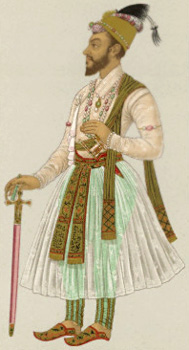
After, the death of Bahadur Shah I (1707 - 1712), the successor of Aurangzeb, Mughal Empire began to decline rapidly. As a result, the areas of Rohtak frequently experienced a change of masters. By the treaty of Surjit Arjungaon, signed on December 30th, 1803, Rohtak area along with the other possessions of Sindhia situated to the west of Yamuna River passed to the British rulers and came under the administration of the North-west provinces. It is also mentioned in the history that the British had no intention at that time to hold large territories beyond the Yamuna. Rohtak, Beri and Meham tehsils of present district of Rohtak were given to the Nawab of Dujana. The formation of present Rohtak District began when the gift was abandoned by the Dujana chief.
When Hisar District was created, Beri and Meham-Bhiwani tehsils were included in Hisar and the other portions of the present northern tehsils in Panipat. In 1824, Rohtak District was formed as a separate unit consisting of Gohana, Rohtak, Beri and Bhiwani tehsils. Bahadurgarh territory formed its eastern and Jhajjar its southern boundary. However, the district was abolished in 1841 AD, Gohana going to Panipat and rest of the tehsils to Delhi but in the next year again it was created. Two districts of Rohtak and Jhajjar together with rest of Delhi and Hisar divisions were detached from North-western provinces after 1857 and passed to Punjab on 13th of April, 1858. Rohtak District remained a part of the Hisar division until 1884.
On the abolition of Hisar Division in 1884, Rohtak District was transferred to Delhi division. It consisted of four tehsils namely Rohtak, Gohana, Jhajjar and Sampla. But in April, 1910, Sampla tehsil was abolished and its area was divided between Rohtak and Jhajjar tehsils which had remained attached to Delhi division since 1861 and was added to Rohtak District in September, 1912, after the separation of Delhi Territory from Punjab. The district was then attached to Ambala division. In 1948, Dujana state was merged in Jhajjar tehsil and a new sub-tehsil of Nahar was created.
Thus, Rohtak District was given four Tehsils namely Rohtak, Sonipat, Jhajjar and Gohana with Nahar and Meham as sub-tehsil of Jhajjar and Gohana tehsils respectively. In 1973 Meham sub-tehsil was upgraded as tehsil. Sonipat tehsil was created by bifurcating Rohtak District, and Gohana and Sonipat tehsils were allotted to Sonipat district. One more tehsil, Kosli was created out of Jhajjar tehsil and Nahar sub-tehsil was abolished. In November, 1989 reorganisation of district took place and Gohana tehsil was again attached with Rohtak District of Rewari. In July, 1997, Jhajjar District was created after bifurcating Rohtak district into Rohtak and Jhajjar districts and present Rohtak District consists of Rohtak and Meham Tehsils.
Economy of Rohtak District
Economy of Rohtak District is primarily based on agriculture that is it has an agrarian economy. Near about 51.89 percent of the total workers are engaged in agriculture and allied activities, 7.68 percent in cottage and household industries and the rest are engaged in other activities. Out of total geographical area of the district, around 83 percent is under cultivation. The main crops cultivated here are wheat, gram, sugarcane and bajra. Modern technology has been adopted in farming. Though agriculture is the main activity in Rohtak District, it dose not provide sufficient income. To supplement their meager income, they are engaged in various allied activities like dairy, poultry, piggery, sheep, goat rearing etc. The district has one milk plant unit at Rohtak. Industrially, Rohtak is one of the fast developing districts of Haryana, having good industrial base with large and medium scale industries along with many small scale units. The distribution of industrial activities is however uneven. The majority of industrial units are concentrated at Rohtak Delhi Road.
Rohtak District`s ample agricultural resources, availability of skilled labourers, a good network of infrastructural facilities and various incentives offered by the government coupled with its close proximity to Delhi has given impetus to the new enterprises to establish several industries here. Rohtak District is well provided with other essential services like postal services, education and healthcare facilities.
Rohtak District`s ample agricultural resources, availability of skilled labourers, a good network of infrastructural facilities and various incentives offered by the government coupled with its close proximity to Delhi has given impetus to the new enterprises to establish several industries here. Rohtak District is well provided with other essential services like postal services, education and healthcare facilities.
Tourism in Rohtak District
Tourism in Rohtak District in Haryana comprises various interesting locales, which are renowned for their historical structures, pilgrimage centers as well as places exuding natural splendour.
Rohtak City : The city of Rohtak is the headquarters of Rohtak district and Rohtak Tehsil and located on Delhi Hisar N.H. 10. The ruins present at Khodrakot town suggest that Rohtak might be as ancient as the Indus Valley Civilization. Rohtak is also associated with `Rohitika`, which finds a mention in the Hindu epic Mahabharata. Historical records claim that Rohtak might have been the capital of the kingdom called `Bahudhanyaka`, which belonged to the `Yaudheyas`. It is believed that trade was conducted from Ganga Valley till Taxila, via the route of Rohitika to Sakala. The fact that Rohtak existed during the reign of Kushanas is proved by the restoration of Kushana Pillar Capital, which is embellished with carvings of riders and winged lions. The riders depicted on the pillars bear a resemblance to the riders on elephants at the caves of Karla and figures at Sanchi gateway. It is a beautiful specimen of sculptural excellence of Haryana. Historians have also discovered clay mounds of coins near the region of Khodrakot.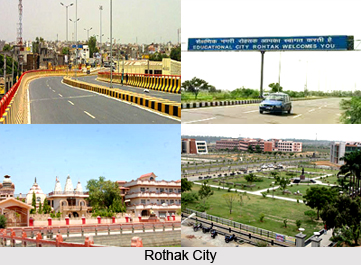 Coin moulds belonging to the period of the later `Yadhyayas` of the 3rd to 4th centuries A.D. have also been found here. Other interesting artefacts existent here is a Gupta terracotta plaque and a head and some coins of Samanta Deva, Hindu rulers of Kabul, etc. The `Rewri` of Rohtak is famous.
Asthal Bohar : Asthal Bohar is located at a distance of about 6 to 7 km from the eastern portion of Rohtak city, particularly on the Rohtak-Delhi N.H. 10. Beautifully sculptured stone idols and ancient math of Asthal Bohar are the special tourist attractions of this place. A legendary account states that this region was founded by Sialkot`s Pooran Bharat and a disciple of Guru Gorakhnath. In the year 1791, the Math was restored after several years of neglect. The Ayurvedic Degree College, Engineering College, Business Management Institute and Free Hospital are amongst the educational institutes which are operated by Math.
Meham : This town is situated about 30 km from the western part of Rohtak city on the Rohtak Hisar N.H. 10. The town is mentioned in the Mahabharata, during which time a large fort was present here. Much later, a Rajput named Rai Ballu had re-founded Meham town, prior to the regime of Prithvi Raj Chauhan. This town, however, was demolished by Muhammad Ghori. Historical accounts have said that Meham was passed on as a `Jagir` to Shahbaz Khan, who was an Afghan.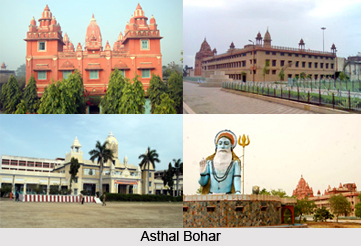 This town was snatched away from the Afghans by the Rajputs during the rule of the Mughal emperor, Aurangzeb. Pirzada Masjid, Jama Masjid and an ancient `baoli` or well are some of the renowned ancient monuments of Meham. The baoli possesses 101 steps and some rooms.
The Baoli has been created by Sidu, a `Chobdar` in about 1656 to 1657 A.D., as revealed by an inscription on a marble slab near the Baoli. Sandstone and `Kankar` or gravel have been employed while making the baoli. There is another Baoli which is based near the southern part of the town. The Jama Masjid was constructed during the rule of Humayun in 1531 A.D, as per the records from inscriptions near the pulpit stairs. Another inscription states that the mosque was erected by Khwaja Rahmet Ullah around 1667 to 1668 A.D. However, two Arabic inscriptions also bear testimony to the statement that a mosque used to exist here even prior to the regime of Humayun. Sheikh Yasaf of Hisar had created the Pirzada Mosque when Babar ruled India, according to the inscriptions on the walls of this mosque.
Rohtak City : The city of Rohtak is the headquarters of Rohtak district and Rohtak Tehsil and located on Delhi Hisar N.H. 10. The ruins present at Khodrakot town suggest that Rohtak might be as ancient as the Indus Valley Civilization. Rohtak is also associated with `Rohitika`, which finds a mention in the Hindu epic Mahabharata. Historical records claim that Rohtak might have been the capital of the kingdom called `Bahudhanyaka`, which belonged to the `Yaudheyas`. It is believed that trade was conducted from Ganga Valley till Taxila, via the route of Rohitika to Sakala. The fact that Rohtak existed during the reign of Kushanas is proved by the restoration of Kushana Pillar Capital, which is embellished with carvings of riders and winged lions. The riders depicted on the pillars bear a resemblance to the riders on elephants at the caves of Karla and figures at Sanchi gateway. It is a beautiful specimen of sculptural excellence of Haryana. Historians have also discovered clay mounds of coins near the region of Khodrakot.
Coin moulds belonging to the period of the later `Yadhyayas` of the 3rd to 4th centuries A.D. have also been found here. Other interesting artefacts existent here is a Gupta terracotta plaque and a head and some coins of Samanta Deva, Hindu rulers of Kabul, etc. The `Rewri` of Rohtak is famous.
Asthal Bohar : Asthal Bohar is located at a distance of about 6 to 7 km from the eastern portion of Rohtak city, particularly on the Rohtak-Delhi N.H. 10. Beautifully sculptured stone idols and ancient math of Asthal Bohar are the special tourist attractions of this place. A legendary account states that this region was founded by Sialkot`s Pooran Bharat and a disciple of Guru Gorakhnath. In the year 1791, the Math was restored after several years of neglect. The Ayurvedic Degree College, Engineering College, Business Management Institute and Free Hospital are amongst the educational institutes which are operated by Math.
Meham : This town is situated about 30 km from the western part of Rohtak city on the Rohtak Hisar N.H. 10. The town is mentioned in the Mahabharata, during which time a large fort was present here. Much later, a Rajput named Rai Ballu had re-founded Meham town, prior to the regime of Prithvi Raj Chauhan. This town, however, was demolished by Muhammad Ghori. Historical accounts have said that Meham was passed on as a `Jagir` to Shahbaz Khan, who was an Afghan.
This town was snatched away from the Afghans by the Rajputs during the rule of the Mughal emperor, Aurangzeb. Pirzada Masjid, Jama Masjid and an ancient `baoli` or well are some of the renowned ancient monuments of Meham. The baoli possesses 101 steps and some rooms.
The Baoli has been created by Sidu, a `Chobdar` in about 1656 to 1657 A.D., as revealed by an inscription on a marble slab near the Baoli. Sandstone and `Kankar` or gravel have been employed while making the baoli. There is another Baoli which is based near the southern part of the town. The Jama Masjid was constructed during the rule of Humayun in 1531 A.D, as per the records from inscriptions near the pulpit stairs. Another inscription states that the mosque was erected by Khwaja Rahmet Ullah around 1667 to 1668 A.D. However, two Arabic inscriptions also bear testimony to the statement that a mosque used to exist here even prior to the regime of Humayun. Sheikh Yasaf of Hisar had created the Pirzada Mosque when Babar ruled India, according to the inscriptions on the walls of this mosque.
Recently updated articles in States of India
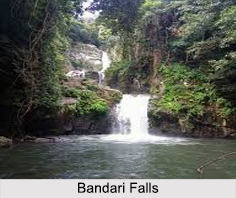
Bandare Waterfalls, Meghalaya
Bandare Waterfalls in South Garo Hills, Meghalaya, is a secluded natural attraction surrounded by dense subtropical forests and rugged mountain terrai...
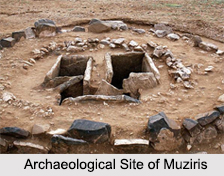
History of Thissur District
Early History of Thissur District explains flourishing of the port cities. Now these port cities are transformed into archaeological sites.
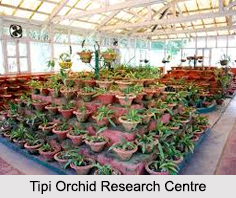
Tippi Orchid Research Centre, Arunachal Pradesh
Tippi Orchid Research Centre in Arunachal Pradesh is renowned for its rich collection of exotic and endangered orchids. Surrounded by lush rainforest...
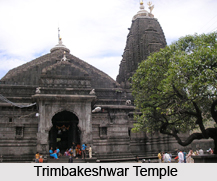
Tourism in Nashik District
Pilgrimage tourism in Nashik district involves visiting the various places of Hindu and Jain worship located here. Some of the holiest sites for Hind...
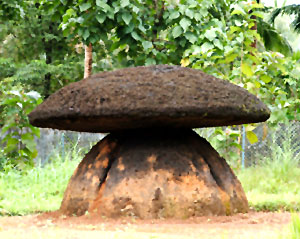
Mangadu, Kerala
Mangadu in Kerala’s Kollam district is a significant megalithic site known for its urn burials, cist burials, menhirs, and stone circles. Excavations...
Related articles in States of India
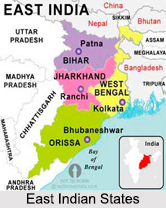
East Indian States
East Indian States comprises of Bihar, Jharkhand, West Bengal, Odisha and also the Union Territory of Andaman and Nicobar Islands. It defines the cult...
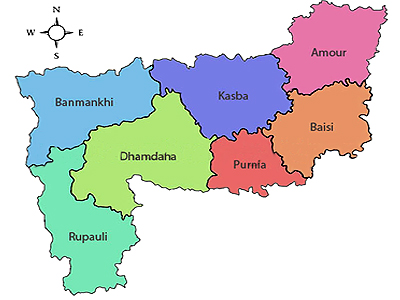
Purnia District in Bihar
Purnia District is located in Bihar and extends from River Ganga to Nepal. The district has a rich Hindu history and glorious past.
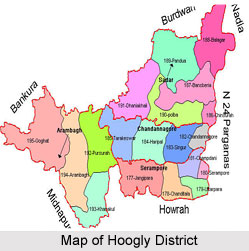
Hooghly district
Hooghly District along the bank of the river Hooghly is one of the principal trading ports of West Bengal.
Geography Of Chittoor District
Geography of Chittoor district is spread along the topography of the land which is divided into two natural divisions; Chittoor has a dry and healthy...
Districts of West Bihar
Districts of West Bihar is comprised of medieval monuments that were built by the different governors of Mughal era.