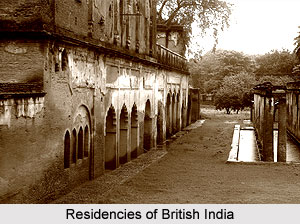
 The Residencies of British India were primarily political offices, which dealt with the relations between a large number of princely states and the British dominated India. These residencies were managed by individual Residents. The Residency system was originated through the system of subsidiary alliances, which was devised by the British East India Company after the Battle of Plassey in the year 1757. The system was created in order to secure Bengal from being attacked by deploying British soldiers in the Bengal Army in the affable native states. Through this system, the Indian Princes of these states were guaranteed protection from internal and external hostility and aggression with deployment of British troops. As a payback, the local rulers had to compensate and pay for the maintenance of the British troops and also accept a British Resident in their state court.
Resident of British India
The British Resident, who was a senior official of the British administration, was positioned in the capital of the Princely States of India. The Resident officially served as a diplomat but was also responsible for keeping the ruler to maintain the association and alliance. The Residencies of British India primarily was developed as a system of indirect rule which was vigilantly managed and administered by the British Resident. The role and function of the Resident included intervening in succession disputes, forming diplomatic alliances with other states and advising in governance. Further more the Resident also had to ensure that the native ruler did not retain military forces, but only for internal policing. The British Residents also tried to develop and improve the princely states by propagation of European concept and philosophy of progressive government.
Development of Residencies of British India
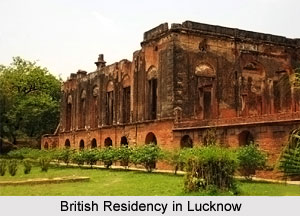 The princely states of Hyderabad, Oudh and Arcot were the initial states to enter such subsidiary alliances. Prior to the great revolt of 1857, the function of the Resident in Delhi was more imperative than that of other British Residents, as tension existed between the emerging power of the British East India Company and the fading Mughal Empire. In the year 1858, the Crown rule of British India was established and the native states, which were ruled by the Indian princes maintained their internal sovereignty in terms of political and administrative control. The external relations and defence of these states eventually became the responsibility of the British Crown. Around two-fifths of the Indian subcontinent were managed and supervised by the rulers of the princely states.
The continuance of the British indirect rule on the Indian princely states allowed the British government to focus their resources on the economically significant areas that were under the direct control of the British. It also obscured the effectual loss of autonomy and independence of the native States in their external relations. The British Resident was a permanent reminder of the auxiliary relationship between the native ruler and the British authorities. The Residency was the materialization of this, which was a complex of structures, buildings and land that was improved according to the aesthetic standards of the British. The Residencies of British India were a symbol of power because of its position within the state`s capital. In several cases, the rulers of the particular princely states even paid for the construction of these Residencies in order to depict their support and allegiance to the British.
The Baroda Residency, the Gwalior Residency, the Mewar Residency, the Indore Residency and the Persian Gulf Residency were some of the most prominent Residencies of British India.