 Religious symbols of Sikhism are the most distinctive signs of being a Sikh. The custom of wearing long hair is among the most cherished signs of an individual`s membership of the Sikh Panth. These symbols have an ideological meaning with a symbolical thought. It has a social function within the community.
The symbols are described below:
Khanda
Khanda derives its name from the double-edged sword which appears at the center of the logo. It is a metaphor of Divine Knowledge and its sharp edges symbolise cleaving Truth from Falsehood. Chakar is the circle around Khanda. Kirpans surround the Chakar. These two swords symbolize concepts of Meeri and Peeri - Temporal and Spiritual authority. A Sikh must abide by spiritual aspirations as well as obligations of the society. It is composed of four traditional Sikh weapons.
Kesh
Thos who have been baptized have Kesh. The Sikh males tie their hair into a bun. It is covered with a turban. At a younger age it is covered with a `Patka`, a smaller turban. Kesh is highly emphasized as it is the body in the natural way that it was created by God.
Kangha
 The Kangha is possessed by those people who have been baptized. It is a comb that is used for cleaning the hair. They clean their hair in the morning and before going to bed in the night.
Kara
The Kara is an iron or steel bracelet that binds the person who is wearing it to God. It reminds the Sikh to do the right deeds. It is worn in the predominant hand so that a Sikh can see it whenever he does anything.
Kachhera
The Kachhera is worn by people who have been baptized. This ensures dexterity and freedom of movement. It is a form of boxer shorts and it symbolizes sexual restraint.
Kirpan
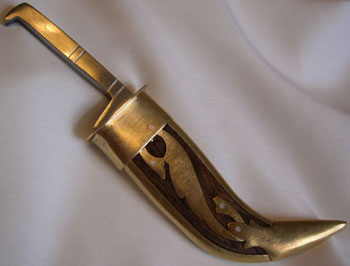
The Kirpan is the last of the Sikh symbols and can only be worn by baptized people. However this is not worn always.
Ek Onkar
Guru Granth Sahib book opens with these words. Ek-Onkar denotes `There is one God.` This symbol is found on other documents. Ek onkar is constantly repeated so that Sikhs are reminded that there is only one God in the universe.