 In the field of religions Harsha followed a policy of religious toleration. Different religious flourished during this period. A brief description of them is given below.
Vedic religion: Vedic or Brahmanical religion had made a great progress by this time and Buddhism was slowly and gradually moving towards its decline. Vedic religion which made progress during Gupta period further progressed during Harsha`s reign. Brahmanism had divided into many philosophical schools and ascetic orders. The followers of Brahman religion worshipped cows and there were many categories of sadhu. Hiuen Tsang has also described different types of sadhu, some of them remained naked, some wore feathers of peacock, some covered their bodies with grass and so on. Some followers of Brahmanism believed in superstitious spirits etc. In the field of philosophy, Sankhya philosophy was progressing and attracting a large number of followers. Regarding multiplicity of schools and ascetic orders, Bana, in this `Kadambari` has mentioned Mukhari, Shaiva, Parashari, Bhagavat, Kapila, Kanada, Upanishads, Panchratrick etc.
Buddhism
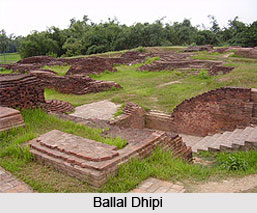
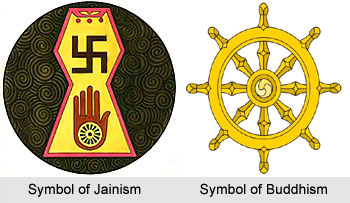
Buddhism was on the decline during Harsha`s period. Besides being divided into two main sects as for example Hinayanaism and Mahayanasim. There was as many as 18 different sects among the Buddhists. Mahayanism was more prominent. During his visit Hiuen Tsang saw as many as 5,000 monasteries accommodation. The most important Buddhist monastery was that of Nalanda.
Jainism
During the Harsha`s period, Jain religion was prevalent at certain places in the northern India. Vaisali and Pundavardhan were the strong holds of Jainism. Jain religion was divided into two main sects such as Svaitamber and Digambar. However, Digambar sect was more prominent and attracted larger number of followers.