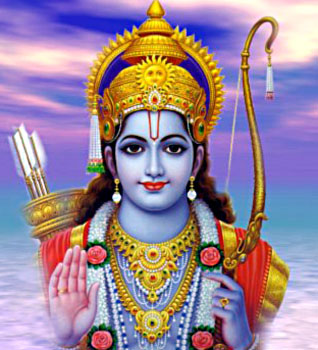
 In medieval India Hinduism was a major religion. Bhakti cult became popular in which devotion was offered to some personal God whose worship as was believed would lead to salvation. Lord Shiva, Lord Vishnu, Lord Rama and Lord Krishna were worshipped. The female aspect of God or Shakti or mother power was also worshipped in various forms like Kali, Uma, Durga, Chandi and Lakshmi Devi. Development of this cult had its superstitious side too.
The Hindus believe with regard to God that he is one, eternal, without beginning and end, acting by the free will, almighty, all-wise, living, giving life, ruling, preserving, one who in his sovereignty is unique, beyond all likeness and unlikeness, and that he does not resemble anything nor does anything resemble him. They continue to believe in the doctrine of human equality defined from the view-point of salvation. According to the Hindu philosophers liberation is common to all classes. The doctrine of untouchability also reached its high watermark in the eleventh century. Popular religion had become the monopoly of the Brahman and the lower classes were prohibited from studying the Vedas. The Hindu society continued to be cemented into unity under the influence of Bhakti.
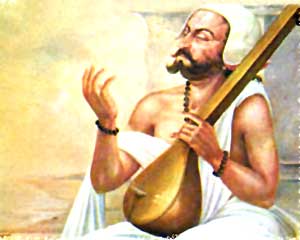 The two most important schools of Bhakti were Shaivism and Vaishnavism. Shaivism has many divisions and contains Shaivism proper, Saktism and other minor systems. It is also known as the Dravidian system. The inscriptions of Mohenjo-Daro as interpreted by Heras speak of the divine Triad consisting of Siva, Muruga and Karttikeya. Lord Shiva was not only a destroyer but also a creator and a preserver. During this period Siva was also called Pashupati, the Supreme Being with the whole of humanity as his folk. King Harsha used to practice Saktism or Tantrism.
The main Shaiva sects are the Yatis, the Arhats, the Ganagirs, the Pasupatas, the Lakulisas, the Kapalikas, the Kalamukhas, the Nathas and the Rasesvaras. The Shaiva philosophy is that Shiva has no end or beginning, free from defects and knows everything. The three fundamental principles or categories of Shaivism are the Lord (Pati), soul (Pasu) and the world (Pasa).
The basic works of Vaishnavism, the Pancharatra Samhitas were formulated. The association of Ram with this cult was developed during this period was also developed. Lord Rama was also regarded as the `avatar`, incarnation, of Lord Vishnu. Ramanuja, Madhava, Nimbarka, and Vallabhacharya among others greatly contributed to the evolution of Vaishnavism during this period. Vaishnavism had also witnessed steeping rise of flourishing in South India between seventh and tenth centuries. Twelve Alvars or saints had distributed Vaishnavism to the common people with their devotional hymns in South India. The temples which the Alvars used to pay visits are presently known as Divya Desams. Vaishnava practices improved in popularity due to the tremendous influence of sages like Ramanujacharya, Madhvacharya, Manavala Mamunigal, Vedanta Desika, Surdas, Tulsidas and several others.
It can be ascertained that Hinduism was the main religion that was followed during this period through Shaivism and Vaishnavism.