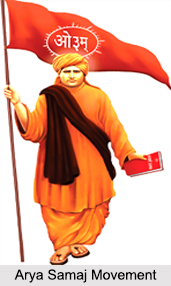
 Arya Samaj was a powerful religious movement in India during the nineteenth century. The movement was led by Swami Dayanand Saraswati, who started it in 1875. Arya Samaj had similarities with the Brahmo Samaj in its ideology and the mode of operations. Dayanand Saraswati was a Sanyasi (renouncer) who believed in the flawless authority of the Vedas. He advocated the doctrine of Karma and reincarnation and also emphasised on the ideals of Brahmacharya (chastity) and Sanyaas. He founded the Arya Samaj to propagate his ideas among the common people. The Arya Samaj upholds the sanctity of the cow, Samakars, oblations to fire and social reform, including the education of women.
Swami Dayanand Saraswati became a disciple of Swami Virajananda in 1840 and it changed the way of his life. He accompanied Virajananda for nearly three years and emerged with a new set of goals. His main objective was to purify Hinduism and save it from its contemporary degenerate state. Dayanand also devised a method of accomplishing these objectives. He believed that all truth was to be found in the Vedas by anyone who used the proper analytic and grammatical tools needed to understand Vedic Sanskrit. Dayanand separated all Hindu scriptures into two categories namely Drsba and Un-drsba. While, the former included the Vedas and any text based on a proper understanding of the Vedas, the latter were the products of the post-Mahabharata period of history when true Vedic knowledge was lost and ignorance prevailed.
To accomplish his aims and objectives completely, Dayanand Saraswati started to preach a `purified` Hinduism. His Hinduism rejected nearly all of contemporary Hinduism that include the popular Puranas, polytheism, idolatry, the role of Brahman priests, pilgrimages, etc. He started to roam around here and there and visited the major cities like Calcutta, Gujarat, Bombay, Punjab, etc. After roaming for a few years, he established the Bombay Arya Samaj (Noble Society) on 10th April, 1875. The Arya Samaj became the first successful organisational expression of his ideas. Dayanand strongly opposed the evil practices of Hinduism like idolatry, child marriage, elaborate rituals, etc. He also attacked the Brahman priests and insisted on the infallibility of the Vedas.
The Arya Samaj soon started to spread into the other parts of India and branches of the Samaj were established in the prominent cities like Punjab, Lahore, Delhi, Madras, etc. and also in Rajasthan and Maharashtra. However, there was no central organisation for Arya Samaj in India and each Samaj used to operate independently. After the death of Swami Dayanand Saraswati in 1883, the members of Arya Samaj took the responsibility to spread his ideas. They started to establish more centres of Arya Samaj in different parts of India. They established schools and other institutions to spread the ideas, out of which, the Dayananda Anglo-Vedic Trust and Management Society was one of the most prominent ones.
However, the Arya Samaj witnessed a few conflicts among its members during the later half of the nineteenth century. A group of members led by Pandit Guru Datta and others started to refer Dayanand Saraswati to as a Rishi and they wanted the school of the Samaj to focus on Aryan ideology, on the study of Sanskrit and the Vedic scriptures. They believed that the school should be modelled after the ancient Hindu universities and would thus produce the new `pure` Hindu youth. However, after its establishment, the school expressed the ideas of more moderate Aryas, who thought of providing English education that is safe from non-Hindu influence and relevant to careers within the colonial milieu. As a result of this, Pandit Guru Datta and his friends decided to leave the Arya Samaj and the Samaj was formally divided in 1893. They also established a new organisation named the Arya Pratinidhi Sabha.
The Arya Pratinidhi Sabha soon developed their own ritual of readmitting the lower caste Hindus, who were converted to Islam or Christianity. They named the ritual as Shuddhi and it was aimed at readmitting those converted Hindus to Hinduism. Though initially Shuddhi was applied only for those converted, soon it started to be performed for anyone whose ancestors had once been Hindus. The Aryas also developed another ritual named Shuddhito to purify the untouchables and transform them into members of the clean castes.
Apart from purifying the untouchables and readmitting the converted into Hinduism, the Aryas were also active to achieve a few other objectives. They were supporters of women education and they established a girls` school, named the Arya Kanya Pathshala to provide education that is safe from missionary influence. They also founded the Kanya Ashram or women`s hostel. They further established the Kanya Mahavidyalaya on 14th June, 1896 to provide higher education to the women. This institution was established with inspiration from the success of Kanya Pathshala. Besides educating the women, the Aryas also actively supported the movement for widow remarriage. They launched societies to support such marriages and also to put these ideals into practice.
The Arya Samaj did establish itself as one of the major acculturative movements with its purified Vedic Hinduism that rejected almost all aspects of contemporary Hinduism. The leadership of the Samaj mostly came from the educated Hindus of the upper castes and the Arya Samaj did adopt a wonderful organisational structure and parliamentary procedures. Both the wings of Arya Samaj created a wide variety of institutions; offered new forms of worship; introduced proselytism including paid missionaries, a conversion ritual; and also reduced their teachings to a fundamental creed. The Samaj mainly focused on the energies and wealth of its members into a variety of fields. The ideals of the Samaj were put into action, rather than be only preached.
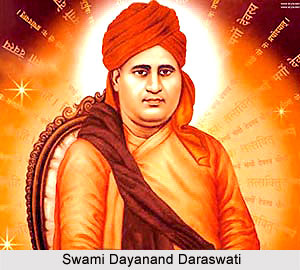 The Arya Samaj was an organisation founded by Swami Dayanand Saraswati and was aimed at making significant social and religious reforms. The Samaj was founded in Punjab and operated mostly in that region. The ideology of the Samaj was based on the thoughts of Dayanand Saraswati and he wanted to purify Hinduism and save it from its contemporary degenerate state. The reforms of Arya Samaj were mostly in the religious field and the Samaj brought about significant changes in the social field as well.
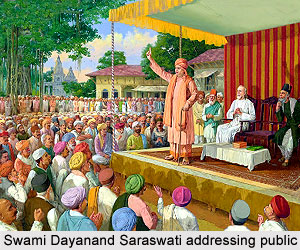 After the success of the high school and the college maintained by the Dayananda Anglo-Vedic Trust and Management Society, another formal representative body was convened. The new representative body was convened in October, 1886 and was named as the Arya Pratinidhi Sabha, Punjab. Representatives from the branches of Arya Samaj through Punjab attended the Pratinidhi Sabha and it dealt with variety of questions and provided a degree of centralisation that was missing since Dayanand`s death. The local branches of Arya Samajes also started to build elementary and secondary schools through Punjab, following the model of the Lahore school. The Arya Samaj also started a campaign to collect funds for orphan relief.