About Reddis of Kondavidu

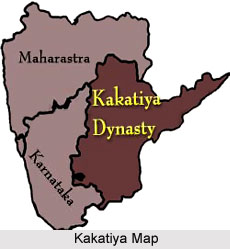
As soon as the Kakatiyas of Andhra Pradesh were defeated in 1322 A.D., entire the Andhra was captured by the army of the Ghias-ud-din Tughlaq, ruler of Delhi. The Tughlaqs were tyrannical and autocratic in their governing. This oppression led to the formation of a coalition of Hindu rulers led by Prolaya Nayaka with the aim of freeing themselves from the Delhi yoke. The Nayaka chiefs, seventy-five in all, managed to drive out the Muhammadan invaders from the entire Andhra area and subsequently founded their own respective kingdoms. The most important among these were the Musunsuri chiefs of Warangal, Padmavelma of Rachakonda and the Reddis of Kondavidu.

Reddis of Kondavidu, Andhra Pradesh , India One among the Reddis of Kondavidu was Proyala Verna (1325-1353 A.D.) who initially ruled with Addanki as his capital which was later shifted to Kondavidu. Vema`s reign is chiefly known for the patronage he extended to poets and scholars who flocked to his court. He constructed a number of temples and tanks and granted villages to the Brahmins of his kingdom. He was succeeded by his son named Anavota (1354-1364 A.D.) who all through his reign, was actively engaged in fighting wars with the Bahmani kings, the Recherla chieftains and also the Vijayanagara monarchs. However, to his dismay, the Vijayanagara rulers managed to capture much of his territory.

Proyala Verna`s younger brotherAnavema succeeded him in 1364 A.D. Anavema was a competent ruler who managed to recover most of the areas captured by the Vijayanagara kings and also defeated the Recherlas. He was succeeded in 1386 A.D. by Kumaragiri, his nephew, also a capable ruler. He had only one son who predeceased him and he subsequently nominated Kataya Verm, a brother-in-law as his successor. However, Peda Komati Vema, a distant relative of Prolaya Verna Reddi, defeated Kumaragiri who along with Kataya Verna sought refuge at Rajahmundri.

Peda Komati Verna who ruled from 1402-1420 A.D. was a dynamic general. Taking advantage of the civil war in Vijayanagar, he managed to recover many of the territories lost to the Vijayanagara kings previously. He was also a great scholar who authored many works in Telugu. He extended his patronage to the great poet, Srinatha who is considered as one of the greatest poets of Telugu literature.

The last ruler of Kondavidu was Racha Verna Reddi who succeeded Peda Komati and ruled for four years from 1420-1424 A.D. The Vijayanagara emperors from the south and the Gajapati kings of Kalinga in the north, who attacked the Reddi kingdom in his reign, brought about the end of this dynasty.
History of Reddi Community

To free their land from the Muslim rulers, who probably belonged to the Delhi Sultanate, there were serious revolutions. Prominent among the leaders of liberation were Prolaya Nayaka and his cousin, Kapaya Nayaka. It is said about seventy-five lesser Nayakas (feudatory chieftains) assisted them in their enterprise, including the celebrated Prolaya Vema, founder of the Reddy kingdom of Addanki and Kondavidu. About 1331, the entire coastal region from the Mahanadi to the Gundlakamma in the Nellore District had been freed from the Muslims.

Of the many Reddi kingdoms that flourished for one hundred and twenty-five years after the end of the Kakatiya Empire, the one at Kondaveedu, founded by Prolaya Vema in 1320, was the most important.

Most of the Reddi kings were enlightened patrons of learning, literature and the fine arts. Prolaya Vema`s court was particularly distinguished because of the presence of the illustrious Sanskrit scholar, Mahadeva. The greatest poet of the Reddi age was Srinatha, a Brahmin whose patron was Peda Komati Vema.

King Veerabhadra Reddi of Rajamathendiravaram was another celebrated aesthete and scholar with knowledge of music and literature.

Another major Telugu poet of the age of the Reddi kings was Vemana who probably lived in the earlier part of the fifteenth century and is believed to have been a Reddy. His succinct, four thousand odd aphorisms in verse, constitute the Bible of the Andhras.

It was thus that the Reddi kingdoms came into being which retained their power for over a hundred years (1325 to 1448). Although the Reddi rulers inherited the responsibilities of their Kshatriya predecessors, they acquired none of the rights as they were Sudras and were debarred from participating in the Vedic rituals. Nevertheless the Kshatriya rulers of Warangal and their Reddi chieftains were associated through social interaction such as occasional intermarriage.


Society of Reddi Community

Agriculture is considered the main occupation of the Reddi community but vocational diversification is also evident. They are in the mica business, undertake forest, timber and abkari contracts and deal in wholesale trade in jaggery, groundnut and onions. Many Reddis are also involved with the entertainment business, such as, films.

They are also represented in government service, particularly in the police, forest, revenue and agriculture departments. They do not work as labourers because of the memories of the suzerainty of their forbears in the 14th and 15th centuries.

The Reddis have no gotras nor can they trace their lineage to any of the rishis. Those who were once famous as fighters are farmers and are the backbone of the Andhra economy. Their community is cohesive and compact with a complex of rigid, built in, mutually exclusive ramifications with a rural bias. The subsections are best distinguished by the tools they use, the crops they raise, the methods of farming they favour, the wealth in terms of lands and cattle they own and the manner in which they utilise their leisure.

The Reddis are more influential than other communities in the villages. Because of their wealth and numbers, they dominate the affairs of all the panchayats. Most of the legislators from Telangana are Reddis. They constitute the ambitious, property-owing elite of the village. Their assets include acres and acres of arable land, flour mills, ginning institutions, vineyards, cinemas and real estate.

A practical, down-to-earth people, they make natural leaders. This community has produced many eminent people including: a president of India who was formerly Speaker of the Lok Sabha, Sanjiva Reddy.

Reddi women have held prominent positions in Indian society. Lakshmi Reddi who received the Padma Bhushan in 1956 was the first woman graduate in medicine and surgery from the University of Madras. This recipient of five gold medals was the founder of the Cancer Institute in Madras. She later went into politics, and represented India at several international conferences for women. Sarojini Pulla Reddi was the first woman mayor of the municipal corporation of Hyderabad and Secunderabad, assuming office in July 1965. Others such as Sudha Reddi and Yasoda Reddi have been educationists and members of Parliament.