
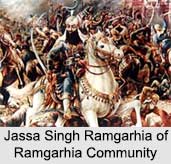
 Ramgarhia Community are Sikh castes, mainly located in the Punjab region of India. They are named after Jassa Singh Ramgarhia who was the leader of the Ramgarhia Misl. The original caste name of the Ramgarhias was carpenter by their occupation. The largest concentration of Ramgarhias is in Ludhiana, which also houses the central secretariat of the Ramgarhia Central Federation.
Ramgarhia Community
Ramgarhia Community is a Punjabi community named after Jassa Singh Ramgarhia who was the leader of the Ramgarhia Misl.
Introduction
Ramgarhia Community are Sikh castes, mainly located in the Punjab region of India. They are named after Jassa Singh Ramgarhia who was the leader of the Ramgarhia Misl. The original caste name of the Ramgarhias was carpenter by their occupation. The largest concentration of Ramgarhias is in Ludhiana, which also houses the central secretariat of the Ramgarhia Central Federation.History of Ramgarhia Community
Mir Mannu, the Mughal governor of Punjab, found that most of his domains were in the hands of the Sikhs. Adina Beg Khan`s territory was also affected by Sikh incursions. In March 1753, he fell upon Sikh pilgrims at Anandpur. When the Sikhs retaliated by plundering the villages in the Jalandhar and Ban Doabs, Adina came to terms and assigned to them some of his revenue and took many Ramgarhias, including Jassa Singh, into his employ.
Mir Mannu now marched to Amritsar and blew up Ram Rauni, killing the entire garrison of nine hundred Sikhs, mostly Ramgarhias. Reprisals went on till Mir Mannu`s death in November 1753, when the administration in the Punjab collapsed. The Dal Khalsa Sikh leaders offered the people protection, which was readily accepted. The Sikh military command retained its headquarters at Amritsar, the Ramgarhias protecting the land between Amritsar and the Himalayas. They levied tribute on Kangra, Nurpur, Chamba, Basohli and Mandi.
After Jassa Singh`s death they became practically leaderless and were soon overpowered by Ranjit Singh. When he died in 1839, much of India, with the exception of the Punjab was under British domination.
The Sikh soldiers did not share all the grievances of Hindustani sepoys which gave rise to the 1857 struggle and with a few exceptions, the Sikhs expressed unreserved support for the British for which they were duly rewarded. They received from the British a tract of land (known as nili bar), irrigated by the 683 kilometre long Chenab canal.
In the latter half of the nineteenth century, the artisans in Punjab ranked just above the untouchables but below the Jats and Rajput zamindars. They performed menial duties for the landowners. With the turn of the century the Sikh artisans of `tarkhan` (carpenter) and `lohar` (blacksmith) origin began to add Ramgarhia at the end of their names.
Ramgarhias also made a considerable contribution to India`s struggle for freedom.
Sardul Singh Kaveeshar is perhaps the best-known Ramgarhia freedom fighter. A member of the All India Congress Working Committee, he coordinated the Civil Disobedience Movement started by Mahatma Gandhi. A close friend of Subhas Chandra Bose, he was instrumental in helping him to escape to Afghanistan.
Mir Mannu now marched to Amritsar and blew up Ram Rauni, killing the entire garrison of nine hundred Sikhs, mostly Ramgarhias. Reprisals went on till Mir Mannu`s death in November 1753, when the administration in the Punjab collapsed. The Dal Khalsa Sikh leaders offered the people protection, which was readily accepted. The Sikh military command retained its headquarters at Amritsar, the Ramgarhias protecting the land between Amritsar and the Himalayas. They levied tribute on Kangra, Nurpur, Chamba, Basohli and Mandi.
After Jassa Singh`s death they became practically leaderless and were soon overpowered by Ranjit Singh. When he died in 1839, much of India, with the exception of the Punjab was under British domination.
The Sikh soldiers did not share all the grievances of Hindustani sepoys which gave rise to the 1857 struggle and with a few exceptions, the Sikhs expressed unreserved support for the British for which they were duly rewarded. They received from the British a tract of land (known as nili bar), irrigated by the 683 kilometre long Chenab canal.
In the latter half of the nineteenth century, the artisans in Punjab ranked just above the untouchables but below the Jats and Rajput zamindars. They performed menial duties for the landowners. With the turn of the century the Sikh artisans of `tarkhan` (carpenter) and `lohar` (blacksmith) origin began to add Ramgarhia at the end of their names.
Ramgarhias also made a considerable contribution to India`s struggle for freedom.
Sardul Singh Kaveeshar is perhaps the best-known Ramgarhia freedom fighter. A member of the All India Congress Working Committee, he coordinated the Civil Disobedience Movement started by Mahatma Gandhi. A close friend of Subhas Chandra Bose, he was instrumental in helping him to escape to Afghanistan.
Society of Ramgarhia Community
Legend of Sardar Jassa Singh of Ramgarhia Community
Jassa Singh became famous in Sikh history as Jassa Singh Ramgarhia. Adina Beg Khan, the Imperial Governor of the Jullundur Doab, exercised great influence in the Punjab. As there was constant quarrelling between him and the Sikhs, Baron Jassa Singh was sent to him as their ambassador by the Sikhs. Adina Beg Khan was so pleased with him that he granted all the demands of the Sikhs. He gained reputation as a soldier of daring and skill. Moreover, Adina Beg took him and his brothers into his service and made him the Tahsildar over a large district. He remained for a long time in the service of the Governor.
Profession of Ramgarhia Community
Ramgarhias were traditionally carpenters but included other artisan occupations such as stonemasons and blacksmiths. Generally, Sikh carpenters use Ramgarhia as a surname.
Society of Ramgarhia Community
Ramgarhia marriages are less expensive and the barriers for endogamy do not exist. Schools, technical institutes and a postgraduate college have also been established.
Through gurdwara elections held in Delhi, Ramgarhia Community has also entered the field of gurdwara management. On the political side, one of them became chief minister of Punjab in 1972. Others have been cabinet ministers in Uttar Pradesh and West Bengal. They are also represented in Parliament and the Punjab Legislature.
The Ramgarhias have not lagged behind in other fields. Major General Sahib Singh Sokhey, a renowned scientist, was director of the Hafifkine Institute, Bombay and regional director of the World Health Organisation. Paramjit Singh Sehra was the first Indian scientist to reach the South Pole in 1971 for research in the upper atmosphere. Other Ramgarhia scientists are doing atomic and space research in different centres in India. Gurbachan Singh Marwaha, a mining engineer, is the director of the Indian School of Mines, Dhanbad. Inderjit Kaur Sandhu, Vice-Chancellor, Punjabi University, Patiala, was the first Ramgarhia woman to hold such a position.
Through gurdwara elections held in Delhi, Ramgarhia Community has also entered the field of gurdwara management. On the political side, one of them became chief minister of Punjab in 1972. Others have been cabinet ministers in Uttar Pradesh and West Bengal. They are also represented in Parliament and the Punjab Legislature.
The Ramgarhias have not lagged behind in other fields. Major General Sahib Singh Sokhey, a renowned scientist, was director of the Hafifkine Institute, Bombay and regional director of the World Health Organisation. Paramjit Singh Sehra was the first Indian scientist to reach the South Pole in 1971 for research in the upper atmosphere. Other Ramgarhia scientists are doing atomic and space research in different centres in India. Gurbachan Singh Marwaha, a mining engineer, is the director of the Indian School of Mines, Dhanbad. Inderjit Kaur Sandhu, Vice-Chancellor, Punjabi University, Patiala, was the first Ramgarhia woman to hold such a position.
Recently updated articles in Religion in India
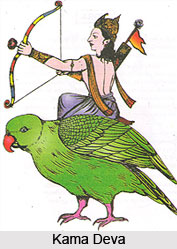
Kusumayudha
Kusumayudha is a name of Kamadeva, the Hindu God of Love. Depicted with a sugarcane bow and flower-tipped arrows, he represents attraction and longing...
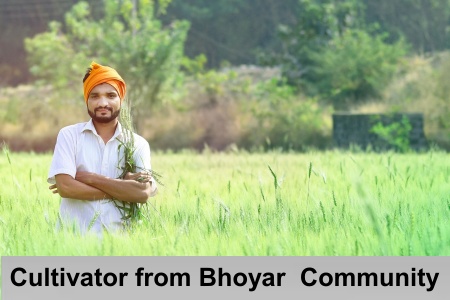
Bhoyar Caste
Bhoyar Caste is largely found in the Central Provinces of the country. Traditional occupation of Bhoyars is agriculture. They are good cultivators and...
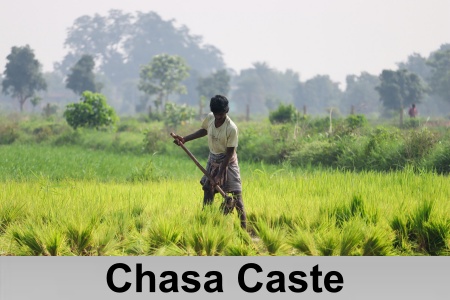
Chasa Caste
Chasa caste is a prominent agrarian community native to Odisha. Traditionally associated with cultivation and farming, Chasas have historically played...
Vigneswara, A Form of Lord Ganesha
Lord Vigneswara is another form of Lord Ganesha or Vinayaka, prominently worshipped as the God of intelligence and good luck in the Indian subcontinen...
Maheswara
Maheswara, meaning “the Great Lord,” is a revered name of Lord Shiva in Hindu tradition. It represents Shiva’s supreme authority over creation, preser...
Related articles in Religion in India
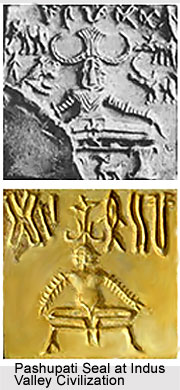
Religion in Indus Valley Civilization
Religion in Indus Valley Civilisation included Hinduism, Buddhism and Jainism. Details about the religion in Indus Valley Civilization have been gathe...
Iyer Brahmin
Iyer Brahmins are originally from Tamil Nadu of South India. They are known for their adherence to Advaita philosophy and Smarta traditions. Tradition...
Kumbhakar / Kumhar Caste
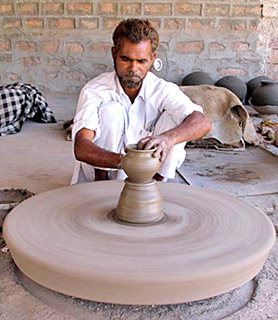
Kumbhakar or Kumhar caste is a traditional artisan community in India known for pottery making. Derived from Sanskrit word Kumbhakar, meaning potter,...

Gujjars in Mughal Era
Gujjars in the Mughal era enjoyed great power. Further their power increased with the decline of Aurangzeb, Mughal emperor.
Gotra in Hinduism
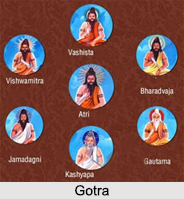
In Hinduism, gotra refers to a lineage system tracing descent from ancient sages, primarily through the paternal line. Originating from Vedic traditio...