 Jahangir continued the Rajput policy of his father Akbar exactly in the same manner. He was extremely liberal towards the Rajputs but he also attempted to force Mewar to submission which had refused it so far. He sent several Mughal forces, one after another, to invade Mewar right from the beginning of his reign. Rana Amar Singh fought against the Mughals with the zeal like his father. He refused to submit though entire Mewar was practically destroyed and the Mughals established military posts everywhere. But, ultimately, he agreed for peace on the advice of his son prince Karan and few of his nobles and the treaty was signed with the Mughals in 1615 A.D.
According to the treaty the Rana accepted the sovereignty of the Mughal emperor Jahangir and, instead of himself, deputed his son and successor, prince Karan to attend the Mughal court. Jahangir returned to the Rana all territory of Mewar including the fort of Chittor on condition that it would not be repaired. Thus, the long conflict between Mewar and the Mughals finally came to an end.
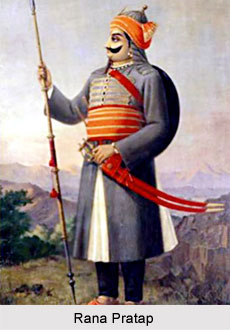
The Ranas of Mewar observed this treaty till Aurangzeb attempted to conquer Mewar during his reign. It would be wrong to conclude that Rana Amar Singh had no tried to safeguard the honour of Mewar and had disgraced the name of his father, Rana Pratap by accepting the peace treaty with the Mughals. Amar Singh also fought as valiantly as Rana Pratap against the Mughals and submitted only when he was advised by his son and successor, prince Karan and a few of his nobles. Besides, the subjects of the Rana needed peace, and fight between the Mughals and Mewar had been so long and hard that Mewar was practically ravaged. Peace was necessary for its reconstruction. Jahangir, on his part, offered very liberal terms to Rana. Jahangir in no way, tried to dishonour the Rana. On the contrary, he returned all territory of Mewar and the fort of Chittor to him.
This article is a stub. You can enrich by adding more information to it. Send your Write Up to content@indianetzone.com